
You Can Draw Cute Foods! In 2 Simple Steps / Learn Drawing for Beginners
Yasmina Creates · Artist & Creativity Cheerleader
A 21-minute class distills cuteness into two repeatable steps, but you'll need your own drawing supplies and patience to fill the gaps.
A tight framework, thinly demonstrated
"You Can Draw Cute Foods!" runs 21 minutes across nine lessons, and it spends that time efficiently on a single idea: cuteness is a formula, not a talent. The teacher, Yasmina Creates, opens with three rules (humanize with simple eyes and a mouth, round off sharp edges, and above all simplify) before condensing the actual drawing process into two steps: observe the reference, then simplify and stylize it. That two-step structure is the spine of the class, and it holds up. It's demonstrated on a chocolate chip cookie, an orange slice, a cupcake, and a burger in quick succession, each time showing how an overly detailed first attempt gets pared down until only the essential shapes and a face remain.
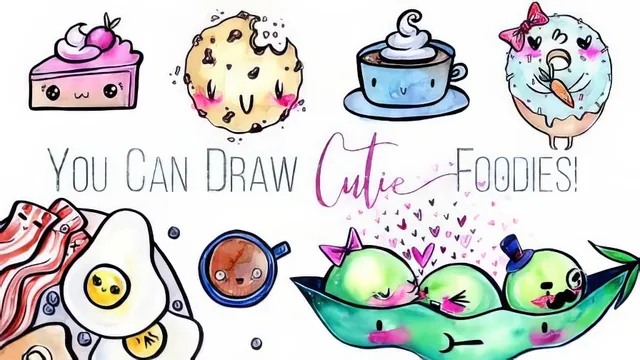
The middle lessons apply that framework to four step-by-step projects: a bitten cookie, a doughnut with a face and little legs, a trio of peas with individual personalities, and a full breakfast plate with ten interacting characters. Each project layers in a new wrinkle. The cookie introduces basic inking and watercolor washes. The doughnut adds accessories (a bow, a carrot) to build a mini-narrative. The peas show how giving multiple faces to one object creates story through interaction, complete with a grumpy top-hatted pea and two peas in love. The breakfast plate scales that idea up, packing a coffee cup, a knife with vampire teeth, and assorted fruit onto one page without letting any single element dominate.
Where the class is genuinely strong is in its explanation of expression as the real engine of cuteness. The lesson on story and mood walks through a dozen variations of the same simple apple shape, showing how a frown, a set of eyelashes, or a couple of tear lines completely change its personality. This is the most transferable insight in the course: cuteness lives almost entirely in the face, not in the rendering of the object itself, and the class proves it convincingly with side-by-side comparisons.
Where it falls short
The course leans heavily on watching rather than doing. The step-by-step projects move fast through inking and watercolor technique (choice of brush pens, wet-on-wet blending, gel-pen highlights) but these are mentioned as asides rather than taught as skills in their own right, and a viewer without watercolor supplies or brush pens on hand is explicitly told to stop and skip ahead. Beginners who don't already have some comfort with basic sketching or a reference-tracing habit may find the "observe" step less concrete than promised, since it largely amounts to "look closely and draw what matters," with actual shape-breakdown technique deferred to other classes in the teacher's catalog. The class also references outside material (a prior animal-drawing class, a general drawing class, a watercolor class) often enough that it can feel like a highlight reel of a broader curriculum rather than a fully self-contained lesson.
At 21 minutes, this isn't a deep technical course, and it doesn't pretend to be. It works best as a fast conceptual primer that turns "cuteness" from a vague aesthetic into a checklist beginners can apply immediately, even if the actual inking and painting craft has to be picked up elsewhere.
The standout
The two-step observe-then-simplify method, demonstrated on a chocolate chip cookie, an orange slice, a cupcake, and a burger, gives a repeatable process for turning any food reference into a kawaii character.
What you will learn
- How to apply the three rules of cuteness: humanize with simple eyes and a mouth, round off sharp edges, and simplify away visual noise
- How to observe a food reference by sketching, tracing, or just looking, then break it into its essential shapes
- How to simplify and stylize an observed shape so it reads as recognizable but not copied
- How to vary facial expressions (frowns, eyelashes, zzz's, eyebrows) to give the same food different personalities
- How to build a scene with multiple interacting characters, as shown in the peas and breakfast plate examples
- Basic watercolor techniques used throughout: wet-on-wet blending, layering for dimension, and white gel pen highlights
Best for: Beginners who already sketch a little and want a fast, focused framework for turning everyday objects into kawaii characters.
Skip it if: Complete art beginners with no drawing or watercolor materials, or anyone wanting deep instruction in inking and paint technique rather than a quick conceptual framework.