
You Can Draw Cute Animals! In 3 Simple Steps / Learn Character Drawing for Beginner Level
Yasmina Creates · Artist & Creativity Cheerleader
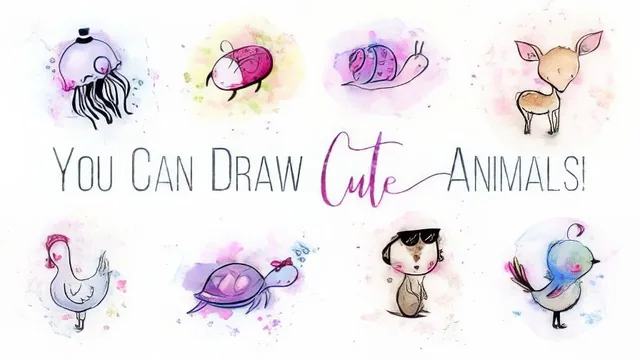
A 19-minute crash course that boils cute-character design into three repeatable steps, worth it if you already sketch but want a formula for charm.
A formula, not a technique dump
Yasmina Creates structures this short class around a single repeatable idea: observe, exaggerate, refine. Rather than teaching cute animals as a series of disconnected drawing exercises, the class treats cuteness as an engineering problem with identifiable levers, big head-to-body ratio, rounded over straight edges, eyes set low and spread wide, minimal detail. The second lesson, "The Science of Cute," lays out these rules using side-by-side comparisons (a rounder-faced cat next to a straighter one, a simplified dog next to a detailed one) and lands on Hello Kitty as the purest expression of the formula. It is a smart choice of reference because it gives students a shared mental benchmark for the rest of the class.
What elevates the course above a simple rules list is the live demonstration lesson, where the three steps get applied to a ladybug, a meerkat, a bird and a deer, in real time, with reasoning narrated at each stage. Watching the meerkat sketch get sunglasses and earrings added because "he doesn't feel as cute as he should" is more instructive than the rules themselves, since it shows the teacher diagnosing a flat result and fixing it with accessories rather than a full redraw. That kind of visible troubleshooting, deciding a design isn't working and course-correcting, is the most transferable skill in the class, more useful long-term than any single proportion rule.
Where the difficulty spikes
The following lesson, on making unattractive animals cute, pushes the formula further by tackling subjects that resist charm: a snail, an angry sea turtle, a grumpy chicken and a jellyfish. The jellyfish segment is the strongest moment in the entire course, since the exaggeration attempt genuinely fails on the first pass. The tentacles overwhelm the design, and the fix, a top hat, monocle and mustache added to balance the visual weight, is presented as a real creative recovery rather than a polished final answer shown after the fact. It is the one place in the class where a student can see a professional illustrator get stuck and think their way out, which does more for confidence than eight clean examples in a row would.
The class is honest about its own limits. It never claims to teach line control, proportion measurement or how to hold a pen, and someone who cannot yet sketch a recognizable animal shape from a photo will find the exaggeration and refinement steps hard to execute even after understanding them conceptually. The "Developing Your Style" lesson, which has students try different eye and ear shapes to find personal preferences, is useful but brief, more a nudge toward experimentation than a structured exercise.
At 19 minutes across seven lessons, the class moves fast, and its greatest strength is also its ceiling. The three-step framework is genuinely reusable, and the final project, picking one already-cute animal and one deliberately unappealing one to redesign, gives students a clear way to test whether the formula actually transfers to a subject the teacher never demonstrated. For anyone who already sketches and wants a repeatable structure for character design, that is a fair trade for less than twenty minutes of runtime.
The standout
The jellyfish demonstration, where the teacher visibly fails with an unbalanced design and fixes it by adding a top hat and mustache to the head, showing real mid-process problem solving rather than a clean rehearsed result.
What you will learn
- A three-step process (observe, exaggerate, refine) for turning any reference photo into a stylized cute character
- The specific proportion rules for cuteness: oversized head, low wide-set eyes, tiny or absent mouth, rounded edges over straight ones
- How to rescue visually awkward animals (a jellyfish, a snail, a turtle) by rebalancing detail and adding small accessories
- How to break down a complex reference into basic shapes before sketching, using the squirrel and deer demonstrations as models
- How to develop a personal inking and coloring style by experimenting with interchangeable eyes, ears, tails and fur treatments
- How to apply the same three-step formula beyond animals, to objects like a cup, an apple or a car
Best for: Beginner to intermediate illustrators who already handle a pencil and pen with some confidence and want a fast, structured method for character-izing reference photos.
Skip it if: Absolute beginners with no drawing experience at all, since the class explains proportion rules but never slows down to teach basic mark-making or hand control.