
You Can Draw Anything! In 3 Simple Steps / Learn Drawing for Beginners
Yasmina Creates · Artist & Creativity Cheerleader
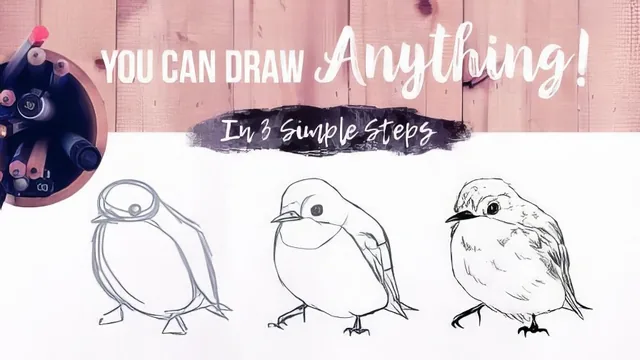
A 38-minute crash course that turns 'I can't draw' into three repeatable steps: shapes, refine, detail, taught through eight quick demos.
This course exists to solve one specific problem: the blank-page paralysis that stops beginners from starting a drawing at all. It does that with a three-step formula, break the subject into basic shapes, refine those shapes into an accurate silhouette, then add detail, and it spends its short runtime proving that formula works on subjects of increasing difficulty rather than dwelling on theory.
The strongest lesson is not the steps themselves but the one that precedes them. Before any shape-drawing begins, the course makes the viewer draw a simple eye from memory, then compares that to a version drawn purely from observation, deliberately copying the exact curves and asymmetries of a reference rather than the mental symbol of "an eye." This exercise is the real engine of the course. The three steps only work if a student has learned to see a shoulder as a line rather than "a shoulder," and the lesson earns that point convincingly by showing the teacher's own first attempt fail for exactly that reason.
From there, the course moves through a sequence of live demonstrations: a bird, a giraffe, a butterfly, a lotus flower, a full nature scene, a car, and a human figure. The giraffe example is the most useful because it is drawn in real time with narrated thinking, including a moment where the sketch's snout is judged too small and re-drawn on the spot. Watching a mistake get caught and corrected mid-process teaches proportion-checking far better than being told about it in the abstract. The car and nature-scene examples exist mainly to prove the method scales to subjects the teacher has no personal fondness for, which is a fair and honest way to demonstrate versatility rather than just claiming it.
The stylization lesson near the end is a genuine bonus rather than filler. Taking a single teddy bear reference and reworking its head, limb, and ear proportions into six distinct variations, some cuter, some stranger, shows concretely how the same three-step skeleton can produce a personal style rather than a photocopy. Applying the same idea to a human face, stretching it, widening it, shifting the features, gives beginners a low-risk way to experiment with likeness and caricature without needing anatomical training first.
Where the course comes up short is depth. Thirty-eight minutes covers a lot of subject variety but very little sustained practice time, and viewers who want real guidance on shading technique, ink handling, or facial anatomy will find those topics gestured at rather than taught. The warmup exercise at the start, tracing shapes and filling blank space with loose lines, is useful but brief, and the assignment at the end asks students to draw two subjects with no further scaffolding or feedback loop.
As an on-ramp for someone who has never picked up a pencil with intention, this succeeds. The shapes-then-refine-then-detail structure is genuinely reusable, and the observation exercise alone is worth the runtime. Anyone past the absolute-beginner stage will find little new here, but for its actual audience, people who don't know where to start, it delivers exactly what it promises without padding.
The standout
The live giraffe demonstration, where the teacher thinks aloud through all three steps in real time, including catching and fixing her own proportion mistakes, does more to teach the method than any of the written explanation.
What you will learn
- How to break any subject, from a bird to a human face, down into basic ovals, triangles, and lines before adding detail
- A practice of active observation ('listening to your eyes') that stops your brain from drawing symbolic shortcuts instead of what you actually see
- How to refine a rough shape sketch into an accurate silhouette before touching any fine detail
- How to add value, shading, and linework in three different finishing styles: realistic shading, full outlining, and loose selective detail
- How to stylize a reference by exaggerating or shrinking its basic shapes to invent your own character or mood
- How to apply the same three-step method specifically to drawing a human face with altered proportions for personality
Best for: Complete beginners who freeze up at a blank page and need a simple, repeatable starting system rather than technical art theory.
Skip it if: Anyone with intermediate drawing experience already comfortable with basic shape construction, or anyone wanting formal instruction in anatomy, perspective, or shading theory.