
Work from Home as a Creative
Amarilys Henderson · Watercolor Illustrator, Design Thinker
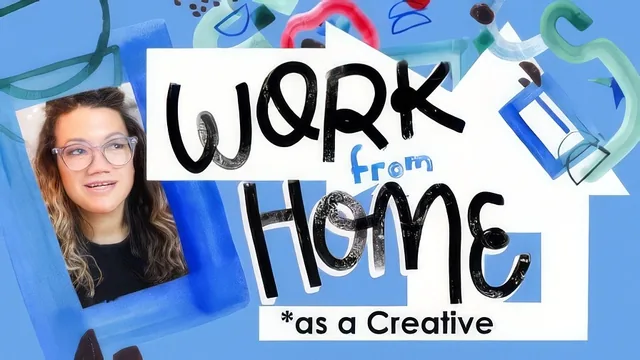
Twelve short pep-talk lessons reframe hustle-guilt into permission, but deliver almost no concrete systems to build.
"Work from Home as a Creative" is a 34-minute monologue split into twelve short segments, and it plays almost exactly like that description suggests: one experienced illustrator and surface designer talking through how she thinks about her week, with no screen recordings, software demos, or worksheets walked through on camera. The course's spine is three reframes: time management becomes focus management, rigid structure becomes finding flow, and income-chasing becomes cultivating a passion-driven inventory. Each idea gets two or three lessons, and the whole thing can be watched in one sitting during a lunch break.
What the course actually walks through
The most concrete stretch comes in the middle, across Priorities, Leftovers, and Watch Yourself. The method is a classic brain dump: write down everything on your mind, from soccer pickups to client contacts, then sort that list into a first, second, and third priority by gut feel rather than a rigid framework. What follows in Leftovers is a useful, if simple, permission structure: anything not finished goes to a dedicated catch-all day, gets pushed to next week, or gets crossed off entirely, and treating that third option as legitimate is presented as the actual skill, not a failure.
Finding Flow extends this into a day-by-day map, where Monday morning becomes protected creative time because early-week client requests haven't arrived yet, Wednesday afternoon becomes the designated email slot, and Friday becomes the day leftover tasks and paperwork get swept up. It is a personal template rather than a generalizable framework, but the underlying instruction, to notice your own weekly rhythm and build around it instead of against it, is the course's most reusable takeaway.
The Being the Boss and Passion to Inventory lessons are more philosophical than instructional. Being the Boss argues for building systems and calendar blocks so you don't have to relitigate priorities daily, but the only tool actually named is a bookkeeping app for tracking finances. Passion to Inventory makes a genuinely good point about creative burnout: work built purely to satisfy client requests eventually erodes both your voice and the client relationship, so making unpaid passion pieces on a regular cadence functions as an investment in future paid work. Power of Play backs this up with an anecdote about experimental watercolor pieces attracting an unexpected client, though the story stays anecdotal rather than becoming a repeatable method.
Where it comes up short
The course never gets specific about tools, templates, or measurable practices beyond the brain-dump sheet mentioned in passing. Viewers looking for a calendar system, a client-intake process, or pricing guidance will not find one here; the content stays at the level of mindset and self-observation. The final lesson's tips, phone in another room, a warm-up ritual, a work buffer at day's end, are reasonable but well-worn advice that most freelancers have already heard.
What the course does deliver is tone: it is warm, personal, and aimed squarely at the guilt and self-doubt that comes with unstructured self-employment, more therapy session than tutorial. For a beginner feeling overwhelmed by not working like a typical employee, that reframing has real value. For anyone past that stage and looking for a system to implement, the runtime will feel thin relative to what gets covered.
The standout
The weekly puzzle-piece method of matching priority tasks to your personal energy pattern across the days is the most transferable idea in the course.
What you will learn
- How to reframe time management as focus management by tracking your own daily energy rhythms
- A brain-dump-to-priority method for sorting a to-do list into three tiers each week
- A way to build a five-day flow based on when you're naturally creative, social, or administrative
- Why saying no and cutting underperforming work streams protects long-term output
- How to treat unpaid passion projects as inventory that generates future paid work
- A short list of environment habits: phone in another room, a warm-up ritual, a work-day buffer
Best for: Freelancers or new solopreneurs who feel scattered and guilty about not working like a nine-to-five employee, and need permission and reframing more than a toolkit.
Skip it if: Anyone wanting a concrete productivity system, software walkthroughs, templates, or step-by-step business planning should look elsewhere.