
Watercolor Basics: Paint Your Own Patterned Note Cards
Juliet Meeks · Designer and Artist
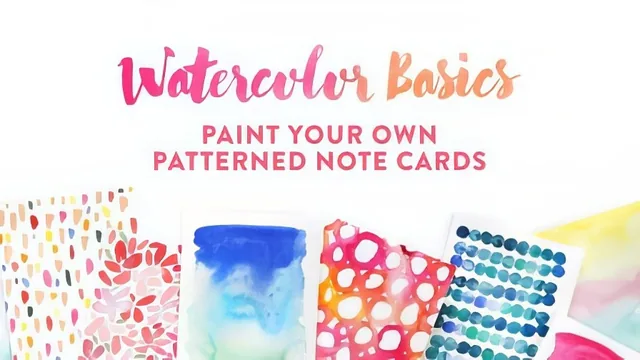
A twenty-minute watercolor primer that trades technique depth for a fast, low-stakes win: a finished set of patterned note cards.
Watercolor Basics: Paint Your Own Patterned Note Cards is exactly what its runtime promises: a compact, low-commitment entry point into watercolor painting built around a single deliverable, a set of hand-painted note cards. Juliet Meeks, a New Orleans-based graphic designer and pattern artist, structures the class in five short lessons that move briskly from introduction to supplies to technique to execution to cleanup, with almost no wasted time between them.
The supplies lesson is more useful than its brevity suggests. Meeks walks through her actual kit, tube watercolors over pan sets for mixing control, a cold press Strathmore pad for practice, pre-cut five-by-seven cards for the final project, and a two-jar water system that separates warm and cool rinses so colors do not turn muddy. She is specific about brush choice too, favoring a round number six and explaining why she avoids larger flats for detail work. None of this is groundbreaking information, but it is presented with enough personal reasoning, not just a list, that a beginner walks away understanding why each choice matters rather than just what to buy.
The technique section is where the class either earns its keep or does not, depending on what the viewer already knows. Meeks demonstrates how varying the water-to-pigment ratio shifts a color from fully saturated to a pale wash, then builds on that to show an ombre effect: applying opaque pigment, dipping the brush in water, and letting the color bleed and lighten across the page. She repeats the exercise mixing two warm colors, then two cool colors, and briefly touches on painting into pre-wetted paper versus dry paper. This is the technical core of the entire class, and it is taught well, with clear cause and effect between water quantity and result. But it is also the only technique taught. There is no discussion of layering, glazing, masking, negative space, or working with different paper weights beyond a passing comment about buckling.
The project lesson applies that single technique twice: once as a large-scale ombre wash across a whole card, once as a pattern of interlocking circles in varying sizes where wet colors bleed into each other. Both results are attractive, and Meeks' running commentary about embracing imperfection and unpredictability is genuinely reassuring for a nervous beginner. But the entire "patterned note cards" premise reduces to variations on the same wet-into-wet blending move applied in different arrangements. There is no third technique introduced to distinguish the two projects.
The closing lesson gathers loose photos of other card patterns, florals, stripes, dashes, and mixed-shape designs, mostly as inspiration rather than instruction, alongside brief but practical cleanup advice about rinsing brushes bristle-down and sealing paint tubes before they dry out.
As a beginner-only, low-stakes crafting session, the class succeeds at what it sets out to do. As a foundation for watercolor painting more broadly, it covers a narrow slice: wash, ombre, and wet-on-wet bleeding, with no color theory beyond warm and cool groupings, and no instruction on more controlled painting where edges and detail matter. Viewers wanting representational watercolor work, botanical illustration, or finer control will need a follow-up course almost immediately.
The standout
The wet-on-wet ombre wash, dragging pigment into standing water on the page and watching it migrate into a second color, is the one technique versatile enough to reuse in any future watercolor project.
What you will learn
- How to identify core watercolor supplies (tube paints, cold vs hot press paper, round brushes, two-jar water system)
- How water-to-pigment ratio controls opacity, from full saturation down to a pale wash
- How to blend an ombre wash by dragging one color into water or into a second color while the paper is still wet
- How to build a wet-on-wet interlocking circles pattern using varied circle sizes and adjoining colors
- How to keep warm and cool color families separate to avoid muddying a mix
- How to clean and store brushes, palettes and paint tubes after a painting session
Best for: A total watercolor novice who wants a low-pressure, low-cost entry point and a finished keepsake in one short sitting.
Skip it if: Anyone who already owns basic watercolor supplies or has taken an intro class before, since the techniques stop at wash and ombre blending.