
Video Essentials: Using Lenses & Lighting to Convey Emotion
Oren Soffer · Director of Photography
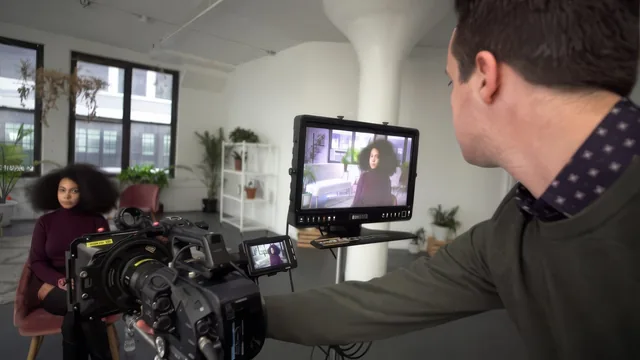
A working cinematographer builds one interview lighting setup from scratch, showing exactly how each choice shapes emotion, in under an hour.
One setup, two looks
Oren Soffer builds this class around a single, deliberately narrow scenario: a static interview subject, one camera position, one location. That constraint is the course's smartest structural decision. By fixing the subject and the setup, every lesson isolates one variable at a time, lens choice, camera height, key light hardness, fill placement, backlight angle, so a viewer can actually see what each decision does rather than trying to disentangle five changes at once. The course walks through the full pre-production sequence first: asking who the subject is, what the location offers, and what budget and equipment are available, before ever touching a light. That planning framework, presented through three real project examples ranging from a neutral documentary to a high-contrast black-and-white piece tied to the film Glass, is a genuinely useful mental model for anyone who has to make stylistic decisions on a shoot.
The heart of the course is the lighting sequence, and it earns its runtime there. Soffer sets a hard key light first to show harsh, dramatic falloff, then swaps to a soft LED source and walks through the Rembrandt triangle as a placement guideline, then adds diffusion material to enlarge the effective light source and soften the transition between light and shadow even further. From there he layers in fill light, reframing it as ambient bounce rather than a second direct source, then backlight, showing how the same tools produce either a clean commercial look or a moody, naturalistic one depending on placement and diffusion. Watching the same face lit four or five different ways, with the false color exposure tool called out each time to explain why a given IRE reading works, turns abstract lighting theory into a repeatable process.
Where it thins out
The course is explicit about its own boundaries, and those boundaries matter for anyone judging fit. It ends at the moment of pressing record: sound, editing, camera movement, multi-camera setups, and production design are named as out of scope rather than glossed over. That honesty is appreciated, but it also means the promise of the title, conveying emotion through lenses and lighting, is really about conveying emotion through lighting and secondarily through focal length and framing choices, with lens selection covered more briefly than the marketing suggests.
The natural light lesson is a valuable addition for anyone without a lighting kit, showing how to track the sun's path and reposition a subject relative to a window to recreate the same foreground-background separation built earlier with artificial lights. But the course assumes a working camera and lens vocabulary throughout, and someone without prior shooting experience will find the pace brisk rather than foundational.
At just over an hour, the course does not waste time on filler, and the single-scenario structure it commits to pays off in clarity. It is not a comprehensive filmmaking course, and it does not try to be. What it delivers is a tight, well-demonstrated framework for lighting and framing a talking subject, which is exactly the kind of content YouTube creators, documentary shooters, and corporate video producers actually need most often.
The standout
The side-by-side demonstration of lighting the same subject two different ways, hard key versus large soft-diffused key with negative fill, makes the emotional effect of lighting decisions immediately visible rather than abstract.
What you will learn
- How to scout a location and choose a camera angle using intuition and background depth cues
- How focal length and camera placement change the emotional relationship between subject and viewer
- How to use false color exposure monitoring to judge and correct exposure while lighting
- How to build a three-point lighting setup (key, fill, backlight) and shift it between a neutral commercial look and a moody cinematic look
- How to soften and shape light using diffusion material like muslin, and control spill with flags and negative fill
- How to read and harness natural window light and modifiers when no artificial lighting is available
Best for: Content creators and semi-experienced videographers who already own an interchangeable-lens camera and some lights and want a working framework for interview lighting and framing.
Skip it if: Total beginners with no camera or lighting vocabulary, and anyone hoping for coverage of editing, audio, or multi-camera and movement-based shooting.