
Unlocking Your Potential: 5 Exercises to Build Creative Confidence
Emma Gannon · Author, Broadcaster, Podcast Host
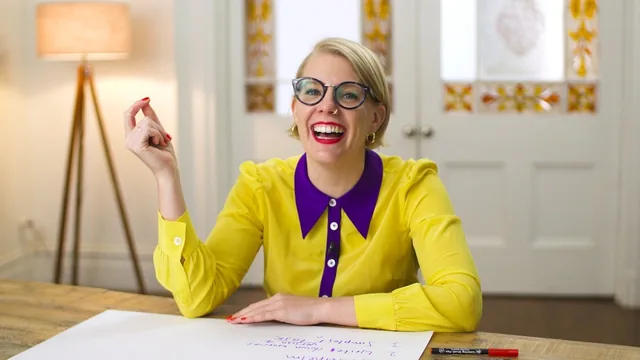
A candid 42-minute pep talk on self-sabotage from author Emma Gannon, built around five writable exercises rather than abstract theory.
Emma Gannon's class promises a framework for creative confidence and mostly delivers a tidy, personal essay on self-sabotage with homework attached. The course is built around four types of self-sabotage: perfectionism, procrastination, the inner critic, and fear of self-promotion, each covered in its own short lesson with one exercise apiece. There is no slide deck, no research citations on screen, no visual aids beyond Gannon talking to camera. The entire class rests on her voice, her own anecdotes, and the exercises she assigns.
What the exercises actually ask you to do
The strongest lesson is the one on perfectionism. Gannon's core move is to have you send unfinished work to three different people: someone in the industry, a friend outside it, and a peer working on something similar. She frames this as ripping off a plaster, and the specificity of choosing three distinct types of reader, rather than just "get feedback," is what makes the exercise land. She backs it with a real example from her own career, showing an agent a skeleton of a book proposal that grew into a working relationship over time.
The procrastination lesson leans on a similar logic of shrinking the task. Her example of tricking herself into writing "a short, bad book" to get a first draft moving is a genuinely useful reframe, and the instruction to tackle the most overwhelming sub-task first, then write down every fear attached to it, gives the lesson a concrete shape rather than just telling viewers to "just start."
The inner critic lesson is the most emotionally direct: write your harshest thoughts about your own work, read them aloud, and address them as if speaking to your younger self. It is a simple technique borrowed from broader self-compassion practice, not something original to this course, but the instruction to physically rip up the page afterward gives it a small ritual quality that some viewers will find genuinely cathartic.
Where the course thins out
The self-promotion lesson is weaker than the rest. Its main advice, to write captions in the tone you'd use with a close friend, is sound but thin, and it repeats points already made in the procrastination and perfectionism lessons about fear of judgment. The class also never engages with any research beyond Gannon mentioning she interviewed psychologists and behavioral scientists for her book; none of that expertise appears on screen in named or citable form, so viewers get her interpretation without the underlying evidence.
The course also assumes a fairly narrow definition of "creative": writing, blogging, podcasting, and side hustles dominate every example, so a painter, musician, or filmmaker will have to translate most of the advice themselves. At 42 minutes across eight short lessons, nothing overstays its welcome, but nothing goes especially deep either. This is a course for someone who needs a nudge and a few writable exercises to get unstuck this week, not a structured program for dismantling long-standing creative blocks.
The standout
The show-three-people exercise for perfectionism, which forces you to send genuinely unfinished work to an industry contact, a friend, and a peer before you're ready.
What you will learn
- How to run a 24-hour highs-and-lows audit to spot when self-sabotage shows up in your day
- A three-step method for lowering perfectionism, including sending unfinished work to three specific people (an industry contact, a friend, a peer)
- How to break an overwhelming task into its smallest first step, using the 'write a short bad book' trick to get moving
- A named-fears exercise for beating procrastination, including writing down and reading worries aloud to defuse them
- How to talk back to your inner critic by rewriting negative thoughts as if speaking to your younger self
- A practical tone-of-voice trick for self-promotion: write captions the way you'd tell a close friend at the pub
Best for: Creatives with a stalled project, half-finished draft, or side hustle who respond better to structured writing exercises than to motivational theory.
Skip it if: Anyone wanting citations, data, or a rigorous psychological framework, or anyone already deep into therapy-based work on self-worth and perfectionism.