
Travel Street Photography: Telling Visual Stories with Powerful Street Photos
Sean Dalton · Travel Photographer
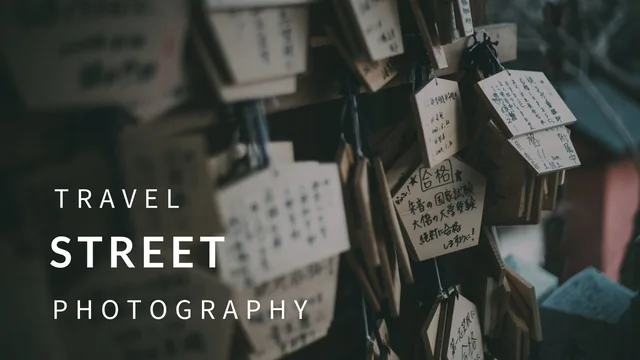
A genuinely useful field-craft lesson in shooting candid street portraits abroad, wrapped around a thin 64-minute runtime.
Sean Dalton's course opens with a clear premise: street photography is about capturing raw human emotion, whether or not a camera ever leaves the pavement of the photographer's own hometown. That framing runs through the whole course and gives it a coherent spine, even when the individual lessons feel thin.
The early theory sections cover ground familiar to anyone who has read a beginner composition guide: negative space, rule of thirds, high and low angles, leading lines. None of this is wrong, and Dalton explains each concept with a plain-language clarity that suits a true beginner, but there is little here a first photography book wouldn't already cover. The more distinctive material comes when he moves into street-specific vocabulary borrowed from Henri Cartier-Bresson, the decisive moment (waiting for a scene's elements to align before pressing the shutter) and juxtaposition (using contrast in subject matter, like poor children posed against a wealthy backdrop, to make a social point). These two ideas are the conceptual backbone of the course and are explained with enough specificity to actually change how someone frames a shot.
The shooting segments
The two location shoots, a market and a street in Hanoi, are where the course earns its keep. Dalton walks through his three-lens rotation (35mm, 55mm, 85mm) and explains what each focal length does to the relationship between photographer and subject: the 35mm forces proximity and works well shot from the hip for discretion, the 55mm creates useful working distance with a shallower look, and the 85mm allows shooting from far enough away to isolate details like food, hands, or a motorbike without ever needing a face. He also shares small, concrete social tactics: buying a piece of fruit from a vendor to build enough rapport to photograph her, or smiling before raising the camera. These moments carry more practical value than the earlier composition lecture because they show a specific decision being made in a specific place, rather than restating a rule.
Editing and its limits
The editing section is the longest and most hands-on part of the course, working through roughly a dozen photos in Lightroom using two commercial preset packs. Watching Dalton choose between color and black-and-white treatments, then explain why (removing a distracting pink or red so the viewer's eye lands on a subject's expression) is a legitimately useful lesson in editing for emotional clarity rather than technical accuracy. The catch is that the workflow leans entirely on his own paid preset packs, so a viewer without them is left applying general principles rather than following a repeatable process.
The course never gets into manual camera settings in any depth beyond aperture and shutter speed mentioned in passing, skips flash or artificial lighting entirely, and offers nothing on the legal or ethical complexity of candid photography beyond a brief note about needing permission when possible. For an hour-long beginner course, that scope is reasonable, but it means the "everything you need to know" framing in the marketing oversells what's delivered. Photographers who already understand basic composition and just want to see how a working travel photographer thinks through a real shoot will get real value here. Anyone hoping for a technical deep dive on manual exposure or studio-grade editing precision should look elsewhere.
The standout
The lens-progression demonstration, showing concretely how switching from 35mm to 55mm to 85mm changes both physical distance from a subject and the emotional character of a shot.
What you will learn
- How to use focal length progression (35mm, 55mm, 85mm) to change distance from subjects and depth of field
- Candid shooting techniques for staying unnoticed, including shooting from the hip and pretending to record video
- Core compositional tools: negative space, rule of thirds, high/low angles, and leading lines
- Street photography-specific concepts like the decisive moment and juxtaposition
- A full Lightroom editing workflow using preset packs, targeted adjustment brushes, and selective cropping
- How to build rapport with strangers (buying something, smiling) to get better candid access
Best for: Beginner to intermediate photographers who already own a camera and want a quick primer on candid street shooting and mood-driven editing.
Skip it if: Anyone wanting in-depth manual camera settings, off-camera lighting, or a rigorous business/portfolio-building angle on street photography.