
The Writer's Toolkit: 6 Steps to a Successful Writing Habit
Simon Van Booy · Author and Editor
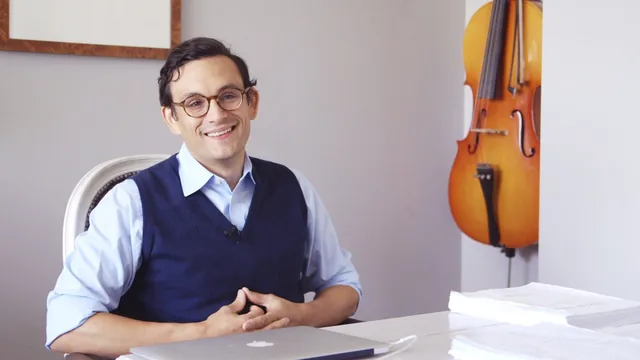
A working novelist's six-step ritual for building a real writing habit, told through his own apartment and notebooks, not a generic checklist.
A habit-building course, not a craft course
Simon Van Booy's class does exactly what its title promises and nothing more: it is about building the conditions for writing, not about how to write well once you're there. Anyone expecting lessons on structuring a scene, developing dialogue, or shaping a plot will find none of that here. The six steps are entirely about the scaffolding around the work: where you sit, what you write on, what you read, what you eat and drink, when you show up, and how you stay stocked with raw material between sessions. It is a short, personal, largely anecdotal class, and it succeeds within that narrow lane.
The structure is simple and easy to follow. After a short personal introduction explaining why Van Booy writes at all, he lays out the six steps up front, then devotes one lesson to each: designate an exclusive space, choose a medium and stick to it, read only work you love, set your personal working conditions, commit to a fixed routine, and keep a sketchbook to stay primed. Each lesson ends with a short "final note" that adds a wrinkle or exception, which keeps the pacing from feeling like a bare list.
What makes the class worth watching is how concrete Van Booy gets with his own habits. He shows the actual tablet he writes novels on, a Chinese ink brush set he uses for slower work, Nabokov's index-card method, his tea cosy knitted by prison-reform volunteers, and a notebook of pasted-in restaurant receipts and Polaroids. The sketching lesson is the strongest of the six: his suggestion to copy out passages from books you admire, or rewrite a paragraph from an author you dislike until it reads better, is a genuinely useful, low-stakes exercise for building voice. His idea of writing the imagined history of a random object, a rabbit named Tuesday, someone's discarded shoe, is a clever prompt generator that a beginner could use the same day.
The course is weaker where it gets vague or repetitive. The step on setting your writing conditions leans heavily on diet and vitamins in a way that reads more like personal lifestyle advice than teachable technique, and several steps circle back to the same idea (protect your space, protect your time) without adding new information. The claim that "what you read is what you'll write" is stated as near-fact rather than examined, and the closing meditation on faith and mortality, while sincere, runs long for a course this short and adds little practical value.
At 38 minutes across nine lessons, this sits closer to a motivational primer than a structured curriculum. There are no exercises, no workbook, no feedback loop, just Van Booy talking through his own process on camera. For someone who has never managed to sit down and write consistently, that may be exactly enough: a permission slip plus six concrete habits to try this week. For a writer already producing regularly, it offers little beyond a few reusable sketching prompts and the reassurance that the process is supposed to feel like chaos most of the time.
The standout
The sketching practice, copying out passages you love and inventing backstories for random objects like a thrift-store rabbit or a stray shoe, gives you literal raw material to type up instead of staring at a blank screen.
What you will learn
- How to designate a physical writing space psychologically distinct from everyday life, even inside a shared apartment
- How to pick and stick with a writing medium (tablet, brush pen, index cards) instead of second-guessing tools mid-project
- How to curate a reading diet of only inspiring work to feed your own sentences
- How to set personal environmental conditions (temperature, silence, food, drink) that consistently produce good writing sessions
- How to lock in a recurring writing time so the brain starts preparing for it in advance
- How to keep a sketchbook of copied passages, overheard lines, and object-inspired fragments so you never face a blank page cold
Best for: Aspiring writers who have the urge to write fiction or literary prose but keep stalling before they build any consistent practice.
Skip it if: Anyone wanting technical instruction on plot, character, dialogue, or genre craft, or a writer who already has a stable routine and needs craft-level feedback instead.