
The Watercolorist's Sketchbook: Creative Exercises to Inspire and Explore
Arleesha Yetzer · Watercolor Illustrator & YouTube Artist
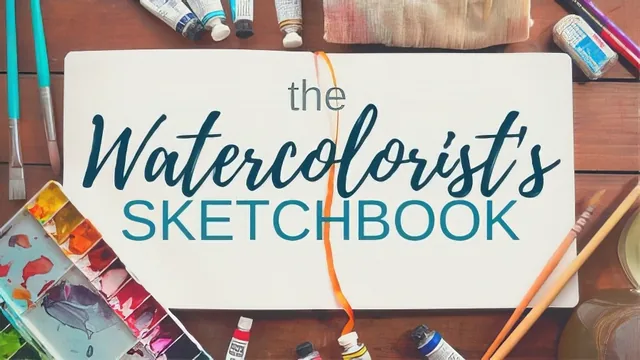
Five quick sketchbook exercises loosen up a stuck watercolorist in under 40 minutes, but nobody learns a new technique here.
The Watercolorist's Sketchbook is less a technique class than a mindset reset, and it is upfront about that trade. Arleesha Yetzer, a watercolor illustrator with a YouTube following near 50,000, spends 37 minutes walking through five small exercises meant to loosen up an artist who feels stuck, blocked, or unsure what to put on a blank page. There is no promise of a finished piece by the end, and the class delivers exactly what it promises: a set of low-stakes prompts rather than a tutorial on watercolor fundamentals.
The arc is sensible. It opens with a materials rundown that is almost aggressively minimal, two round brushes, a mixed palette, water, a rag, and a couple of pencils, before moving into Exercise 1, where simple spheres and cubes get sketched in pencil for value first, then repainted in watercolor for color. That pencil-to-paint pairing is the most instructive segment in the class because it isolates two separate decisions, light and shadow, then color, so a beginner can actually see how a shape reads differently in graphite versus pigment.
Exercise 2 is the highlight. Random, unplanned watercolor shapes get painted first and left to dry, then reinterpreted in pencil into faces, ears, plants, or creatures based on whatever the blob suggests. It's a familiar cloud-gazing trick applied to painting, but it works, and it produces genuinely surprising results because the artist commits to not overthinking the shape before drawing on top of it.
Where the exercises thin out
Exercise 3, taping off small grid squares and dropping in just two colors to study how they mix, is a reasonable color-study habit, but it gets less screen time than its usefulness deserves, and there is no real discussion of specific pigment behavior, granulation, or how particular pigment pairs interact. Exercise 4 asks the viewer to paint a mood or theme like nostalgia, which is a fine creative prompt but offers little concrete instruction beyond "notice how color and shape make you feel," a directive that experienced painters will already know and beginners may find too abstract to act on.
The closing study, an ear painted from a personal reference photo, does tie the earlier lessons together by revisiting the value-sketch-then-paint sequence and introducing the idea of relative color, choosing each new hue based on the color next to it rather than trying to match a photo exactly. It is a useful concept, briefly stated, and not elaborated on with much technical depth.
Who it actually serves
This class does not teach brush control, wet-on-wet versus wet-on-dry technique, paint-to-water ratios, or how to choose or care for materials, and the "all levels" label undersells how much prior comfort with watercolor is assumed. Someone who has never picked up a brush will be able to follow along but won't learn how to actually control the medium. Where it succeeds is as a short, repeatable warm-up ritual, something a working illustrator or hobbyist can return to on days when the sketchbook feels intimidating. Judged as a technical class it comes up thin. Judged as a creativity reset, which is what it is actually trying to be, it holds together and does its job in well under an hour.
The standout
The random-shapes exercise, where dried, loosely painted blobs get reinterpreted in pencil into faces and creatures, is the single most transferable warm-up idea in the class.
What you will learn
- How to warm up with simple pencil-then-paint studies of spheres and cubes to practice value before color
- A random-shapes game that turns loose watercolor blobs into faces, creatures, and small scenes using pencil over dried paint
- A two-color exploration method using taped-off grids to study how pigments mix and flow together
- How to build a mood or atmosphere page around a single theme using color and shape choices
- A combined study exercise that pairs a value sketch with a relative-color painting of a real subject
Best for: Watercolorists who already own basic supplies and want low-pressure warm-up routines to break through a sketchbook rut or art block.
Skip it if: Complete beginners wanting brush handling, paint mixing ratios, or paper/materials guidance, or anyone hoping for a finished, polished painting to follow along with.