
The Freelancing Guide: How to Organize Your Work and Life
Faye Brown · Faye Brown Designs
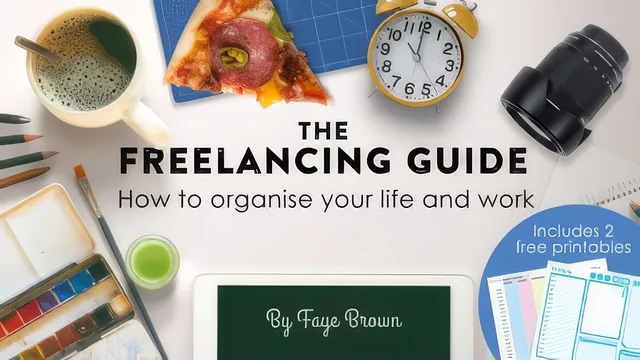
Seven short lessons on scheduling, boundaries, and burnout for freelancers, built almost entirely on the teacher's own anecdotes.
A planner, not a playbook
Faye Brown's "The Freelancing Guide: How to Organize Your Work and Life" is a 34-minute, seven-lesson course built around one central artifact: a weekly diary page and daily planner that the viewer fills in alongside the lessons. The structure is straightforward. Scheduling comes first and takes up roughly half the runtime, followed by shorter lessons on favors for friends, networking, downtime, family commitments, and a closing lesson that tries to tie everything together under the label "work-life integration."
The scheduling lesson is the strongest part of the course, and it earns that position by being genuinely procedural rather than motivational. Brown walks through a four-step exercise: identify your most productive hours by tracking a week of work sessions, list fixed weekly commitments like school runs, list flexible-but-necessary tasks like housework or dog walks, and log time spent on email and social media. Only after that does she introduce the planner itself, blocking out unavailable time first and fitting work around it rather than the reverse. She also name-checks the Pomodoro technique and Trello as lightweight tools worth trying, though neither gets more than a passing mention.
Past that first lesson, the course shifts from method to memoir. The favors-for-friends lesson is really a set of scripts, phrases like offering a "friends discount" instead of free work, useful for anyone who has struggled to say no to unpaid requests. But it doesn't extend into contracts, invoicing, or any structural fix, just conversational tactics. The networking lesson stays at the level of suggestions to visit galleries or start a local meetup, without addressing how to actually convert those contacts into paid work. The downtime lesson leans heavily on Brown's own story of launching her first Skillshare class during maternity leave, which is illustrative but not a technique the viewer can directly copy.
The family-commitments lesson is the most honest moment in the course. Brown describes taking on a tight-deadline job, having her daughter fall ill mid-project, and working late nights to deliver anyway. It's a real account of the freelance failure mode most courses gloss over, and her takeaway, always pad deadlines and build a support network in advance, is sound advice even if it isn't new.
The closing lesson is where the course thins out. It reaches for Richard Branson quotes and a Forbes definition of "work-life integration" rather than a concrete framework, and the final recap boils down to three points already covered earlier: schedule and list, be honest with clients about availability, and protect time for something you enjoy.
Nothing here is wrong, but very little of it is unique to freelancing as opposed to time management in general, and the course assumes a fairly specific life situation, a parent working from home with school-age children, that won't map cleanly onto every freelancer's circumstances. Viewers wanting business strategy, pricing, or client acquisition should look elsewhere entirely, since this class only glances at those topics in passing references to a companion finance-focused class. As a low-stakes primer on building a personal weekly rhythm, though, it does what it sets out to do in well under an hour.
The standout
The four-step scheduling exercise, listing fixed commitments, flexible commitments, productive hours, and time spent on email or social media before ever opening a planner, turns a vague goal like 'balance' into a concrete weekly grid.
What you will learn
- How to map fixed versus flexible weekly commitments onto a diary page and daily planner
- How to identify your personal peak-productivity hours through a week of self-tracking
- Scripts for turning down unpaid favors for friends without burning the relationship
- Ways to build networking and creative input into a home-based freelance routine
- How to treat quiet periods as time for skill-building or side projects instead of dead time
- How to set client-facing boundaries around family or other job commitments
Best for: New or early-stage freelancers working from home who feel scattered and want a simple, low-tech way to structure their week around family or a second job.
Skip it if: Freelancers with several years of experience or anyone wanting data-backed productivity systems, software workflows, or business-growth tactics rather than lifestyle anecdotes.