
The Complete DJ Course for Beginners: A Full Step-by-Step Guide To DJing
Jak Bradley · Professional International DJ
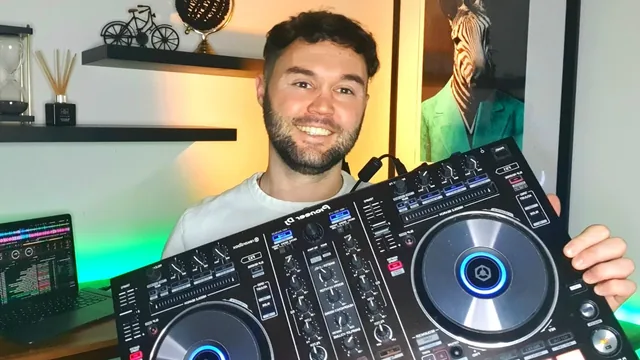
A free-music-included, mix-along beginner course that teaches phrase counting and beat matching in real, replayable detail rather than vague theory.
A course built around one repeatable habit
The Complete DJ Course for Beginners is organized less like a lecture series and more like a practice regimen. It opens with software setup for both Rekordbox and Serato, side by side, so a learner is never stuck configuring playlists or beat grids before getting to the actual skill. From there it moves through music theory specific to DJing: beats, bars, phrases, and the different sections of a dance track, before finally introducing beat matching and mixing.
The backbone of the entire course is a single idea introduced early and reused constantly: the "rule of 32," the observation that modern dance tracks change in blocks of 32 beats, and that significant sounds (basslines, vocals, melodies) tend to enter or drop out at the start of those blocks. Once a student can count phrases from a chorus drop, timing a mix stops being guesswork. The course demonstrates this directly by playing the same two tracks mixed badly (pressing play on the chorus drop, or on flat outro beats) and then mixed well (timed to the phrase), so the difference is audible rather than asserted.
From basic timing to genre-specific problem solving
The mixing sections escalate sensibly. Basic mixes rely on nothing more than counting phrases and using the crossfader. Intermediate mixes add EQ and filter work, including a specific "bass swap" technique for avoiding low-end clashes when two basslines would otherwise collide. Advanced mixes bring in hot cues, loops, and effects, including a genuinely useful buildup technique that loops an acapella and progressively halves the loop length (32 beats down to an eighth of a beat) to manufacture the kind of drumroll anticipation found in produced tracks.
Later lessons address a real-world problem many beginner courses skip: tracks that are not "DJ-friendly," meaning they lack a clean intro or outro. The course covers using an outro as a substitute intro via hot cue jumps, and introduces drop mixing (simply stopping one track and starting the next at a strong moment) as a deliberately unglamorous but practical fallback, particularly useful across hip-hop and R&B tracks with mismatched BPMs. Ending on a live-style demonstration that strings six tracks together from 70 to 130 BPM ties the individual techniques back into something resembling a real set.
Where it earns its beginner label, and where it stays there
The inclusion of over 20 downloadable tracks matched to more than 30 guided mix tutorials is the course's strongest structural decision. Students are not asked to imagine how a technique sounds; they can load the same files and reproduce the exact mix. That closes the gap between watching and doing far better than most beginner tutorials manage.
The tradeoff is scope. Everything here concerns mixing mechanics: timing, EQ, loops, effects. There is no discussion of building a career, reading a crowd, curating a set for a specific venue, or producing original transitions and edits. The teaching style also leans heavily on repetition, walking through the same phrase-counting logic across dozens of track pairs, which reinforces the habit but can feel padded once the underlying principle is clear. For a true beginner who wants to go from zero to competently timed mixes, that repetition is the point. For anyone past the basics, it will feel like more of the same lesson restated with different songs.
The standout
The 'rule of 32' lesson, which teaches beginners to count phrase blocks from the drop rather than guessing when to bring in the next track, directly fixes the two most common timing mistakes new DJs make.
What you will learn
- How to structure a DJ set by identifying beats, bars, and 32-beat phrases in a track
- Beat matching and syncing two tracks using tempo faders, jog wheels, and the sync button in Rekordbox and Serato
- Setting and reading beat grids so tracks lock together correctly
- Timing a mix using the 'rule of 32' to avoid clashing choruses or flat, energy-less transitions
- Using EQs, filters, and bass swaps to blend tracks smoothly without frequency clashes
- Using hot cues, loops, and effects like echo to build advanced transitions and handle tracks without clean intros or outros
Best for: A complete beginner with a DJ controller and either Rekordbox or Serato who wants a structured, practice-along path from zero to basic and intermediate mixing.
Skip it if: Anyone who already understands beat matching and phrasing and wants advanced creative techniques, unusual genres, or business and gigging advice.