
The Art of Visual Storytelling: How Comics Work | Learn with Smithsonian
Phil Jimenez & The Smithsonian Team
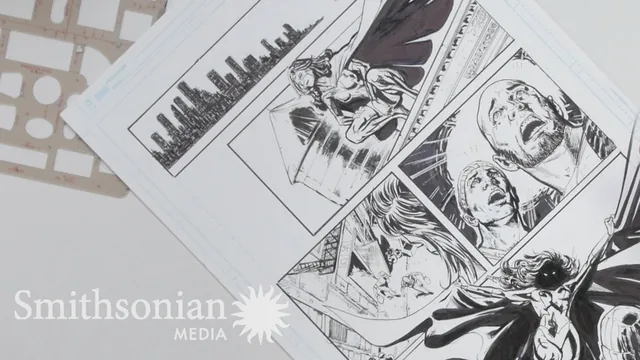
A 25-year DC and Marvel artist condenses a full comic-page workflow into 30 minutes, but the class is too short to build real drawing skill.
Phil Jimenez, a veteran artist on titles like Wonder Woman and the X-Men, uses this short class to answer a narrower question than the title suggests: not "how to draw comics" but "how to think like a comics storyteller before you draw a single line." The seven lessons move from a short introduction through a script breakdown, a segment on reference gathering, a drawing demonstration, a tactics roundup, and a second pass at the same script with an alternate, non-superhero premise.
The spine of the course is a one-page five-panel script that Jimenez provides and then dissects panel by panel. He treats a plain plot description (an establishing shot of a city, a hero on a rooftop, criminals in an alley, their shocked reaction, the hero's leap) as a set of decisions the artist has to make: what kind of city, what kind of hero, how hardened the criminals look, what emotion the panel needs to land. This is the strongest material in the class, because it demonstrates a transferable process rather than a one-off example. He repeats the exercise later with a domestic version of the same script, a mother catching her kids raiding the fridge, to show that the panel logic (establishing shot, protagonist, complication, reaction, climax) holds regardless of genre.
Craft content versus reassurance
The reference section covers real ground: distinguishing inspirational reference from specific reference, using the Smithsonian's 3D object archive for accurate detail, and even pulling costume and lighting cues from black-and-white films. The drawing segment touches gesture drawing, invisible diagonals for camera movement, and line weight as a stylistic choice between a bold cartoony look and a more rendered, cross-hatched one.
But a meaningful share of the runtime goes to encouragement. Jimenez repeats, in slightly different phrasing, that anyone can tell a story regardless of drawing ability, and that reference use is not cheating. That message has value for a nervous first-timer, but it displaces time that could have gone to more worked examples or a second full demonstration.
What's missing
At 30 minutes, the class cannot do more than sketch its own outline. There is no instruction on basic figure construction, perspective, or anatomy, so anyone hoping to leave with improved drawing mechanics will be disappointed. The pacing tips (vary panel size, use rhythm, draw connecting arrows between characters) are stated once and never drilled. The class also leans on a single script throughout, so students see one problem solved twice rather than several different narrative problems solved once each.
What it delivers well is a mental checklist: break the script down, gather reference, decide camera angle and panel size, exaggerate expression, vary rhythm. That checklist is genuinely useful for comic artists, but also for anyone building a slide deck, a storyboard, or a visual pitch, since the underlying logic (sequence, emphasis, and reader attention) applies well beyond superhero pages. Treat this as an orientation to how visual sequences are built, not a drawing course, and it delivers exactly what it promises in the time it takes.
The standout
The panel-by-panel script breakdown, where a single page of plot text is dissected into specific visual decisions about camera position, environment, and character expression.
What you will learn
- How to break down a script into panels by identifying key story beats before drawing anything
- How to use reference images (including the Smithsonian X 3D archive and old films) without simply copying them
- How to plan page layout, panel size, and panel shape to control pacing and emphasis
- How to convey action and emotion through posture, facial expression, and exaggerated features rather than violence
- How to use camera angle (low angle for power, over-the-shoulder for POV) to shape a reader's perception of a character
- How to adapt one script into either a superhero story or an everyday domestic scene using the same structural principles
Best for: Total beginners, writers, and presenters who want a fast grounding in visual narrative logic without needing any drawing skill.
Skip it if: Anyone seeking hands-on figure drawing instruction, anatomy guidance, or inking and coloring technique.