
The Art of Ceramics: Creating a Modern Mug
Helen Levi · Potter
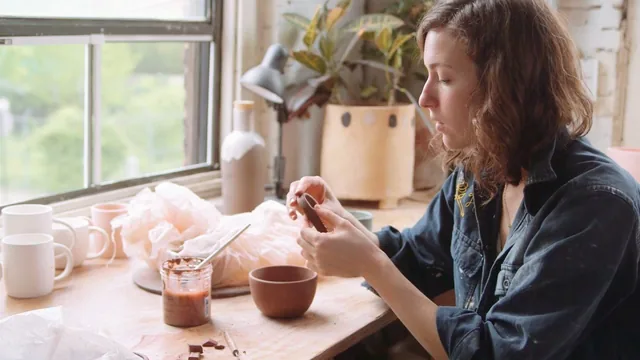
This 36-minute class shows a professional potter's full mug-making arc, but it teaches by demonstration, not hands-on instruction, so solo beginners will struggle to replicate it.
What the class actually covers
Helen Levi's class walks through the complete lifecycle of a single mug, from a lump of dark brown stoneware to a glazed, fired object. The eight working lessons follow the object's own timeline: preparing the clay, throwing it on the wheel, trimming it once leather-hard, pulling and shaping a handle, attaching that handle, and finally glazing and firing. A bonus lesson on bisque firing closes things out with logistics like kiln temperatures and drying times. Because the class is only about 35 minutes long, each stage gets just a few minutes, which means the course reads more like a guided studio tour than a step-by-step tutorial.
Levi's strongest material comes in the handle lessons. She explains the pull method for shaping a coil into a rectangular cross-section, why she lets it firm up before attaching it, and how scoring and slipping the joint prevents cracks as the piece shrinks during drying. She's specific about timing here, noting that a small handle can dry faster than the body it's attached to, which is exactly the kind of failure point a beginner would not anticipate on their own.
The glazing lesson is similarly concrete. Levi dips the piece, then uses a damp sponge rather than wax resist to clean up the line where glaze meets bare clay, explaining the tradeoff between the sharper edges wax gives you and the softer, more organic edge a sponge produces. It's a real technique choice presented with a real reason behind it, not a vague aside.
Where it falls short
The throwing lesson is the weakest link, which is unfortunate since centering and pulling walls are the hardest skills for a beginner to acquire. Levi moves through centering, opening, and pulling in under five minutes, using professional equipment and years of muscle memory that make the process look faster and smoother than it will feel to someone at a wheel for the first time. She names techniques like coning and compressing the bottom, but doesn't linger long enough on any of them for a first-timer to internalize the hand positions.
The class also never addresses the fact that most viewers won't have a kiln, a professional wheel, or a dedicated glaze setup at home. Levi acknowledges this directly, pointing viewers toward community studios, but the course itself doesn't adapt its content for that reality. It shows what professional practice looks like rather than what a beginner's first attempt should look like.
Who should take it
This class works best as an orientation, not an instruction manual. Someone already enrolled in a studio membership or a beginner wheel-throwing course would benefit from watching Levi's full arc first, since it clarifies how the individual skills they're learning piecewise fit together into one finished object. It also succeeds as an accessible explainer for anyone curious about the ceramics process without any intention of trying it themselves, given how clearly Levi narrates her reasoning at each stage.
Anyone hoping this class alone will teach them to throw a mug at home is likely to be disappointed. The pacing assumes a level of comfort with clay and the wheel that beginners simply won't have after 35 minutes, and the lack of at-home equipment guidance leaves a real gap for the DIY audience the course's own description claims to serve.
The standout
The segment on scoring and slipping the handle joint, and waiting for the right leather-hard firmness before attaching it, is the single most practically useful piece of troubleshooting in the class.
What you will learn
- How to wedge and center a small ball of stoneware clay on a wheel
- How to open, pull, and shape the walls of a thrown mug form
- How to trim a leather-hard piece on a foam bat without altering its profile
- How to pull, curve, and dry a coil into a handle using the pull method
- How to score, slip, and attach a handle so it survives drying and firing
- How to dip-glaze a piece and clean sharp lines with a sponge instead of wax resist
Best for: Someone who already has access to a pottery studio or wheel and wants a clear mental map of the mug-making sequence before or alongside hands-on instruction.
Skip it if: Anyone hoping to learn wheel-throwing mechanics from scratch at home with no prior studio access or teacher, since the pace assumes comfort with the equipment already.