
Style Your Space: Creative Tips and Techniques for Interior Design
Emily Henderson · Stylist, Author, Host
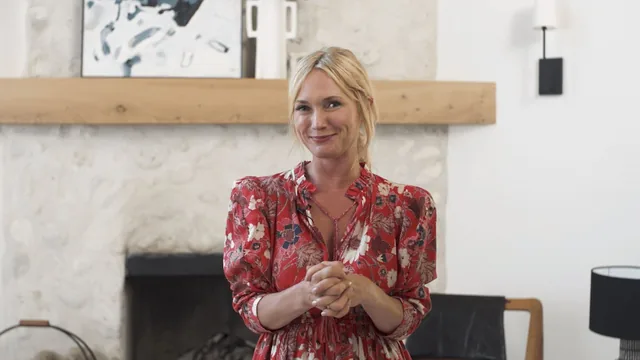
Emily Henderson turns a vague feeling of 'my house doesn't look like me' into a 12-style quiz and a repeatable process for beginners.
Emily Henderson opens by drawing a clean line between styling and interior design: designers start with function, stylists start with feeling. That distinction sets up everything that follows, and it is a useful one for a beginner audience that has probably been mixing the two ideas without realizing it. The class is filmed inside Henderson's own mountain cabin, which she treats less as a backdrop than as evidence, pointing to real pieces in the room as she explains each concept.
The style quiz and the vocabulary it builds
The centerpiece of the early lessons is a visual quiz: four options appear, from lamps to sofas to accessories, and the viewer picks by instinct rather than function or color. The scoring maps to twelve named styles, from contemporary and industrial through to zen, modern glam and eighties. This is the course's smartest structural choice. It gives someone with no design vocabulary a concrete word to search with, rather than a vague sense of what they like. Henderson is upfront that the quiz is not scientific, and she spends a full lesson describing each style in plain language so a viewer who scores ambiguously can self-correct.
Where the course adds real value is in the rules that follow the quiz. The color palette lesson lands on a specific, usable number: three to five colors, pulled from both sides of the color wheel so a cool palette does not read as cold. The mixing lesson offers a similarly concrete technique, pairing streamlined furniture with decorative accessories rather than the reverse, because an ornate sofa is harder to calm down than a plain one is to dress up. The trends lesson is the most practical of the three, built around a "test before you invest" rule: bring a trend in through a side table or a vase before committing a whole room to it, and favor the vintage original of a trend over its cheap knockoff.
The live demo
The back half of the class shifts from theory to practice, as Henderson styles her own living room mantle, coffee table and side table in real time. She talks through options out loud, eliminating a brass lamp because it clashes tonally with a wood side table, choosing a black vessel over a taller one because of how it catches the eye, and grouping accessories in threes because groups of odd numbers read as intentional. This section works because it shows reasoning rather than just a finished result, and it is the closest the course comes to teaching a transferable skill instead of a rule to memorize.
The course's limits are mostly limits of scope. It never touches furniture layout, room proportions, lighting plans or budgeting, and viewers hoping for anything resembling a design curriculum will find sixty minutes is not nearly enough runway. The sourcing lesson leans heavily on Henderson's own resources, Craigslist and flea markets, with tips on judging vintage furniture that are genuinely useful (shape can't be changed, finish can) but narrow in scope. As an entry point for someone who owns a pile of things and doesn't know where to put them, though, it does exactly what it promises.
The standout
The live styling walkthrough, where Henderson narrates why she eliminates specific lamps, trays and vases one by one until only the pieces that fit the room's story remain.
What you will learn
- How to take a visual quiz that sorts personal taste into one of 12 named styles (contemporary, industrial, traditional, seventies, bohemian, Scandinavian, mid-century, zen, rustic, modern glam, eighties, minimalism)
- How to build and hold a 3-to-5 color palette that pulls from both warm and cool sides of the color wheel
- A rule for mixing multiple styles in one room without it looking chaotic (streamlined base pieces, decorative layers on top)
- How to test-drive a design trend on a small scale before committing a whole room to it
- Where to spend money (conversation pieces) versus where to save (swappable textiles), plus how to shop vintage without overpaying
- A room-styling elimination process demonstrated live on a mantle, coffee table and side table
Best for: First-time decorators who feel stuck or overwhelmed by their own belongings and want a simple vocabulary and process to start arranging a room with confidence.
Skip it if: Anyone wanting technical interior-design skills like space planning, furniture layout, lighting design or budgeting for a full renovation.