
Street & Documentary Photography: The Ongoing Moment
Andre D. Wagner · Photographer
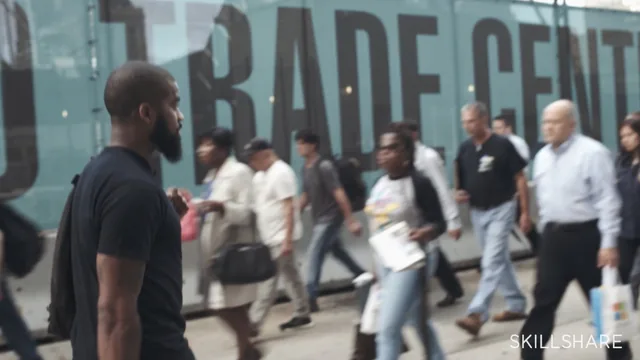
A raw 31-minute walk with a working street photographer, thin on technical instruction but rich on mindset and confidence-building.
Andre D. Wagner's class is less a tutorial than a ride-along. Across six short lessons totaling half an hour, he narrates his own process while walking New York's financial district with a Leica M6 loaded with Tri-X film, and the value sits almost entirely in that narration rather than in any structured lesson plan.
What the course actually covers
The project brief is simple: shoot for a full day, come home with four images strong enough to stand alone, then sequence them into a small visual story. Wagner demonstrates his own version of that process by printing cheap 4x6 photos from his summer's shooting and taping them into a subway-themed dummy book, moving pages around to test sequencing and pacing before committing to a final edit. This physical-review habit, printing and living with images rather than judging them on a screen the same day they're shot, is the most transferable idea in the class, and it appears without much elaboration on how to scale it to a beginner's smaller shoot count.
The camera-handling lesson is where the class gets concrete. Wagner shows how he zone-focuses his rangefinder by feel, checking the lens tab position against an estimated distance, a skill he says he built by practicing on a stationary object like a sidewalk tree during ordinary commutes. He also carries a handheld light meter to set exposure quickly rather than relying on the camera's internal metering, a detail that matters for anyone shooting film in changing outdoor light. Neither of these gets a step-by-step breakdown of settings or numbers a beginner could copy directly. They're shown in action, at walking pace, and the viewer is expected to infer the mechanics.
Where it succeeds and where it thins out
The class earns its keep on mindset. Wagner is candid about the anxiety of photographing strangers, describing his own turning point of deciding to just shoot whatever interests him and deal with any confrontation only if it happens, since most interactions last a few minutes at most. He also flags a specific bad habit worth naming: tunnel vision, where a photographer locks onto one subject and stops scanning the wider scene, missing better compositions at the edges of the frame. That's a genuinely useful diagnostic for anyone who already shoots street photography and wants to self-critique.
Where it thins is coverage. There is no discussion of legal considerations around photographing people in public, no walk-through of editing software beyond a passing mention of basic contrast and exposure tweaks in a scan, and no attention to safety judgment beyond "deal with it if it happens." The Getting Familiar with Your Camera lesson, despite its title, assumes the viewer already understands aperture, ISO, and rangefinder mechanics rather than teaching them.
This is a mood-and-method piece, best watched as a short shadowing session with a working photographer rather than a skills course. Someone who already owns a camera and wants permission and perspective to shoot more boldly will get real value in half an hour. Someone looking to learn photography from the ground up will finish with atmosphere but no framework.
The standout
Practicing zone-focus by guessing distance on a sidewalk tree and checking the lens tab, until distance-guessing becomes reflexive enough to shoot without looking down.
What you will learn
- How to structure a four-photograph street project into a cohesive visual story
- A physical review method: printing 4x6s and taping them into a working dummy book
- Zone-focusing a rangefinder lens by feel instead of stopping to autofocus
- How to move through a crowd without announcing yourself as a photographer
- Using foreground and background subjects to interact within a single frame
- Why reviewing images the same day you shoot them undermines honest editing
Best for: Photographers with working camera skills who want to see how a professional street shooter thinks, moves, and edits in the field.
Skip it if: Beginners needing camera fundamentals, exposure basics, or step-by-step technical instruction on gear settings.