
Storytelling in the Edit: 5 Essential Principles
Dandan Liu · Filmmaker | Contemplative Creative
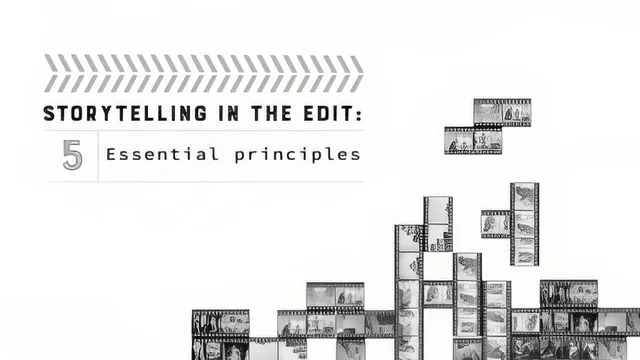
Thirteen minutes, five sharp editing principles, and a mandatory re-edit of your own footage to test them immediately.
A five-point checklist, not a masterclass
"Storytelling in the Edit" is exactly as long as its five principles need to be and not a minute longer. Dandan Liu structures the course as a straight list: show don't tell, let visuals breathe, build continuity with sound, build continuity with close-ups, and treat transitions as storytelling opportunities, with two bonus notes on ruthless trimming and invisible editing tacked on at the end. Each lesson follows the same shape: state the principle, show a quick before-and-after clip from Liu's own documentary footage, then hand out a one-line assignment to apply it to the learner's own project. There is no filler between lessons and no lecture that overstays its point.
The clearest lesson is the first one, where a subject's monologue about land and conflict gets trimmed down so the surviving footage speaks for itself. It is a concrete, visible edit rather than an abstract rule, and it sets the tone for what the rest of the course is trying to do: get learners to trust their images over their dialogue tracks.
The sound and close-up lessons are the most technically specific of the five. The J-cut explanation, where a scene's incoming audio is dragged earlier so it plays under the tail of the previous shot, is a genuine, nameable editing move that a beginner can go try immediately. The close-up lesson is thinner by comparison: it identifies a real beginner mistake, shooting only wide and mid coverage with nothing to cut away to, but its fix is really a production note more than an editing technique, since a missing close-up can't be conjured in the timeline after the shoot.
The transitions lesson is the weakest of the five. It gestures at using contrast, a loud scene cutting to a quiet one, and cites a Stranger Things example, but never walks through how to actually build a transition beyond that one idea. It names an ambition rather than teaching a method.
What the course is and isn't
This is a companion to a longer, software-focused Premiere Pro course, and it plays that role honestly: there's no tool instruction here, no timeline mechanics, no export settings. It assumes a learner already has a rough cut sitting somewhere and simply wants a second, sharper pass over it. That framing is the course's biggest strength and its main limitation at once. Learners who already have a project to revise will get real, applicable notes. Learners hoping for a general introduction to editing, or for step-by-step software guidance, will find nothing here to hold onto.
The bonus lessons, mute your sequence and check whether every shot still earns its place, and get outside eyes to find any cut that calls attention to itself, are simple but useful revision habits, closer to editing discipline than technique. They round out the course well even though neither one is developed much beyond a sentence.
For its length, the course delivers what it promises: five real principles, each with one clear demonstration and an assignment that forces the learner to apply it rather than just watch. It won't teach editing from scratch, and a couple of its five points are noticeably thinner than the others, but as a short critical pass to run over an existing cut, it does its narrow job.
The standout
The J-cut demonstration, where audio from the next scene is laid under the previous shot to bridge two locations seamlessly, is the one technique with a visible before-and-after payoff.
What you will learn
- How to cut dialogue and let a visual carry the same meaning on its own
- How to judge when a shot needs more time to breathe instead of a quick cut
- How to build a J-cut by underlaying next-scene audio beneath the current shot
- How to use close-ups deliberately for continuity and emotional detail
- How to design a transition as a storytelling beat instead of a default dissolve
- How to strip a sequence down to only the shots that serve the story
Best for: Editors who have already assembled a rough cut of a short film and want a fast, targeted pass to make it feel more intentional.
Skip it if: Anyone who hasn't shot or edited footage yet, or who wants software instruction, since there is no editing-software walkthrough here at all.