
Storytelling Basics: How Creatives and Brands Can Build a Following | Learn with Kickstarter
Stephanie Pereira · Director of Community Education, Kickstarter
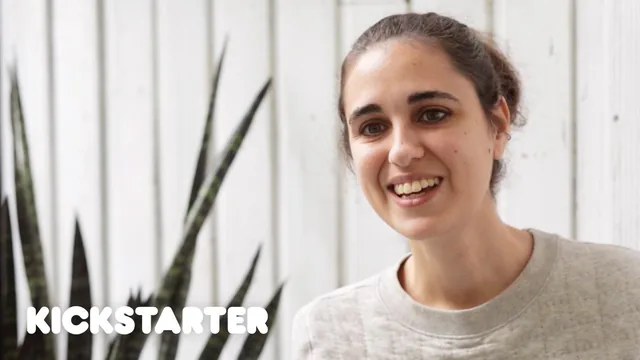
A tight 35-minute framework for turning a creative idea into an audience-building story, drawn from Kickstarter's own launch data.
This class is built around a single premise: most creative launches fail not because the idea is weak but because nobody spent time finding the people who would care before asking them to care. Stephanie Pereira, Kickstarter's Director of Community Education, spends the entire 35 minutes unpacking that premise into a sequence a creator can actually follow, using real funded projects as recurring case studies rather than abstract advice.
The Framework
The course moves through a clear chain: define your goal, identify your audience, find your story, build relationships, then turn all of it into a communication plan. What keeps this from feeling like generic marketing advice is the repeated use of three specific Kickstarter projects, a photography book called By the Olive Trees, a Sigmund Freud handwriting typeface, and a Chicago food magazine called Middlewest, walked through at every stage of the framework. Watching how the same three projects get a different audience, a different story angle, and a different channel mix at each step does more to teach the logic than any bullet list could.
The strongest single stretch is the audience-and-story matching exercise, where Pereira shows that a single project can have three or four plausible audiences, and that the choice of audience should drive which story gets told. The Freud typeface example is particularly effective here: it could be pitched to design nerds, to Vienna enthusiasts, or to the creator's own existing following, and the course makes the case that these are genuinely different pitches requiring different assets, not just different headlines on the same pitch.
Where It Delivers, and Where It Thins Out
The relationship-building lesson is the most practical stretch, with concrete tactics like joining the Facebook groups and forums an audience already uses, testing which content format they respond to before a launch, and building an insider email list months in advance rather than the week of. The email cadence example, walked through with real dated messages, is a rare moment of showing an actual sequence rather than describing one in the abstract.
The back half, covering communications planning, press outreach, and launch day, is more schematic. The who-what-where-when worksheet is a genuinely useful planning tool, and the 70-30 rule for content versus ask is a memorable, specific number. But press outreach gets only a few minutes and stays at the level of "send a release the day you launch," with no guidance on what makes a pitch land or how to actually get a journalist's attention beyond having a prior relationship.
This is a strategy class, not a tactics class. It never touches copywriting, video production, ad spend, or platform mechanics, and anyone expecting concrete templates to fill in and use immediately will find only a worksheet structure, not finished examples to adapt. For a beginner who has an idea and no plan for who should hear about it, though, the arc from goal to audience to story to plan is coherent, well-illustrated, and short enough to finish in one sitting.
The standout
The recurring worksheet exercise of mapping goal, audience, story, and channel side by side against real Kickstarter projects like By the Olive Trees and the Sigmund Freud typeface, which turns an abstract strategy into a repeatable template.
What you will learn
- How to define concrete project goals beyond just fundraising, using contrasting real Kickstarter examples
- How to map multiple possible audiences for one project and identify which one matches the goal
- How to choose a single story thread from several competing narrative options
- How to build relationships with an audience before a launch, including channel testing and email cadence
- How to assemble a communication plan across social, email, and press using a who/what/where/when worksheet
- How to sequence a launch-day and pre-launch timeline, including the 70-30 content-to-ask ratio
Best for: Someone with an actual creative project in mind, likely heading toward a crowdfunding launch, who needs a structured way to find and reach an audience before asking for money.
Skip it if: Anyone wanting hands-on execution help such as ad copywriting, email design, or platform-specific growth tactics, since the course stays at the planning and framework level throughout.