
Start with a Shape - An Illustration Challenge
Amarilys Henderson · Watercolor Illustrator, Design Thinker
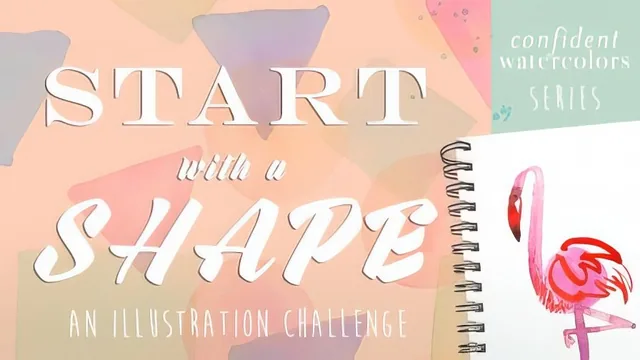
A quick, honest 17-minute nudge to break through blank-page fear by turning a single doodled shape into a finished piece.
A creative constraint, not a technique class
Start with a Shape is built around a single, transferable idea: paint a loose watercolor shape first, decide what to do with it second. Amarilys Henderson frames this as a response to her own struggle keeping a sketchbook, and the class spends its short runtime unpacking why that reversal works before showing how to execute it. The shape functions as a constraint. It narrows infinite creative possibility down to something workable, which the course argues is what actually gets people painting instead of staring at blank paper.
The demonstration itself is simple by design. Henderson uses a wet-on-wet method, laying down water before pigment so colors blend on their own, which keeps the initial shape visually interesting without any drawing skill required. From there she works with a thin liner brush to sketch details directly onto the dried or damp shape, skipping pencil underdrawing entirely. This is the entire technical core of the class, and it is taught in a couple of minutes.
The four-way framework is the real payoff
The most substantial teaching moment comes when Henderson breaks down four ways a shape can become a finished piece: the shape can be the subject itself (a circle becomes a ball), part of the subject (a circle becomes a flower center), a color block to paint over entirely (a triangle disappears into a butterfly), or a small incidental detail within a larger scene (a red triangle becomes a tiny distant hat). Each is illustrated with a quick example, and the fourth in particular, where the original shape shrinks to a minor accent, pushes the exercise past "doodle and elaborate" into something closer to genuine compositional thinking. This section alone gives the class more substance than its runtime suggests, and it is the part worth returning to.
Supporting material rounds out the class: a rundown of Henderson's travel kit (spiral-bound 140lb paper, a compact travel palette, a Sakura Koi water brush), and habit-building advice like using a timer, prepping the next blank page in advance, and keeping supplies within reach for stolen five-minute sessions. None of this is novel, but it is specific and immediately actionable.
Where it comes up short
At 17 minutes across nine short lessons, the class is closer to a creative pep talk with one demonstrated method than a full lesson in painting technique. It assumes the viewer already knows how to hold a brush, mix a wash, and manage water-to-pigment ratios. There is no guided step-by-step painting from start to finish, no discussion of color theory beyond a passing note on light versus saturated palettes, and no critique or troubleshooting of common mistakes. Viewers hoping to build actual watercolor skill will find little here.
What it delivers instead is a mental framework and a habit-formation nudge, both of which are genuinely useful for anyone who owns watercolor supplies but rarely opens them. As a companion piece within a broader Confident Watercolors series, that narrower scope makes sense. As a standalone class for someone wanting to learn watercolor, it does not.
The standout
The four-way framework for turning any shape into finished subject matter (subject, element, color block, or small hidden detail) gives a genuinely reusable creative decision tool beyond this one exercise.
What you will learn
- How to start a painting from a wet-on-wet shape (water first, then color) instead of a blank page
- Four distinct strategies for developing a shape into subject matter: shape-as-subject, shape-as-element, shape-as-color-block, and shape-as-small-detail
- Practical habits for sustaining a daily sketch practice, including timed sessions and carrying supplies everywhere
- A specific travel supply kit: spiral-bound 140lb watercolor paper, a travel palette, and a Sakura Koi water brush
- How to sketch with a thin liner brush directly, bypassing pencil underdrawing
- How to integrate a painted shape into its surroundings so the original outline disappears into the final image
Best for: Watercolor beginners or plateaued hobbyists who want a low-stakes daily practice to beat blank-page paralysis and generate ideas fast.
Skip it if: Anyone seeking structured technique instruction on brush control, color mixing, or composition, since this class assumes those basics and focuses on a mindset exercise instead.