Start Drawing: Techniques for Pencil Portraits
Gabrielle Brickey · Portrait Artist - ArtworkbyGabrielle.com
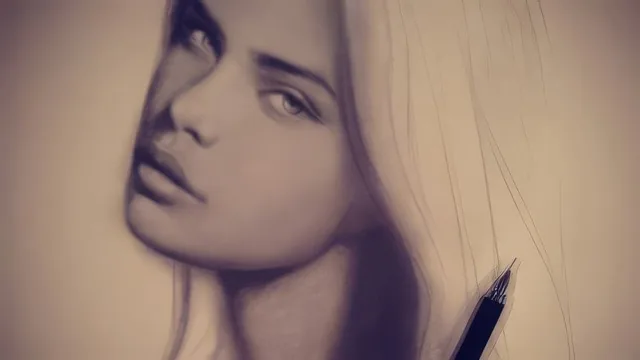
A working artist walks through the exact pencil grades, plane structure, and feature-by-feature shading logic behind a lifelike graphite portrait.
A method, not just a demo
This class is built around a single idea repeated at every scale: break a complicated shape into planes, then shade those planes according to where the light falls. The instructor introduces that framework early, drawing three lines from the cheekbone to the jaw muscle, the chin, and the canine tooth to expose the underlying geometry of a face, then returns to it for the nose (a wedge with front, side, and bottom planes), the mouth (a heart shape over two teardrops), and even the ear (six angles around a central bowl called the concha). Anyone who has tried to draw a nose as two circles and a bridge line will recognize the trap this avoids.
The measuring section is the most immediately useful stretch of the class. Splitting the head in half to place the eyes, then dividing brow-to-chin into thirds to find the nose and hairline, and thirds again from nose to chin to place the lips, gives a beginner a repeatable checklist instead of guesswork. The instructor also demonstrates arm's-length angle comparison and paper-strip measuring, low-tech tricks that transfer to any subject, not just this one portrait.
Where the craft lives
The shading vocabulary is the backbone of the whole course: highlight, halftone, form shadow, core of the form shadow, reflected light, cast shadow. What makes this more than jargon is the pairing with edge quality, form shadows fade in soft gradual transitions while cast shadows snap from dark to light with a hard edge, and that distinction alone explains why some student drawings look flat no matter how much shading they add. Feature lessons apply this directly: the eye gets a triangular depression at the tear duct, the iris darker on the side away from the light, lashes drawn as clumped triangular groups rather than individual strands; the nose gets an exclamation-mark highlight shape; the mouth gets the top lip rendered darker because its plane faces down.
A few techniques stand out as genuinely inventive rather than standard-issue advice. Puncturing a kneaded eraser with the pencil tip and dabbing it onto toned graphite creates a stippled texture for skin or fabric. Retracting the lead so only the metal touches the paper leaves an invisible imprint that becomes visible once shading is layered over it, a trick borrowed from printmaking that produces convincingly fine flyaway hairs. These two moments alone separate this from a generic "how to shade" tutorial.
The gap between demonstration and instruction
The course moves at the pace of someone who already knows how to draw explaining her own process, not a curriculum paced for a first-timer. Terms like masseter, philtrum, and orbicularis arrive with brief definitions and then get used freely afterward, which rewards someone with prior sketching experience and can leave a true beginner scrambling to keep up. There is also no dedicated troubleshooting section: common failure points, like a portrait that reads as flat, an eye that looks surprised because too much sclera is showing, or proportions that drift during shading, get mentioned in passing rather than addressed as their own fixable problems.
Material recommendations are specific almost to a fault: named pencil brands, exact lead grades, and particular paper weights are called out repeatedly, which is useful for someone ready to commit to the medium but adds friction for a viewer who just wants to try the approach with whatever pencil is on the desk. For a learner who already has basic drawing mileage and wants the anatomical and tonal logic behind a realistic portrait, the substance here is dense and genuinely instructive.
The standout
The plane-by-plane breakdown of light and shade, naming highlight, halftone, form shadow, core shadow, reflected light, and cast shadow with distinct edge qualities for each, gives structure that most beginner portrait tutorials skip entirely.
What you will learn
- How to measure facial proportions using the halfway-point and thirds rules for eyes, nose, lips, and hairline
- How to break the face into planes and read highlight, halftone, form shadow, core shadow, reflected light, and cast shadow
- How to sketch and shade the eye, nose, mouth, and ear individually with their specific anatomical landmarks
- A texture technique using a puncture-marked kneaded eraser as a stamp for skin and hair detail
- How to choose a reference photo by squinting to isolate simple shadow shapes and sufficient contrast
- How to draw convincing hair using clumped S-shapes and a blind embossing trick with a retracted pencil tip
Best for: Someone who already sketches a bit and wants a systematic, feature-by-feature method for building a realistic graphite portrait rather than vague encouragement to copy a photo.
Skip it if: A total beginner who has never held a pencil to represent form, since the class assumes basic drawing comfort and moves fast through anatomy and measuring without slowing down for first-timers.