
Social Media Marketing: Top Tips for Growing Your Followers & Going Viral
Cat Coquillette · Artist + Entrepreneur + Educator
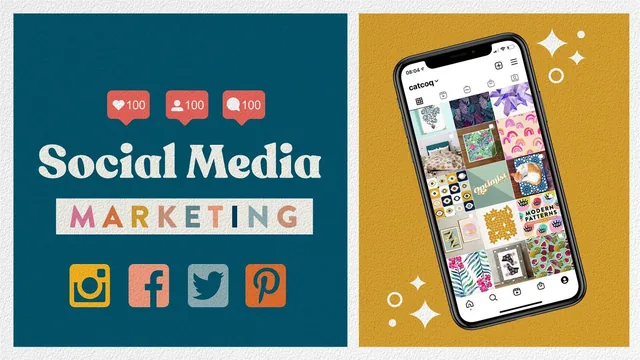
A working artist's real Instagram-to-storefront playbook, useful mainly if your brand lives or dies on visuals.
This class is a founder's field notes, not a marketing course in the academic sense. Cat Coquillette built a watercolor art brand into a full-time business primarily through Instagram, and the entire 66 minutes reads as a debrief of what worked for her, delivered in short, plainly organized segments rather than a structured curriculum.
Structure and what it actually covers
The arc is sensible: why social media matters, a platform-by-platform pros-and-cons rundown, profile optimization, post construction, two dedicated segments on growing followers and boosting engagement, then hashtags, posting frequency, a walkthrough of native analytics dashboards, and five closing tips. The platform comparison is the most genuinely useful stretch. It does not just list features, it explains tradeoffs an instructor with real experience would know, like Instagram's single clickable bio link versus Facebook's easy embedded links, or Twitter's brevity being both its strength and its ceiling. The half-life comparison between platforms (a tweet loses half its relevance in around 20 minutes, a pin over roughly three and a half months) is a genuinely sharp piece of framing that changes how a beginner would think about repost frequency.
The bio and profile section is practical and specific: include your actual name even behind a brand account, keep the bio short, choose between a logo, a headshot, or product photography for your profile picture depending on whether people are following you or your brand, and treat the one clickable bio link as a rotating asset tied to your current priority rather than a static field. The hashtag lesson is similarly concrete, recommending a mix of broad and niche tags, and noting real differences in how each platform surfaces them, down to Cat's own habit of stacking all 30 tags at the bottom of an Instagram caption behind a wall of ellipses.
Where it falls short
The analytics lesson is the weakest section. It is a screen-by-screen tour of where to click inside each platform's native dashboard, useful as orientation but not as strategy. It never goes deeper than naming the metrics (reach, impressions, engagement) and pointing at where they live. Anyone who has opened Instagram Insights before will learn nothing new here.
The bigger limitation is that everything is filtered through one specific business model, a visually driven, direct-to-consumer art and product brand. The instructor is candid that Facebook, Twitter, and most of the platforms covered are weak for B2B, and that advice throughout skews toward Instagram because that is where her own audience lives. A service business, a B2B company, or a writer-led brand will find large stretches, particularly the profile picture and content-mix advice, only partially transferable.
The course also leans hard on personal anecdote as proof. Stories about gaining 2,000 followers after a brand partnership, or 300 overnight from a Skillshare shoutout, are engaging but function more as testimonial than technique, and a viewer looking for repeatable systems rather than one person's history will come away with fewer concrete levers to pull than the class title promises. It is a solid, efficiently paced primer for someone starting from zero on a visual brand, not a deep or platform-agnostic marketing education.
The standout
The platform half-life comparison, contrasting a tweet's roughly 20-minute relevance against a Pinterest pin's several-month lifespan, reframes how much repeat-posting effort each platform actually deserves.
What you will learn
- How to weigh Instagram, Facebook, Twitter, and Pinterest against each other before committing time to any one of them
- How to write a bio, pick a profile photo, and structure a clickable-link strategy across platforms with only one bio link slot
- How to build a content mix (roughly one third promotional) and time posts around when a specific audience is actually online
- How to use hashtags strategically, mixing broad and niche tags and adjusting placement per platform
- How to read basic analytics on each platform (reach, impressions, engagement) without getting lost in vanity metrics
- How to use brand mentions and cross-promotion, including negotiating social shoutouts into client contracts
Best for: Visual-brand solopreneurs and early-stage shop owners, especially artists or makers, who want a founder's lived playbook rather than a marketing textbook.
Skip it if: Anyone running a B2B, service, or text-heavy brand, or anyone who already knows platform fundamentals and wants advanced growth tactics or paid strategy.