
Shooting a Character Documentary
Danya Abt & Zac Halberd · Documentary Filmmakers
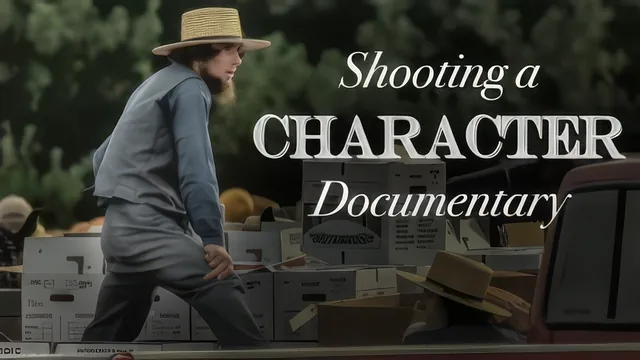
A tight 43-minute preproduction primer that gets you from finding a character to a finished shot list, but stops before editing begins.
A preproduction crash course, not a full filmmaking class
"Shooting a Character Documentary" is exactly what its title promises: a compact walkthrough of how to plan and shoot a short character-driven documentary, from finding a subject to wrapping the shoot. It does not cover editing, and it says so directly early on, which is a useful bit of honesty that sets expectations correctly. The course runs 43 minutes across 16 lessons, and the pacing reflects a preproduction and production focus rather than a soup-to-nuts filmmaking curriculum.
The early lessons are the conceptual backbone. Finding a character comes down to three criteria: someone articulate, someone accessible, and someone who reveals themselves through what they do rather than what they say. From there the course moves into loglines, using the "somebody does something" formula, and treatments, which are framed as a looser, more visual planning document than a script. The example used throughout, a woman named Carmen cooking a family recipe, is revisited across the logline and treatment lessons and gives the abstract advice a concrete throughline that a viewer can actually apply to their own idea.
The interview lesson is short but functional. Its core advice, asking open-ended questions and following up on offhand remarks rather than moving past them, is standard documentary craft, but it is delivered with enough specificity (asking a subject to repeat an answer more concisely for editing flexibility) to be actionable rather than generic.
Where the course earns its runtime
The equipment and technical lessons are where the course is strongest and most detailed. The rundown of gear, a DSLR with a zoom lens, a shotgun mic, a lavalier system, spare batteries, high-capacity memory cards, and a field backup routine of duplicating footage twice, reads like a working professional's actual kit list rather than a marketing checklist. The camera setup lesson gets specific about frame rate (24fps versus 25fps for PAL regions) and matching shutter speed to frame rate, which is a detail beginners commonly get wrong. The sound and lighting sections that follow are similarly hands-on, covering lavalier placement to avoid clothing rustle, white balance using a gray card, and framing choices like headroom and eye-line space.
The final stretch, covering the interview shoot itself, room tone, and B-roll and verite footage, ties the technical setup back to the storytelling goals established earlier. The closing assignment, cutting a short teaser from footage and two B-roll shots, gives the course a concrete deliverable even without touching editing software.
The tradeoffs
The course's narrow scope is both its strength and its limit. Beginners get a clear, repeatable process rather than a sprawling survey of documentary theory, but anyone expecting guidance on structuring a longer film, handling multiple characters, or actually assembling footage will need to look elsewhere. The gear-focused lessons lean toward a specific setup, DSLR plus shotgun and lavalier mics, that assumes access to a reasonably complete starter kit, which may not match every viewer's actual equipment. As a focused primer for a single short interview-driven piece, though, it delivers a workable plan in well under an hour.
The standout
The lavalier-mic placement and rustling-fabric fix using adhesive 'undercovers' is a specific, field-tested trick most beginner guides skip entirely.
What you will learn
- How to identify a documentary subject using three criteria: articulate, accessible, and revealing through action
- How to write a logline using the 'somebody does something' structure
- How to build a treatment that maps a beginning, middle, and end around a character's core activity
- How to set up an interview: framing, eye line, white balance, and hiding a lavalier mic under clothing
- How to build a documentary gear kit, including camera settings (24fps, shutter speed matching), audio backup strategy, and field data backup redundancy
- How to shoot verite and B-roll footage to support an interview-driven cut
Best for: A first-time or early-stage filmmaker who already owns a DSLR and basic mics and wants a structured plan to shoot one short character piece start to finish.
Skip it if: Anyone looking for editing instruction, advanced cinematography theory, or a documentary style beyond the single-subject interview-plus-verite format.