
Shading Fundamentals / Drawing with Dramatic Light and Shadow
Brent Eviston · Master Artist & Instructor
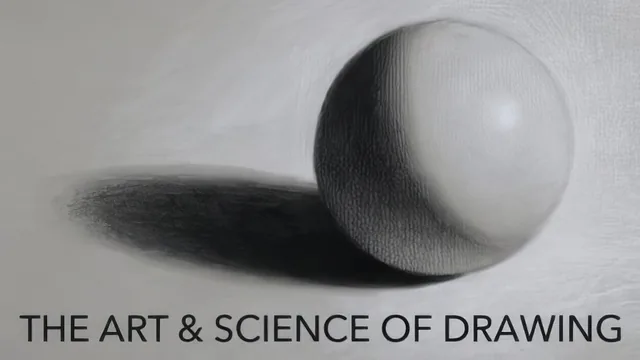
A structured five-step shading system for spheres, cubes and cylinders that turns vague light-and-shadow guesswork into a repeatable, learnable procedure.
A system, not a set of tips
Brent Eviston's approach to shading is built on a single organizing idea: reduce every object to a sphere, cube or cylinder, then apply the same fixed sequence of light and shadow conditions to each. Over seven lessons and about 97 minutes, the course walks through that sequence one piece at a time rather than throwing a finished, fully rendered drawing at the viewer on day one. It opens with value itself, having students build a five-step value scale on both white paper and toned gray paper, calibrating by eye until the jump between each step feels even. That may sound like a warmup exercise, but it turns out to be the backbone of everything that follows, since every later shadow condition gets assigned a number on that same scale.
From there the structure is genuinely additive. The line of termination, the boundary where light stops and shadow begins, comes first. Then the cast shadow, broken into its shape (an oval for a sphere, straight angled lines for a cube), its value gradient from a near-black occlusion shadow to a lighter penumbra, and its edge quality. Then the core shadow, which only exists on curved forms and depends entirely on reflected light bouncing off a nearby surface. Only in the final lesson does light itself get addressed, through the highlight, the center light, and the mid tone, the three lit-side conditions that most beginners lump together as "just bright." Each lesson ends with a specific pencil-and-paper project using the same three objects, so skill compounds rather than resets with every new drawing.
Where the teaching earns its keep
The most useful moment in the whole course is the demonstration of why a core shadow is never as dark as the occlusion shadow beneath an object, and why moving a cube next to a cylinder visibly brightens the cylinder's shadow side. That single demonstration does more to explain reflected light than most drawing books manage in a full chapter, because it is shown changing in real time rather than described in the abstract. The explanation of why a highlight moves when the viewer moves, while the line of termination stays fixed, is similarly sharp and rarely covered this clearly outside dedicated academy training.
The course is honest about its own limits in a useful way: it repeatedly tells the viewer these are practice drawings, not finished pieces, and that refinement comes later. That prevents the frustration of comparing a rough five-minute study to a polished illustration. Its narrower drawback is that it never varies the object set. Every lesson works with the same sphere, cube and cylinder, so a viewer who already grasps the logic by lesson four may find lessons five and six repetitive rather than illuminating.
Beginners without any prior drawing grounding will struggle immediately, since the course states upfront that basic form construction is a prerequisite and does not slow down to teach it. For anyone who already has that foundation, though, the value scale plus six-condition framework is a genuinely transferable tool, applicable well beyond the specific objects drawn here, and worth the full 97 minutes to internalize before moving into painting or figure work.
The standout
The stepwise buildup where each of the six light and shadow conditions (highlight, center light, mid tone, core shadow, reflected light, cast shadow) is isolated and practiced separately before being combined into a single finished rendering.
What you will learn
- Building and calibrating a five-step value scale on both white and toned gray paper
- Locating and drawing the line of termination that separates lit and shadow sides of a form
- Constructing cast shadow shapes and grading them from a dark occlusion shadow to a lighter penumbra
- Drawing the core shadow and understanding how reflected light creates it
- Placing highlights, center light, and mid tone correctly on curved forms
- Assembling all six light and shadow conditions into one fully rendered drawing of a sphere, cube and cylinder
Best for: Beginner to intermediate artists who already have basic perspective and form-drawing skills and want a systematic, almost procedural approach to shading rather than trial and error.
Skip it if: Absolute beginners who cannot yet draw a sphere, cube or cylinder in correct proportion and perspective, since the course explicitly assumes that skill is already in place.