
Room to Create: A Guide to Designing Your Space & Enhancing Your Creativity
Mimi Chao · Owner & Illustrator | Mimochai
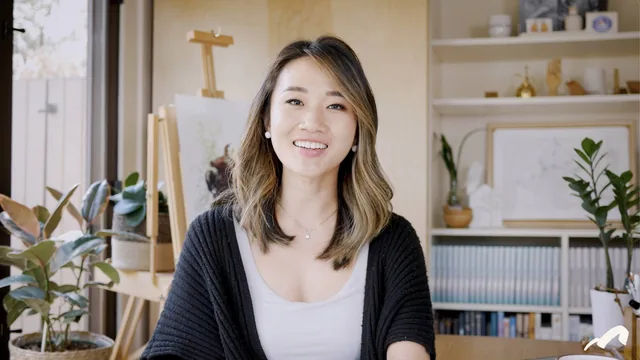
A 25-minute pep talk on picking a corner and decorating it, dressed up with light research citations and famous-writer trivia.
A short primer, not a deep method
Mimi Chao's class does exactly what its runtime suggests: it delivers a compact, friendly overview of how to set up a physical space for creative work, without ever slowing down to go deep on any single idea. The thirteen lessons move briskly through intention-setting, physical space, lighting, seating, distraction management, organization, inspiration, sensory design, and mindful "breathing space," each covered in two to four minutes. There is no long-form project, no drawing or design exercise beyond sketching out space ideas on a downloadable workbook, and no cumulative skill being built. It is closer to a well-organized checklist narrated aloud than a class with a technique to master.
Chao's own studio serves as the running example throughout, and that specificity is the class's strongest asset. She describes her floating shelves for swapping out books and objects, her stack of favorite titles including The Little Prince and Zen Mind Beginner's Mind, her KINTO mug chosen partly for its texture, and her use of a full-screen window on her computer to avoid tab-switching distractions. These small, concrete details do more to make the advice usable than the general tips do on their own, because they show one working creative adapting abstract principles to a real room.
The most transferable idea in the class is the notion of using a portable trigger object to simulate a dedicated space when no permanent one is available. For anyone sharing a dining table or a couch corner with roommates or family, the suggestion to bring a specific placemat, candle, or plant only during creative sessions gives a concrete way to train a Pavlovian association with a shared spot. This single tactic, grounded explicitly in classical conditioning, is more actionable than most of the surrounding content and could genuinely change how someone without a spare room approaches their setup.
Where the class thins out
Much of the rest of the material stays general. The lighting lesson cites a study from the Journal of Environmental Psychology on darker lighting and creative freedom, but stops at the citation without offering guidance on how to actually test or apply it. The organization lesson presents both sides of the tidy-versus-cluttered debate and essentially shrugs, telling viewers to "see what works for your personality." The sensory engagement lesson lists options, scent, texture, sound, taste, without much structure for choosing among them. These sections function more as prompts for personal reflection than as instruction, which fits the class's stated modest scope but limits how much a viewer actually learns to do differently.
The historical detours about Monet's garden studio, Virginia Woolf's writing lodge, and Beethoven's morning routine are pleasant but decorative, adding motivational color rather than technique. They work well as framing in the early lessons to justify why a dedicated space matters, but they do not carry through into the practical sections.
For someone who has never consciously designed their work environment, this class offers a fast, low-effort orientation with a few genuinely useful tactics, the trigger-object trick chief among them, and a reading list and resource links for going further. For anyone who has already read up on creative habits or workspace design, the ground covered here will feel familiar within the first few lessons, and the payoff is mostly in the small personal details Chao shares from her own studio rather than in new methodology.
The standout
The advice to use a portable trigger object, a specific placemat, candle, or plant brought out only during creative time, to condition a shared or non-dedicated spot into a reliable creative cue.
What you will learn
- How to set an intention for a creative space based on whether you need clarity or energy
- How to claim a workable spot even without a dedicated room, using cues like a specific chair or a placemat
- How lighting, seating, and noise choices affect focus and creative output
- How to build an inspiration board and curate objects, books, and plants without cluttering the space
- How to engage senses beyond sight, using scent, texture, and sound to shift into a creative mindset
- How to treat the space as a mindfulness practice, not just a workstation
Best for: Beginners and hobbyists who have never thought deliberately about their physical work environment and want a short, encouraging nudge to set one up.
Skip it if: Anyone who has already read a book like The Artist's Way or set up a studio before, since the content stays at a surface level throughout.