
Roadmap to Getting Your Illustrations on Products
Anne Bollman · Anne Was Here
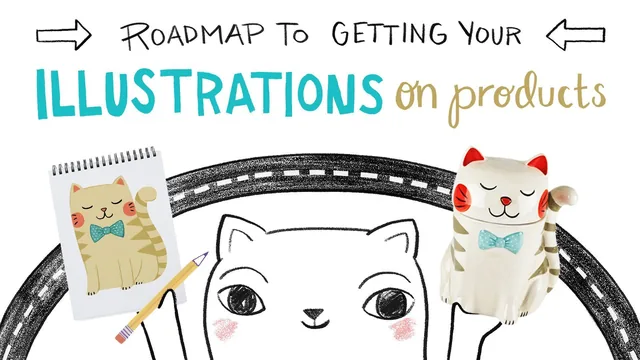
A specific, tested marketing roadmap for illustrators from someone who actually built a six-figure licensing business with it.
What the roadmap actually covers
This class is built around a single downloadable artifact, an illustrated road map plus a workbook, and the entire 66 minutes exists to help students fill it out. Anne Bollman, who left an in-house design job and built a six-figure illustration career within two years, walks through her own submission process in ten labeled steps: defining a goal, identifying three target markets, researching manufacturers, reviewing an existing portfolio against that research, scheduling the work, building an online presence, developing new pieces, and writing a pitch email. The arc is linear and practical rather than inspirational padding, each step produces a concrete written output before the next one starts.
The market research section is the strongest stretch of the course. Bollman gives a genuinely reusable method for finding manufacturers, checking retail sites and catalogs, flipping physical products over to read the back label, following art licensing agents on Instagram, and then confirming a company actually works with outside artists by looking for submission pages or artist credits on packaging. She extends this into a surprisingly candid tactic for guessing an art director's email address from a known naming pattern, and doesn't shy from recommending a plain phone call to a corporate office when digital research dries up. This is the kind of specific, low-glamour legwork that separates a course with real experience behind it from one recycling generic advice.
Where it thins out
The scheduling section, built around dividing total hours needed by hours available per week plus a buffer, is useful but repetitive. It works, but the class spends a disproportionate amount of runtime narrating spreadsheet arithmetic that most students could infer after seeing it once.
The online presence and portfolio development sections are honest about their own limits. Bollman explicitly says mockup creation is not covered and repeatedly points students toward other classes for website platforms, Instagram tactics, and children's book submissions. That is fair signposting, but it also means three of the four "must have" marketing elements she opens the class with, website, portfolio, Instagram, get a conceptual overview rather than a walkthrough. Students expecting to leave with a finished website or Instagram strategy will need to look elsewhere.
The closing steps on scheduling adjustments and email follow up are useful mainly for managing expectations: no response, rejection, or requests for more work are all treated as normal, and Bollman is upfront that traction can take one to two years. That kind of honesty about pacing is rare in courses selling a fast path to product sales, and it's arguably as valuable as any single technique taught.
Bottom line
The course is less a skill-building class than a business-process class for illustrators who can already draw at a commercial standard. Its value sits almost entirely in the market research and manufacturer-outreach method, which is specific, tested, and transferable. Anyone hoping for technical instruction in illustration, mockup design, or platform setup will need supplementary classes, but as a framework for turning existing talent into a submission pipeline, it delivers exactly what its title promises.
The standout
The manufacturer fit-and-credit checklist, flipping products over, checking submission pages, comparing color palettes and themes, turns vague market research into a repeatable five-name list.
What you will learn
- How to pick and rank three target product markets that fit your art style
- How to research manufacturers to confirm they use artists and are a stylistic fit
- How to find art director contact info through websites, LinkedIn, and cold calls
- How to build a realistic hours-and-weeks schedule for portfolio and online presence work
- How to structure a website, portfolio, and Instagram account around a single target audience
- How to write a short email pitch and interpret the range of responses you'll get
Best for: Illustrators who already have a body of work and talent but have never built a submission pipeline or contacted manufacturers directly.
Skip it if: Complete beginners with no portfolio yet, or anyone wanting hands-on instruction in mockup creation, website building, or Instagram growth tactics.