
Professional Practice In Illustration: Following a Creative Brief & Executing An Assignment
Lisa Congdon
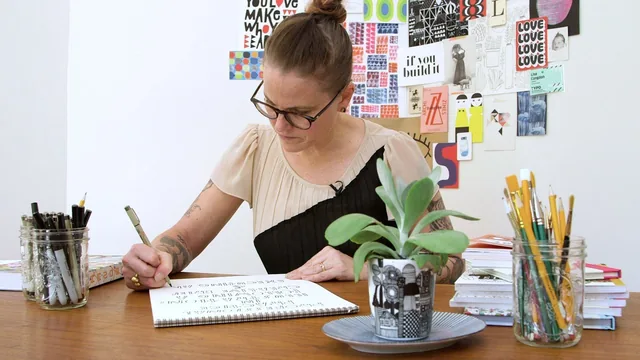
A working illustrator walks through one real assignment start to finish, teaching client process rather than drawing technique, which makes it useful once and forgettable after.
Lisa Congdon's class does not teach illustration. It teaches the job around illustration, and it says so plainly in the first few minutes. That framing is the class's biggest strength and its biggest limitation at once.
What the course actually walks through
The spine of the class is a single pretend assignment: illustrate a cover for The Story of the Three Little Pigs from a deliberately incomplete creative brief. Congdon has students read the brief, decide whether they'd take the job (weighing skill fit, interest, deadline, and fee), then draft a professional inquiry email asking the questions the brief left out. From there the class moves through concepting and rough sketches, a feedback round, and finally rendering the approved sketch into finished art.
The most concrete, reusable moment is the transition from sketch to final. Congdon describes literally sketching in pencil directly on the substrate she'll paint on, or laying tracing paper or a light box over an approved rough so the final composition never drifts from what the client signed off on. That single habit, an artist can take and use on the next real job regardless of subject matter or medium.
The feedback section is the other genuinely useful stretch. Congdon breaks down how to turn a vague client note into a bulleted checklist, how many revision rounds is standard (two to three, and why that should be written into a contract), and how a same-day "call me" email is not automatically bad news. This is the kind of institutional knowledge that usually only comes from years of freelancing, and hearing it stated directly saves a beginner some real anxiety.
Where it thins out
The class is honest that it is not about technique, but that honesty leaves a gap. The final artwork section spends more time on file formats and delivery methods (WeTransfer, Dropbox, FTP) than on how the watercolor-and-line combination in the finished piece was actually built. Students are told to combine hand-painted swatches with digital layering in Photoshop, but the demonstration is a walkthrough of what was done, not a lesson in how to do it.
Pricing gets the same treatment: Congdon is candid that she still finds it hard after a decade of freelancing, then points to a reference book rather than offering a framework or sample numbers. That is a fair and honest answer, but it leaves the one topic beginners worry about most unresolved inside the class itself.
At under an hour, the class covers a lot of ground in broad strokes and none of it in depth. Anyone who has already freelanced for a year or two will recognize most of the advice as things they've already learned the hard way. For someone who has never sent a client email or been asked to revise a sketch, though, it compresses a genuinely stressful learning curve into forty minutes of straightforward, practical reassurance. It succeeds at exactly what it sets out to do and does not pretend to be anything more.
The standout
The demonstration of tracing an approved rough sketch onto watercolor paper or using a light box so the final artwork stays exactly true to what the client signed off on.
What you will learn
- How to read a creative brief and decide whether to accept a job based on skill, interest, deadline, and fee
- How to write a professional inquiry email to an art director that asks clarifying questions without seeming unprepared
- The difference between rough sketches and final artwork, and why the sketch phase is usually the most labor-intensive part of a job
- How to receive and organize client feedback into an actionable list, including how many revision rounds is normal
- How to move from an approved sketch to final artwork using tracing paper or a light box to preserve the approved composition
- Where to find real-world pricing references instead of guessing a fee
Best for: Illustrators who already have solid drawing or painting skills but have never worked a paid client assignment and don't know how the back-and-forth actually runs.
Skip it if: Anyone hoping to learn illustration technique, digital rendering, or how to develop a personal style, since the class explicitly sets those aside for workflow and communication.