
Powerful Storytelling Today: Strategies for Crafting Great Content
Soledad O'Brien · CEO Starfish Media Group
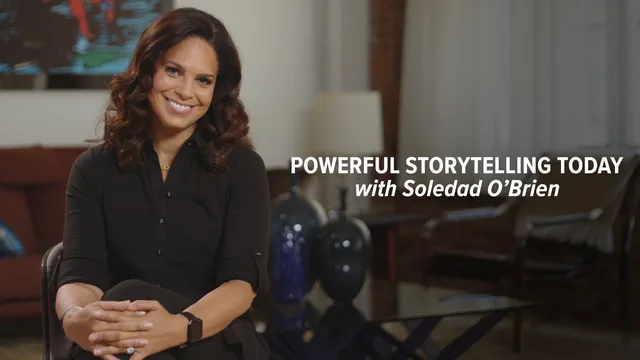
Soledad O'Brien distills 30 years of interviewing into one lesson: authentic, human-centered stories beat polished ones every time.
A veteran journalist's mental checklist, not a workshop
Soledad O'Brien built her career on getting people to say things they didn't plan to say, and this course is essentially a transcript of how she thinks about that process. It moves in the order a real project would: find the idea, find the partner or platform, cast the right people, research them obsessively, interview them well, then cut the footage into a structure. There's no software, no editing timeline, no B-roll examples on screen. What's here is judgment, the kind that comes from three decades of sitting across from people and deciding which threads are worth pulling.
The strongest material is in the interview lessons. O'Brien argues that most people are terrible listeners because they're just waiting for their turn to talk, and she describes catching herself doing exactly that early in her career, moving to question three regardless of what her subject had just said. Her fix is concrete: let silence sit. She describes asking someone how they felt about something, getting "it was fine," and then saying nothing, because the real answer usually follows the comfortable lie. She also flags the yes-or-no question as a trap, singling out White House press conferences as an example of the format failing in public.
The pre-interview idea is the one technique that feels genuinely transferable outside journalism. Before a big sit-down, someone else on her team calls the subject for a casual two-hour conversation, no cameras, just background. She uses this to explain why an interview with Andrew Young about the night Martin Luther King was killed produced real tears instead of the well-worn version he'd told a thousand times before. Warming someone up before the moment that counts is a technique any content marketer prepping a founder for an on-camera testimonial could use tomorrow.
Where the course is thinner is anything resembling a story arc for a corporate or personal narrative. O'Brien tells several strong illustrative stories, including a documentary about women who worked as first responders on 9/11 and a case study on framing a scholarship recipient by her achievements rather than her parents' addiction struggles, but these are anecdotes that support a point rather than worked examples the viewer builds along with. The lesson on structure covers logging transcripts by timecode and starting a story mid-action rather than at the beginning, both useful, but it stops short of a repeatable template.
At 36 minutes across eight lessons, this sits closer to a distilled set of principles than a skill-building workshop. Nothing here requires prior writing or journalism experience, which matches its "all levels" billing, but it also means viewers looking for hands-on practice, worksheets, or a project to submit will come up empty. The value is entirely in absorbing how an experienced interviewer thinks about authenticity, research, and structure, then applying that thinking to their own storytelling situation without a hand-holding exercise to follow.
The standout
The pre-interview technique, where a colleague conducts a loosening-up conversation days before the real interview so the subject arrives less guarded and more willing to go off script.
What you will learn
- How to pitch and shape a story idea before you know any of the details, including who it's for and where it will live
- How to cast subjects by putting them on camera first and researching their backstory before you ever sit down with them
- How to run a pre-interview to loosen someone up before the real interview so their answers get less rehearsed
- How to ask open questions instead of yes-or-no ones, and how to use silence and pushback to get past a rehearsed answer
- How to structure a story from raw transcripts, including starting in the middle of the action instead of at the beginning
- How to frame subjects by their strengths and specifics instead of reducing them to their hardships
Best for: Entrepreneurs, social media managers, and content marketers who need to turn company or personal narratives into interviews and short-form video content.
Skip it if: Anyone wanting a hands-on editing or shooting tutorial, or scripted exercises to practice with.