
Personal and Lifestyle Branding: Building Your Story
Kate Arends · Founder, Wit & Delight
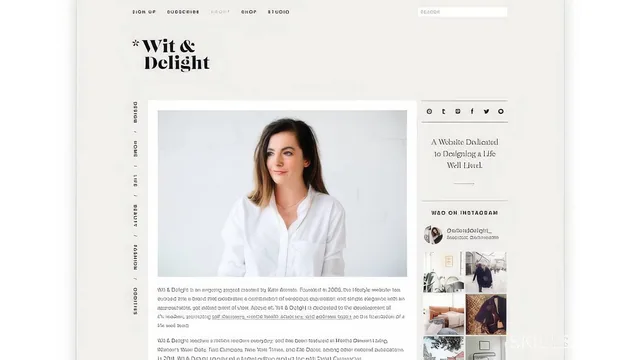
A 31-minute worksheet session that gives you Kate Arends' own brand-mission framework, useful if you can tolerate broad strokes over specifics.
Kate Arends built Wit and Delight from a personal blog into a full-time lifestyle brand, and this class is her attempt to hand over the thinking behind that growth rather than the visual output of it. There is no talk of logo files, color palettes, or typography here. Instead the entire 31 minutes is a guided worksheet session: two documents, filled out in a specific order, that are meant to leave a student with a written belief, mission, and set of pursuits by the end.
The structure moves in a deliberately unusual direction. Rather than starting with the big, abstract question of what a brand believes, Arends has students work bottom-up: first naming three concrete pursuit categories (for her, wellness, decor, and personal style), then describing what the brand actually does within each one, and only afterward stepping back to write the mission and belief statements that summarize all of it. This ordering is the class's real strength. Asking someone to state their belief cold produces vague, greeting-card language. Asking them to first describe three specific things they do, then find the sentence that ties those together, produces something closer to a usable mission statement.
The Venn diagram exercise in the middle lesson does similar work for values. Students list emotional benefits (how a customer feels) on one side and functional benefits (what the product or service actually delivers) on the other, then look for the overlap. Arends walks through her own answers in enough detail to make the exercise legible: trusted resource pairs with transparent reviews, someone to relate to pairs with personal stories, and so on, landing on five values including the on-brand pairing of wit and delight. Seeing a real worked example, rather than an empty template, is what makes the abstract concepts of "emotional benefit" and "functional benefit" click.
Where it runs thin
The class leans heavily on brand-name examples, Nike, Apple, Madewell, Warby Parker, to illustrate what a focused brand looks like, and while the analysis of Just Do It and Think Different is reasonably sharp, it is also well-trodden ground that any student has likely encountered before in other branding content. The bigger gap is depth: because the whole class fits into three worksheet-focused lessons, each concept gets one clean pass and no real troubleshooting. There is no discussion of what to do if your pursuits do not converge into one clean mission sentence, no second-pass revision guidance, and no treatment of how to test a mission statement against real customer feedback beyond posting it to the class gallery.
Who it actually serves
This is best suited to someone at the very beginning of defining a personal brand or new business, who has energy and direction but no language for either yet. The pen-and-paper simplicity is a genuine advantage for that audience. It is a poor fit for anyone past that stage, established businesses looking to refine an existing brand will find the exercises too basic, and anyone hoping for tactical design or marketing execution advice will not find it here. As a short, structured nudge toward clarity, it delivers exactly what it promises. As a comprehensive branding education, it is not trying to be one.
The standout
Building the brand toolkit worksheet bottom-up, starting from concrete pursuits before naming the abstract belief, makes an otherwise vague exercise actually doable.
What you will learn
- Identify the four traits of a focused brand: vision, purpose, action plan, and values
- Fill out an emotional-versus-functional benefits Venn diagram to surface your core values
- Distill your offering into three focused pursuit categories instead of five or more
- Write a belief statement, a mission statement, and three supporting pursuits in one worksheet
- See a real, worked example of this process using Wit and Delight's own brand documents
Best for: Solopreneurs, freelancers, or early-stage bloggers who have a business idea but can't yet articulate it in a clear sentence or two.
Skip it if: Anyone who already has formal brand documentation, works within a team, or wants tactical help with logos, color, or visual identity.