
Neuroscience-Based Goal Setting: 4 Steps to Achieving Your Goals Without Willpower
Jill McAbe · Business & Marketing Strategist
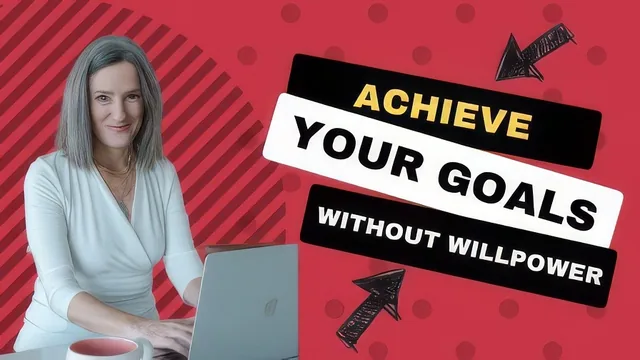
A single reusable four-step worksheet for turning a vague wish into a specific, emotionally charged goal statement.
What it actually teaches
This course sells itself on neuroscience but delivers something more modest and more useful: a four-part worksheet exercise called MOMA, standing for Motivating Outcome, Measurable, with Appointments. The setup takes about half the runtime. Jill McAbe walks through a "your subconscious filters your world" idea (illustrated with a close-your-eyes, notice-all-the-blue exercise), then spends three lessons diagnosing what she considers the core flaw in ordinary goal-setting: people write down a plan and mistake it for an outcome. Her stock example is "I want to go to the gym three times a week" versus the real underlying want, "I want to feel fit and healthy." The distinction is the spine of the whole course, and it gets repeated from several angles before the method itself even starts.
The MOMA method occupies the back half. It is a linear worksheet process: state your starting goal, ask "why do I want that" five or six times to dig toward the real outcome, rewrite the outcome once it surfaces, attach emotional stakes by imagining the cost of failure and the reward of success, define how you will know you have achieved it (with both hard numbers and honest subjective markers), and set both a deadline and a recurring check-in date. A final short exercise asks the learner to imagine having already achieved the goal and rate how good that feels on a 1-to-10 scale, treating anything below an 8 as a sign the goal needs more work or isn't really theirs.
Strengths and gaps
The apple-and-bites illustration is the best moment in the course. By showing how a narrow, mistaken outcome (going to the gym) forecloses ideas like walking, better sleep, or stress management, while the correct outcome (feeling fit and healthy) opens all of them, it makes a genuinely persuasive case for outcome clarity before planning. That single reframe is worth the runtime on its own for anyone who habitually confuses tasks with goals.
Where the course falls short is proportion and rigor. The neuroscience framing, amygdala, subconscious filtering, conscious versus subconscious "languages", is presented as settled fact with no citations, and it functions more as a motivating metaphor than as instruction a learner could verify or apply independently. The planning stage that MOMA explicitly defers to ("a goal without a plan is just a wish") is not covered here at all, it is pointed toward the instructor's separate book. So the course ends exactly where the harder, more actionable work would begin.
Structurally it is efficient: thirteen short lessons, minimal padding beyond the personal history in the opening two videos, and a worksheet the learner can reuse indefinitely. Anyone repelled by folksy personal-brand storytelling (restaurant ownership, a car accident, a "best-selling author" mention) will need to sit through a fair amount of it before reaching the method itself.
The standout
The apple-and-bites reframe, where naming the true outcome first (feel fit and healthy) instead of the plan (go to the gym) opens up ten times more paths to success.
What you will learn
- Why a stated goal ("go to the gym three times a week") is often a plan in disguise, not the real outcome
- A repeated "why do I want that" drilling technique to surface the true underlying outcome
- The MOMA framework: Motivating Outcome, Measurable, with Appointments for review and completion
- How to write measurable check-ins for a goal, including subjective ones like "I enjoy going to work most days"
- A verification step that rates imagined goal-achievement on a 1-10 scale to test whether a goal is likely to stick
- Why working on one goal at a time beats juggling several
Best for: Someone who keeps setting goals and abandoning them and wants a short, repeatable worksheet rather than a theory-heavy deep dive into neuroscience.
Skip it if: Anyone expecting rigorous citations to brain research or a fully built-out planning and accountability system, since the science stays at the level of plain analogy and the planning side is deferred to the teacher's book.