
Learn How to Mix Music with Young Guru
Young Guru · Grammy-Nominated, Legendary Audio Engineer
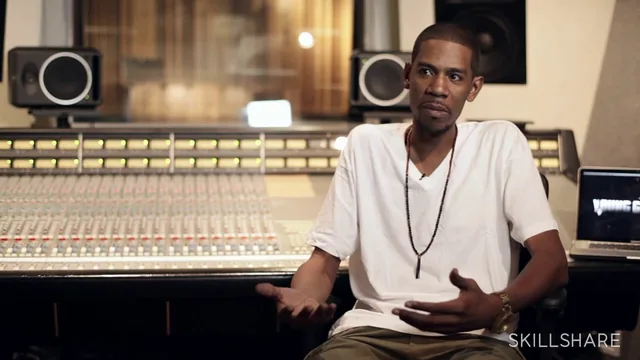
A Grammy-nominated engineer distills his entire session workflow into 52 minutes, trading depth for a working framework you can use today.
Young Guru's mixing class runs under an hour, but it is built around one real session, worked from a blank fader board to a finished balance, which gives it a shape most short tutorials lack. Rather than lecturing about mixing in the abstract, he opens a live-drum recording of a funk-style track and walks through the actual decisions he makes, in the actual order he makes them. That structure, session setup, level balancing, effects, then a final tonal check, mirrors how a working engineer actually approaches a song, and it is the course's biggest strength.
The workflow, not just the theory
The opening lesson on organizing a session sounds like housekeeping but earns its place. Labeling every channel, grouping drums together, and physically deleting blank stretches of audio rather than relying on gates is a habit most self-taught producers skip, and Young Guru frames it as the difference between a mix that fights you and one that flows. His panning explanation, using an orchestra's seating chart to decide not just left-right placement but perceived distance, is a clean mental model that a beginner could apply immediately without needing to understand the underlying acoustics.
The most technically substantial segment is the effects section, where he layers a sine-wave oscillator underneath a live kick drum and gates it using the kick track itself as the trigger, effectively synthesizing a clean sub layer that only sounds when the real kick hits. It is a specific, reproducible technique with real payoff for anyone recording acoustic drums and wanting them to compete with programmed low end. He follows it with a sensible case for reverb busing, sending multiple channels to one shared reverb rather than loading a plugin per track, which is as much a practical CPU lesson as a creative one.
Where it runs thin
Because the whole course fits in under an hour, several ideas get one pass and no second look. Compression is explained clearly, threshold, ratio, release, and the danger of squashing a vocal's dynamics, but the demonstration is brief and never shows the vocal automated or "ridden" in detail, despite him naming vocal rides as essential. The tonal balance lesson that closes the course is similarly compressed: a quick sweep of a master EQ to flatten obvious dips, with no discussion of reference tracks or how to judge balance against commercial records.
The course also assumes a working knowledge of a DAW's interface. Young Guru explicitly tells viewers to learn their software elsewhere first, and true beginners will find some of his moves, sending to a bus, assigning a sidechain input, hard to follow without pausing and rewinding. For someone who already knows their way around a session but has never had a professional explain why they organize things a certain way, this is a fast, credible download of real studio habits, not a full engineering curriculum.
The standout
The sidechain-gated sine wave trick for beefing up a live kick drum's low end is a genuine professional technique rarely explained this plainly.
What you will learn
- How to organize a mixing session by labeling every track, grouping instruments left to right, and deleting dead audio to avoid clutter
- A panning philosophy borrowed from orchestra seating, placing instruments left-right and front-back for stereo balance
- How to build a reinforced sub-bass layer for a live kick using a sine wave oscillator gated by the kick's own signal
- How to set up a send bus so one reverb plugin can serve an entire mix instead of loading reverb on every channel
- The mechanics of compression: threshold, ratio, and release, and why over-compressing robs a vocal performance of life
- How to sanity-check overall tonal balance with a master EQ analyzer before handing a mix off for mastering
Best for: Home producers who already know their DAW's basic controls and want a professional's actual session workflow, not just plugin theory.
Skip it if: Total beginners who have never opened a DAW, and anyone hoping for genre-specific techniques for EDM, hip-hop, or electronic production.