
Learn Filmmaking from Beginner to Pro
Jordy Vandeput · Filmmaker and Youtuber
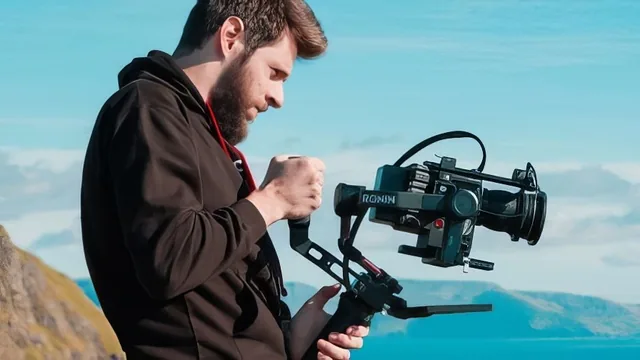
A genuinely structured crash course in camera fundamentals and framing, weighed down by recurring gear plugs and thin depth on anything past the basics.
"Learn Filmmaking from Beginner to Pro" is a two-hour crash course built around a simple arc: get the camera off automatic, learn to compose a shot, then learn to move the camera. It does not chase cinematic flash. It spends its time on the unglamorous fundamentals, and for a true beginner that restraint is the course's biggest strength.
What it actually teaches
The first third is the exposure triangle: aperture, ISO, and shutter speed, each explained through its side effect rather than its number. Aperture is taught as a depth-of-field control as much as a light control, ISO as a noise trade-off, and shutter speed as the source of motion blur, with a specific rule tying shutter speed to frame rate (roughly double the frame rate for natural-looking motion, so 1/50 at 25fps or 1/60 at 30fps). A lesson on reading the histogram follows, framed as the objective alternative to eyeballing a monitor.
The middle section shifts to composition and is where the course is strongest. The rule of thirds gets extended past the basic grid into viewing space and walking space for subjects looking or moving off-frame. Talent framing breaks people into close-up, medium shot, and long shot categories, then adds two specific, reusable rules: never cut at a joint (ankle, knee, neck) because it creates an odd "puppet effect," and always leave breathing space above the head rather than letting it touch the frame edge. Camera position gets tied to storytelling through a status argument: shooting from below makes a subject feel powerful, from above makes them feel small, illustrated with an employee-asking-for-a-raise scenario that shows the same conversation reframed by camera height alone. The 180-degree rule closes this section with a clear explanation of why crossing the line disorients an audience, and an honest acknowledgment that breaking it deliberately (a fight scene, for instance) is also a valid choice once the rule is understood.
The final stretch covers gear: ND filters (with the actual math on ND numbers and a recommendation to buy one variable ND with step-up rings rather than a full set), tripods versus gimbals versus sliders, and a closing lesson on "creating depth" through parallax, layered foregrounds, and focus separation that gestures at cinematography without fully developing it.
Where it falls short
The course leans on its instructor's on-camera persona heavily, with long comedic bits (an abandoned camera storage unit, a running joke about bad hair) that eat into a 120-minute runtime without adding technical content. More concerning is the repeated funneling toward paid extras: a stock-footage affiliate link, and pointers to the instructor's other paid classes for lighting and advanced composition, both of which cover ground this "beginner to pro" title implies it should include itself. Autofocus, manual focus, white balance, and picture profiles are named in the syllabus but get comparatively thin treatment next to the framing lessons. There is no editing, audio, or lighting instruction of substance, despite the course positioning itself as a complete filmmaking foundation.
As a first course on manual camera operation and shot composition, it delivers a genuinely useful and well-organized set of rules. As a complete "beginner to pro" education, the title overpromises.
The standout
The talent-framing lesson, which turns close-up/medium/long shot choices into a concrete rule set about where to cut relative to joints and how much breathing space to leave above a head.
What you will learn
- Manual control of the exposure triangle (aperture, ISO, shutter speed) and how each setting's side effect (depth of field, noise, motion blur) shapes a shot
- Reading a histogram to judge exposure instead of guessing from the monitor
- Framing people using the close-up, medium shot, and long shot system, including 'breathing space' and avoiding the 'puppet effect' at joints
- Using the rule of thirds with viewing space and walking space for moving or off-center subjects
- The 180-degree rule for keeping screen direction consistent across cuts
- Choosing camera height (low, eye-level, high) to signal a character's status, and matching camera support (tripod, gimbal, slider) to the mood of a shot
Best for: A total beginner with any kind of camera, phone included, who wants a fast, structured map of the technical and compositional basics before shooting their first real project.
Skip it if: Anyone who already knows the exposure triangle and rule of thirds, or who needs lighting, audio, and editing covered rather than just camera and composition.