
Knife Skills: A Mini Class to Chop Like a Chef
Elana Karp · Head Chef, Plated
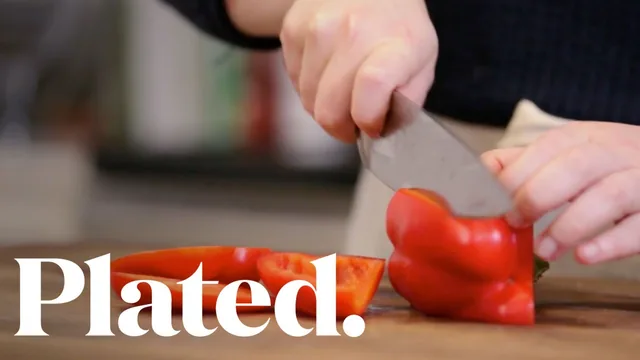
A 12-minute crash course that nails knife grip, the bear claw, and four core cuts, but skips sharpening technique entirely.
What it actually teaches
The class opens with Elana Karp, head chef at meal-kit company Plated, explaining why knife skills matter before any blade comes out: better cuts mean faster, less stressful prep. From there it moves through four cuts in rapid succession, each built on the last. Safety comes first, with the bear claw grip (fingertips curled under, knuckles taking the risk instead of fingertips) and a pinch grip on the blade's base that keeps the knife from wobbling when the wrist turns.
The cutting lessons use real ingredients rather than abstract demonstrations. Celery becomes the practice vegetable for slicing, its natural curve producing what the course calls a demilune, or half-moon shape. Bell pepper gets julienned into thin strips after its four flat walls are sliced off the core, a shortcut that avoids fighting the pepper's round shape. Onion is where the course earns its keep: the technique keeps the root end intact through two rounds of cuts, a horizontal set and a vertical grid, so the onion holds together right up until the final crosswise slice sends it apart into a clean, even dice. Garlic mincing closes out the technique section, including a genuinely useful trick for popping a clove out of its papery skin by pressing the flat of the blade down on it with a closed fist.
Strengths and gaps
The pacing is efficient. In well under a quarter hour, a viewer moves from zero grip technique to four transferable cuts, and each demonstration explains not just the motion but why it works, like keeping the knife's tip anchored to the board so the blade never fully leaves the surface. That single anchoring principle carries through slicing, julienning, and mincing alike, which gives the class more internal coherence than its short runtime would suggest.
The closing section on knife care is thinner than the rest. It offers one diagnostic (if a blade struggles to pierce a tomato's skin, it needs sharpening) and one piece of advice (take it to a local kitchen supply store rather than learning to use a sharpening stone). That is a reasonable beginner recommendation, but it means the course teaches nothing about maintaining an edge at home, only when to outsource the problem.
The structure asks for active participation rather than passive watching: viewers are told to cut along using the same vegetables and the same shapes, then upload a photo of the results. That kind of built-in accountability suits the class's real audience, someone who has never held a chef's knife with purpose and wants concrete correction before their next dinner prep. Anyone past that stage, already comfortable slicing an onion or julienning a pepper, will find little new here. The value is concentrated almost entirely in the first ten minutes, before the course winds down into a short recap and a call to explore more classes.
The standout
The onion-dicing method that keeps the root intact through two sets of cuts so the whole vegetable falls apart into even dice only on the final slice.
What you will learn
- The bear claw grip for protecting fingertips while holding ingredients steady
- A pinch grip on the blade base for full control of the knife
- How to slice using a rocking motion with the tip anchored on the board
- How to julienne bell peppers into thin, even strips
- A root-intact technique for dicing an onion without it falling apart mid-cut
- How to mince garlic using the lower blade with the tip anchored down
Best for: A total beginner who has never held a chef's knife with intention and wants the four foundational cuts in one sitting.
Skip it if: Anyone who already knows basic knife grip and cuts, or wants guidance on sharpening technique rather than just when to seek it out.