
Introduction to Social Media Advertising | Learn with Buffer
Brian Peters · Strategic Partnerships Manager, Shopify
A genuinely useful 52-minute primer that trades platform-specific tactics for a durable mental model any social advertiser can reuse for years.
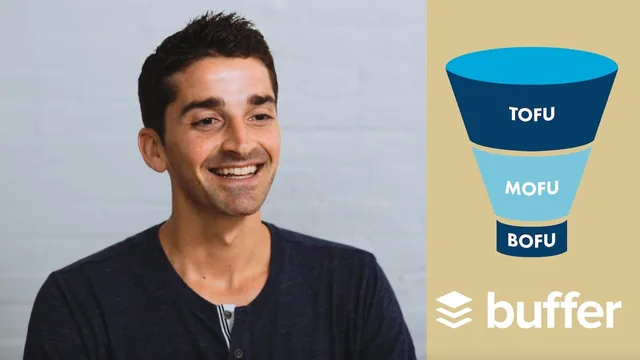
Brian Peters, then Buffer's social media strategist, built this course around a single organizing idea: nearly every effective social ad fits into a three-part marketing funnel, and knowing which part you are targeting should dictate everything else about the ad, from budget to copy to audience. That framing, more than any single tactic, is what makes the course hold together across its ten short lessons.
Structure and teaching method
The course opens with vocabulary, which sounds dull but pays off. Terms like CPM, CPA, reach versus impressions, and ad sets versus campaigns get defined once, cleanly, and then get reused constantly for the rest of the class. This matters because Peters leans on real screenshots from Buffer's own Facebook Ads Manager account throughout, showing actual custom audiences built from website traffic and email lists rather than describing them abstractly. Seeing an $800-million industry stat next to a real $20 boosted post grounds the class in a way a pure lecture would not.
The funnel itself is the spine of the course. Top-of-funnel content, Peters argues, should never ask for anything: no links, no calls to action, just something genuinely useful or entertaining, like the Buffer GIF tutorial he uses as his running example. Middle-of-funnel content gets "brand direct" but still trades in value, like a podcast link. Bottom-of-funnel is where free trials, discount codes, and direct asks belong, and it is also the most expensive and hardest to get right, because it only works once an audience already trusts the brand. Real examples from Blue Apron, Dollar Shave Club, and HubSpot illustrate each stage with enough specificity to be memorable rather than theoretical.
Where the substance lives
The targeting lesson is the most technically dense, walking through custom audiences built from website pixels, uploaded email lists, competitor or peer targeting, and Facebook's lookalike audience feature, which finds new users who resemble an existing customer base. Peters is careful to connect each targeting method back to funnel stage: broad interest and demographic targeting for top-of-funnel awareness, pixel-based retargeting for middle and bottom. The budget lesson reinforces the same logic with a specific and useful heuristic: start at five dollars a day, spend it at the top of the funnel where content is cheap because nothing is being asked for, and only push money toward expensive bottom-of-funnel asks once an audience has been warmed up.
The final two lessons on copy, visuals, and iteration are more prescriptive: keep video ads between 60 and 90 seconds, test 10 to 20 headline variations, isolate one variable at a time (graphic first, then caption, then headline), and use Facebook's relevancy score, typically 8 to 10 for top-of-funnel content, to judge whether an ad's placement is actually working before deciding whether to kill it or scale it.
Where it falls short
The course is unmistakably Facebook-centric. Other networks get name-checked but never walked through, so a marketer working primarily on LinkedIn or Pinterest will need to translate every example. It is also dated in its framing of costs, funnel behavior, and ad platform mechanics, since ad interfaces and targeting rules shift constantly, and the numbers cited reflect a much earlier state of the industry. Nothing here addresses privacy-driven targeting restrictions or iOS tracking changes that reshaped pixel-based retargeting after this class was recorded. As a foundational mental model for how to think about paid social, though, it remains sound and well-organized.
The standout
The funnel-matched budgeting logic, which explains why top-of-funnel content should be cheap and broad while bottom-of-funnel offers need retargeted, warmed-up audiences to justify their higher cost.
What you will learn
- How to read and calculate the core metrics: CTR, CPC, CPM, CAC/CPA, reach vs impressions
- How to map ad content to the three-stage marketing funnel (TOFU, MOFU, BOFU)
- How to build and use custom audiences, including pixel-based retargeting and lookalike audiences
- How to set a starting ad budget and scale it based on which funnel stage you're targeting
- How to structure ad copy, visuals, and headlines, and test them systematically
- How to evaluate performance using relevancy score and decide when to kill or scale an ad
Best for: Solo marketers, freelancers, and small business owners who have never run a paid social campaign and need one coherent framework before opening Facebook Ads Manager.
Skip it if: Anyone who already runs paid social campaigns professionally or needs platform-specific walkthroughs (actual ad-account screens, current interfaces, or non-Facebook mechanics like TikTok or LinkedIn's own ad managers).