
Instagram Next Level Amazing: Inspiration, Tools and Tricks
Tyson Wheatley · Photographer, Journalist, Dad
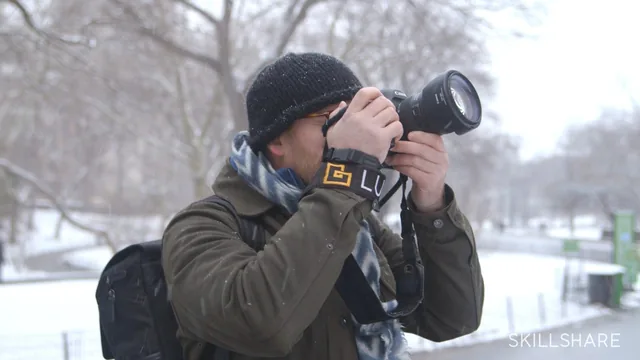
A 28-minute walk through Central Park with a working photographer, thin on technique but genuinely useful for finding a fresh angle.
Tyson Wheatley's class is less a tutorial than a walk-and-talk with a working commercial photographer, and it succeeds or fails on how much you value that format. Shot largely on location in a snowy Central Park, the class opens with Wheatley naming his own visual obsessions (leading lines, reflections, architecture) before setting the day's assignment: take an overphotographed location and find an angle nobody else bothered to try. That framing device holds the whole class together and gives the scattered lessons a shared spine.
What actually gets taught
The gear rundown is the most concrete section, and it earns its place. Wheatley walks through two Canon DSLR bodies, a 24-70mm everyday lens, a 17-40mm wide angle, an 85mm portrait lens he picked up in Japan, a compact PowerShot for video, plus the reflector and tripod he carries. It is not a buying guide so much as a look at how a working photographer's kit accumulates over years, and the reasoning behind each piece (why a wide lens, why a dedicated video camera) is more instructive than the gear list itself.
The shooting demonstrations are where the class is strongest and thinnest at once. In the tunnel sequence, Wheatley uses a model to fill negative space against striped architectural lines, switching from a wide lens to an 85mm portrait lens mid-shoot to change the composition's feel entirely. It is a good demonstration of how lens choice reshapes a scene, but there is no discussion of the aperture, focal length math, or camera settings behind it. The puddlegram segment fares better as a teachable technique: flip the phone upside down, get the lens close to the water's surface, and wait for something with color (a yellow cab, in this case) to pass through the reflection. It is specific, repeatable, and the kind of trick a viewer could try that same afternoon.
Where it comes up short
The editing section leans heavily on Priime, an app Wheatley discloses he collaborates with, walking through style presets and adjustment sliders for contrast, warmth, and shadows. It is useful as an overview of what mobile editing can do, but it assumes viewers already know the basics from Wheatley's earlier Skillshare class and explicitly defers to it for VSCO, Snapseed, and TouchRetouch coverage, so this class alone leaves gaps in the mobile-editing toolkit.
The inspiration section, built around name-checking photographers like Paul Octavious and Michael O'Neal, is pleasant but generic: follow people you admire, stay consistent, don't be afraid to revisit familiar locations with a twist. None of it is wrong, but none of it is unique to photography either. Overall the class rewards viewers looking for creative motivation and a couple of specific field tricks, and will frustrate anyone expecting a structured technical curriculum.
The standout
The step-by-step puddlegram technique, complete with the specific weather and stillness conditions needed to make it work, is the one concrete, repeatable trick worth the price of admission.
What you will learn
- How to build an inspiration habit by following and studying a small set of photographers with recurring visual themes
- What gear a working Instagram photographer actually carries and why (mirrorless-era Canon bodies, a 24-70mm workhorse, an 85mm for portraits, a wide 17-40mm, a compact vlogging camera)
- How to shoot a subject straight-on for symmetry against strong architectural lines, like a striped tunnel
- How to shoot a puddlegram: flipping the phone upside down against a still puddle to capture a clean reflection
- How to read light and weather conditions (just after snow, just after rain) for stronger images
- How to edit in Priime and in Instagram's own updated tools, including the improved straightening and cropping controls
Best for: Hobbyist Instagrammers who already own a phone or basic camera and want fresh shooting ideas and mindset shifts rather than technical training.
Skip it if: Anyone wanting camera settings, manual exposure, or structured editing tutorials, since the class stays anecdotal and skips specifics like aperture or shutter speed.