
Ink & Watercolor Illustration: Learn Simple & Magical Techniques & Find Your Style
Yasmina Creates · Artist & Creativity Cheerleader
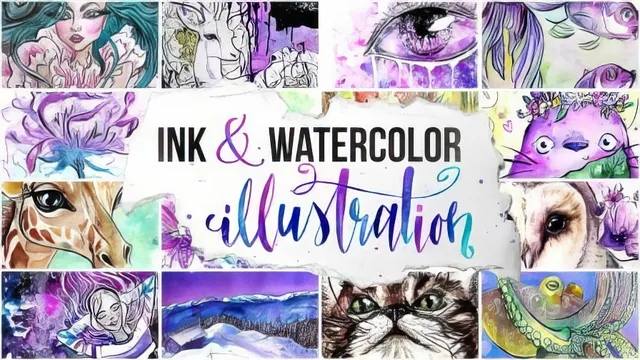
Twenty-four minutes teaches the mindset for combining ink and watercolor, not the fundamentals of either medium alone.
This course does not teach watercolor and it does not teach ink. It teaches the seam between them, and it says so upfront: anyone new to either medium is pointed to the teacher's separate basics classes before starting. That framing matters more than it might seem, because it defines exactly what 24 minutes can and cannot cover.
What the class actually delivers is a decision framework. Two techniques dominate. The first, "using ink first," is the coloring book approach: sketch loosely in pencil, ink the outlines, erase the pencil, then fill the resulting shapes with watercolor exactly as you would color a coloring page. The second, "using watercolor first," reverses the order, painting complete washes and then adding ink afterward, sparingly, for outlines, patterns, or texture. Each approach gets several worked examples, and the differences between them are concrete rather than abstract: painting after inking means you never see stray pencil marks bleed through, while inking after painting means you can change your mind about how much definition a piece needs without committing to outlines too early.
Where the substance is
The most useful stretch of the class is the testing lesson, which treats supplies as variables to be measured rather than assumed. An opacity test compares how differently each watercolor sits over a black ink line. A tool test runs water over every pen and marker on hand to see which bleed and which hold. This is the kind of practical, repeatable groundwork that separates a course grounded in studio habit from one that just shows finished paintings and asks you to admire them.
A handful of specific techniques stand out for being genuinely non-obvious. Coating a masking fluid brush in dish soap to protect the bristles is a small but real tip. Using a toothbrush with Copic Opaque White to splatter dreamy dot textures onto a dried wash is a specific move with a specific tool. And the discovery that peeling dried masking fluid off an inked line drags some of the ink away with it, creating a faded effect, is the kind of accidental technique that only surfaces from someone who has actually logged hours at the desk.
Where it runs thin
The final lesson, on finding a personal style, is more exercise than instruction: sketch one object six times, force a different technique each time, then ask yourself which version you liked best. It is a reasonable prompt but a light one, closer to a journaling assignment than a lesson with content to absorb.
The bigger limitation is length. Nine lessons in 24 minutes means each technique gets a demonstration but rarely a full walkthrough with reasoning at each step. Viewers get to watch the outcomes of many small decisions (which wash to use, when to introduce white, when to let ink bleed on purpose) without always getting the full why behind each one. For an intermediate illustrator who already trusts their brush, that is plenty. For anyone still building basic control over either medium, the class will feel like it is skipping ahead, which is exactly the audience it says, honestly, this is not for.
The standout
The masking-fluid-over-ink trick, where peeling dried masking fluid off an inked line lifts some of the ink with it for a deliberately faded effect, is a specific, non-obvious technique worth the runtime alone.
What you will learn
- How to test whether ink and markers are waterproof before committing them to a piece
- The coloring book method: ink outlines first, then watercolor fills within them
- The reverse method: watercolor washes first, then ink added afterward for detail and definition
- How to use Copic Opaque White or white gel pens to add highlights neither medium can create alone
- How salt, alcohol, and masking fluid behave differently on ink versus on watercolor
- A style-finding exercise: sketch one simple object six times, using a different technique each time
Best for: An illustrator who already has working knowledge of both watercolor and ink separately and wants a framework for combining them.
Skip it if: A complete beginner to either medium, since the course explicitly defers the fundamentals to the teacher's separate watercolor and ink basics classes.