How to Talk About Art: A Beginner's Guide | Learn with Artsy
Artsy's Learning Team and Jordana Zeldin
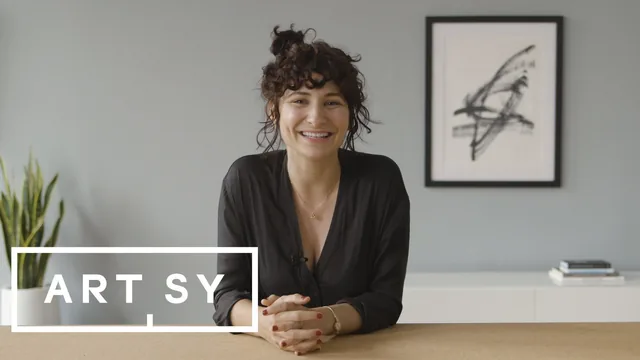
A tight 30-minute primer that trades art jargon for a simple two-question framework you can use at any museum tomorrow.
This course sets a modest, well-defined goal: give someone who has never taken an art class a working vocabulary for looking at contemporary art, and it hits that goal efficiently in half an hour. Jordana Zeldin, speaking from her experience as a gallery partnerships lead and Whitney Museum docent, structures the class around three moves: naming the type of art in front of you, asking questions about it, and knowing where to go find more of it.
The opening lesson introduces the single idea the rest of the course builds on: art can be defined by intention (did the artist mean this to be art) or by reception (do we now receive it as art regardless of original intent). It is a genuinely useful mental shortcut, illustrated with a contrast between Olafur Eliasson's glacial ice sculptures and Egyptian tomb objects that were never made to hang in a museum. From there, the second lesson sorts contemporary art into three buckets: object-based work like sculpture and painting, experience-based work you move through or touch, and time-based work like performance or video that has a start and an end. Examples range from El Anatsui's bottle-cap tapestries to EJ Hill's endurance performance piece, giving each category a concrete anchor rather than an abstract definition.
The questioning toolkit
The strongest stretch of the course splits looking into two modes: what you can see and what you cannot. The visible half covers formal analysis, breaking a work down into composition, material, technique, and whether it reads as abstract or representational. Side-by-side comparisons, such as three painters using oil on canvas in wildly different ways, make the point that technique is a choice, not an accident. The invisible half moves into research: artist intention, audience and site, process, and historical moment. The EJ Hill example, where a jump rope on a fence turns out to reference the artist's childhood isolation, demonstrates convincingly why context can transform a plain-looking object into something loaded with meaning.
Where it thins out
The final lesson on finding art in the world is the weakest section, largely because it functions as a practical orientation to museums, galleries, and public art rather than teaching a skill. It is useful information for someone who has never set foot in a gallery, but it does not build on the analytical tools from earlier lessons, and its recommendation to browse Artsy's own platform reads as a promotional aside rather than course content.
The course also never tests the viewer. There are no exercises where a learner applies the intention or formal-analysis frameworks to a new work and checks their thinking, so retention depends entirely on the accompanying PDF cheat sheet rather than anything built into the lessons themselves. For a course this short, that is a reasonable tradeoff, but it means the value is front-loaded into the ideas rather than practiced skill.
Overall this works well as exactly what it claims to be: an accessible on-ramp for someone who finds contemporary art confusing or off-putting. It will not satisfy anyone who already knows the difference between formal and contextual analysis, but for its intended beginner audience it delivers a compact, genuinely applicable framework in less time than a single gallery visit.
The standout
The intention-versus-reception framework, illustrated with Olafur Eliasson's ice blocks versus Egyptian tomb objects, gives a durable, reusable lens for any unfamiliar artwork.
What you will learn
- Distinguish object-based, experience-based, and time-based art
- Frame art through intention (did the artist mean it as art) versus reception (how it is received)
- Run a formal analysis: composition, materials, technique, and abstract versus representational content
- Do contextual research into an artist's intention, process, and site-specific placement
- Identify where to find and read contemporary art: museums, galleries, public spaces, and online
- Use a discussion toolkit to talk about art out loud with confidence
Best for: Total beginners who feel intimidated walking into a gallery or museum and want a simple vocabulary to start noticing and discussing what they see.
Skip it if: Anyone with prior art history training or gallery-going experience, since the content stays at an introductory, vocabulary-building level and never gets into art movements, criticism, or market context.