
How to Cook Productively - A Meal Planning System for Beginners
Ali Abdaal · Doctor + YouTuber
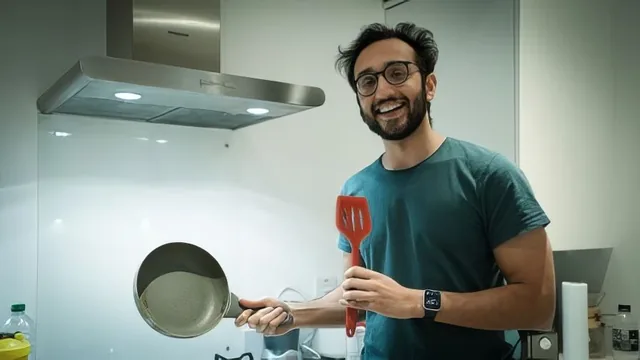
A doctor who admits he lived on takeaways learns a working meal-prep system from an actual home cook, in real time, mistakes included.
A beginner's system, taught through a real conversation
The course frames itself around a simple premise: Ali Abdaal, a self-described taker-away-and-ready-meal eater, sits down with Kym, a working mother who has built her own batch-cooking system, and gets taught it from scratch. That framing carries the whole class. Instead of a chef delivering polished technique to camera, this is one competent home cook walking a genuine beginner through her method, including his questions about things an experienced cook would never think to ask, like whether a wooden spoon does anything a spatula can't. That format is the course's biggest asset and its biggest limitation at once.
The system itself is straightforward and repeated often enough to stick: pick one weekday evening to plan and write a grocery list, shop a day or two later, then batch cook using overlapping heat sources so a slow cooker, a hob pan, and an oven tray are all running at the same time. That overlap is the one idea in the course that qualifies as a real technique rather than common sense. It compresses what would be four or five separate cooking sessions into one two to three hour block, and it is demonstrated concretely across the four recipes rather than just described.
Those recipes carry most of the runtime, and they are deliberately basic: a teriyaki chicken and sweet potato salad, a slow cooker beef stroganoff, a sheet-pan vegan sausage and vegetable dish with a maple mint dressing, and a mustard and rosemary salmon. None of them requires a skill more advanced than chopping, seasoning by eye, and checking that meat is cooked through. Measurements throughout are approximate on purpose, "a glug of olive oil," "about half a cup," which suits the stated audience but means anyone who wants precision or wants to understand why a recipe works will come away wanting more.
Where it earns its place and where it thins out
The pantry and tools sections do real work early on, sorting kitchen equipment into what's actually needed against what tends to just accumulate, and steering shoppers toward a small set of flavors, mustard, maple, teriyaki, lemon, that can be recombined rather than a long list of single-use ingredients. That's a genuinely useful mental model for someone starting a kitchen from nothing.
The storage section near the end is thinner than it should be given how much the course leans on "step three: store it properly" as part of its pitch. It amounts to buy stackable containers in a few sizes and choose plastic for microwave reheats, glass for the oven, advice most people already know instinctively.
The conversational format also means a fair amount of the runtime is small talk, corrections, and Ali fumbling with a chopper or asking whether he's allowed to use an olive oil spray. It makes the class feel honest and low-pressure, but it stretches 133 minutes further than the actual instructional content justifies. Someone who wants a tight reference they can return to mid-cook will find the useful information is there, but scattered inside a lot of chat.
As a first push into home cooking, particularly for someone who has convinced themselves they don't have time, the course does its job. It will not teach anyone to cook well, and it doesn't try to. It teaches four dependable meals and a repeatable weekly rhythm, which for its target audience is the entire point.
The standout
The overlapping-heat-source method, running the slow cooker, hob, and oven simultaneously so three meals finish inside the same two to three hour session, is the one technique that genuinely changes how much time meal prep costs.
What you will learn
- A three-step meal prep framework: plan and shop on a fixed weekday, batch cook using overlapping heat sources (slow cooker, hob, oven at once), then portion into stackable storage containers
- Which kitchen tools actually earn their spot (chef's knife, kitchen scissors for cutting raw chicken, tongs, magnetic measuring spoons) versus which are optional extras
- How to build a small rotating pantry of core flavors (mustard, maple, teriyaki, lemon) that recombine into different meals instead of hoarding single-use ingredients
- Four full recipes cooked start to finish: a warm chicken and sweet potato teriyaki salad, slow cooker beef stroganoff, a sheet-pan vegan sausage and vegetable medley with maple mint dressing, and mustard rosemary salmon
- How to portion and store batch-cooked food in the right container size and material (plastic for microwave reheating, glass for oven) so a week of lunches and dinners is grab-and-go
- A quick overnight oats formula built on ratios (oats to liquid) rather than exact measurements, meant to be made fresh rather than batched
Best for: Someone who has never really cooked for themselves, eats mostly takeaway or ready meals, and needs a low-pressure, low-precision system rather than a chef's technique class.
Skip it if: Anyone who already meal preps regularly, wants exact recipes with gram-accurate measurements, or is looking for advanced knife skills, baking, or restaurant-level technique.