
Happy, Angry, Awed: Drawing Faces for Webcomics
Shen ! · Webcomic Artist, Shen Comix
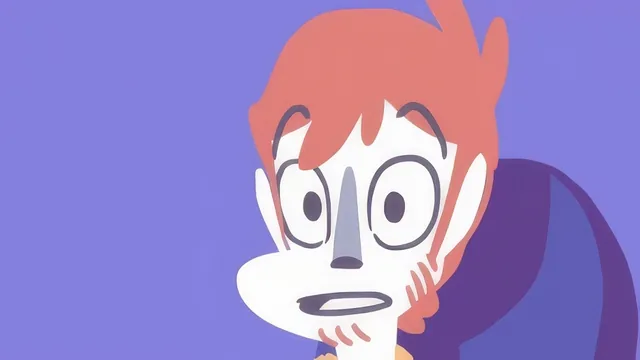
A 14-minute crash course on drawing cartoon expressions from a working webcomic artist, with a real drawing assignment attached.
What it actually covers
This is a short, tightly scoped class built around a single question: how do you make a drawn face communicate a specific emotion clearly enough to land a joke. Shen, the cartoonist behind Owl Turd comics, spends the bulk of the runtime on a handful of drawing principles rather than step-by-step demonstration. Eye size maps to intensity (bigger eyes read as surprise, fear, or awe, while smaller eyes suggest suspicion or boredom), mouth size maps to tone (small mouths read cute, big mouths read funny), and the position of features on the face determines how serious or silly a character looks. The most useful single idea in the course is the split between passive and active emotions: passive states like boredom or sadness keep eyebrows resting just above the eyes and the mouth low, while active states push the mouth higher and swing the eyebrows to extremes in either direction depending on whether the emotion is anger or elation. It is a simple enough rule that a viewer can start applying it to their own drawings within minutes of hearing it.
Structure and the assignment
The course is built around two linked assignments rather than passive demonstration. The first asks students to fill out a grid of twelve faces: four emotions (happy, sad, angry, infatuated) each drawn at three levels of intensity, from mild to extreme. The second asks for a three-panel comic where the final panel is wordless, with the joke landing entirely on a drawn expression. This is a sound structure for a short class. It forces immediate application of the eye-size, mouth-size, and positioning rules rather than leaving them as abstract advice, and the wordless-punchline constraint is a smart way to make students actually test whether their expression reads on its own.
Where the course thins out is anywhere past the core principles. A section on context briefly makes the point that an identical expression means something different depending on what surrounds it (a bored face in a classroom versus a bored face during a house fire), and touches on manga and American cartoon shorthand like sweat drops, anger veins, and speed lines. Both ideas are worth including, but neither gets more than a couple of minutes, and there is no real walkthrough of how to draw any of these symbols or where they tend to fail. The Skillshare blurb promises demonstrations of "happy, sad, angry, tired, and infatuated" worked through on the instructor's own characters, but the actual lesson content leans much more on verbal explanation of principles than on visible step-by-step drawing process.
Verdict
At around 14 minutes of instruction, this functions more as a warm-up prompt than a complete course. It is honest and specific about the mechanics of expression, delivered with an informal, self-aware sense of humor that keeps it watchable, and the two assignments give it a genuine reason to exist rather than just being a lecture. Anyone who can already draw a face and wants a fast, concrete framework for pushing expressions further will get real value out of it, especially the passive-versus-active distinction. Anyone looking for a demonstration-heavy walkthrough of specific poses, or for foundational instruction in drawing a face at all, will find the pacing too thin and the promised depth oversold relative to what is delivered.
The standout
The passive-versus-active emotion framework, where eyebrow height relative to the eyes and mouth height determine whether an expression reads as low-energy or high-energy, gives a concrete rule to apply to any face.
What you will learn
- How exaggerating eye size and mouth size signals emotion (big eyes for surprise or fear, small eyes for suspicion or boredom)
- How eyebrow and mouth positioning distinguishes passive emotions like boredom from active ones like anger or elation
- How to build a 12-square expression grid across four emotions (happy, sad, angry, infatuated) at three intensities each
- Why referencing your own face in a mirror or reference photos improves expression accuracy
- How context surrounding a character changes what an identical expression communicates
- How manga and American comic symbols (sweat drops, anger veins, motion lines) function as culturally recognized shorthand
Best for: Beginner comic artists or illustrators who already draw and just need a focused framework for pushing facial expressions further.
Skip it if: Complete drawing beginners with no figure or face-drawing fundamentals, since the course assumes basic draftsmanship and spends no time on construction basics.