
Gardening 101: A Guide For Growing & Caring For Plants
Geraldine Lavin · Herbalist & Farmer
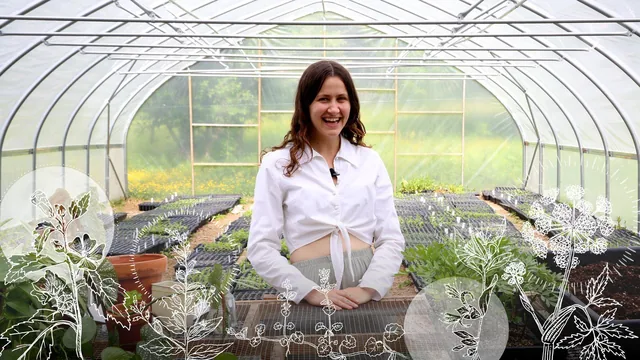
A genuine working farmer walks you through seed starting, divisions, and cuttings in under an hour, roots and all.
What it actually covers
Geraldine Lavin teaches this course from Suntrap Farm, the herb operation she runs in upstate New York, and that setting shapes everything about the content. Rather than a generic vegetable-patch primer, the course moves through three propagation methods (seed starting, divisions, and herbaceous cuttings), then basic plant vocabulary, garden layout, ongoing maintenance, and finally harvesting and drying. The arc makes sense: you start a plant, you plan where it lives, you keep it alive, and eventually you cut and store what it produces. Nothing feels like filler, though at ten short lessons the whole thing clears well under an hour.
The propagation section is the backbone, and it earns that position. Seed starting gets real specificity: plant a seed as deep as it is wide, stratify cold-germinating natives like blue vervain in moist sand in the fridge for 30 to 120 days, scarify a hard-shelled seed like marshmallow with sandpaper. The comparison between plastic pots, terracotta, and soil blocking is honest about tradeoffs rather than pushing one answer, noting plastic holds moisture and grows plants faster even though terracotta and soil blocks are the more sustainable choice. Divisions get a clear rule of thumb: take them in early spring or late autumn, keep roots intact, and give both halves a long deep watering rather than a shallow one.
The class project and its limits
The centerpiece is the herbaceous cutting, the class project everyone completes: find new growth 4 to 6 inches down a stem, cut diagonally at a leaf node, strip a couple of leaves, and set it in water for about two weeks until roots appear. It is demonstrated cleanly enough that a first-timer could repeat it immediately on a pothos or a rosemary sprig sitting on a windowsill, which is exactly the kind of tangible, low-cost outcome a 45-minute class should deliver.
Where the course thins out is anywhere a grower would eventually want more than a general framework. Garden planning covers USDA zones, frost dates, and companion planting in broad strokes (marigolds warding off fungal spread to nearby basil is the one concrete pairing given), but there is no plant-by-plant spacing chart or pest identification guide, and someone growing food crops at any real scale will hit its ceiling fast. The harvesting and storage lesson is similarly useful but narrow, built around Lavin's own herbalist habits, harvesting at peak bloom once dew has evaporated, drying in a dark ventilated space for about 48 hours until brittle, rather than a broader look at vegetables or fruit.
What holds the course together is Lavin's own frame of reference. She is not reciting rules, she is describing decisions she makes on her own farm, down to the Excel spreadsheet she keeps every winter for planning what to sow and when. That specificity is what makes the course feel trustworthy rather than generic, even in the sections that stay high-level. For someone who wants a foothold in propagation and basic garden logic without wading through a textbook, it delivers exactly that.
The standout
The herbaceous cutting demonstration, which shows the exact diagonal cut at a leaf node that lets a plant root in water within two weeks.
What you will learn
- How to start seeds from scratch, including which ones need cold stratification or scarification before they will germinate
- How to divide an overgrown perennial or houseplant into two healthy plants without shocking either one
- How to take and root an herbaceous cutting using a diagonal cut at the leaf node
- How to read your USDA zone and first/last frost dates to plan a garden layout
- How to arrange tall and short plants by cardinal direction for even sun exposure
- How to harvest and dry herbs so they store for a year or more without losing potency
Best for: Total beginners with a windowsill, balcony, or small yard who want a plant they can multiply themselves rather than just water and hope.
Skip it if: Anyone growing vegetables at scale or wanting yield charts and pest-and-disease troubleshooting, since the lens here stays herbalist and small-plot.