
Fun and Easy Watercolour Galaxies - Step by Step (Polaroid Style)
Zaneena Nabeel · Top Teacher | Artist
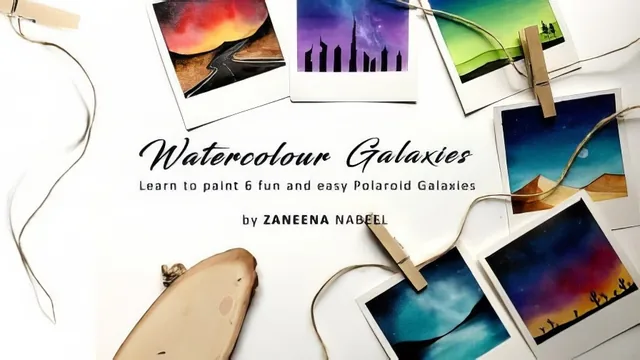
Six quick watercolor galaxy paintings in ten to fifteen minutes each, ideal for beginners wanting fast, satisfying results.
Zaneena Nabeel's watercolour class promises six small paintings in under ninety minutes, and it largely delivers on that promise. Each piece follows the same reliable formula: wet the paper, layer two to five colors into a gradient sky, splatter white gouache for stars, then add a black or dark silhouette element to finish. Once a viewer completes the first painting, the remaining five feel like variations on a theme rather than new lessons, which is both the course's strength and its limitation.
Structure and Technique
The course opens with a supply list and paper-prepping segment that covers masking tape application and paper sizing, oriented around a 10 by 11.5 centimeter Polaroid format cut from a larger sheet. This setup section is practical and specific, including the tip to run fingers across the tape multiple times to prevent seepage and to peel tape at an angle to avoid tearing.
The six paintings vary mainly in color palette and foreground subject. The desert night sky uses Prussian blue and turquoise for the sky, then yellow ochre and burnt sienna for dunes shaded with attention to slip faces and wind faces, a genuinely useful piece of landscape observation. The desertscape swaps in a five-color sunset gradient from black through purple to gamboge yellow, finished with a cactus-studded horizon. The cityscape introduces a milky way technique, painted wet-into-wet with white watercolor and blended with a damp brush, alongside a simplified Dubai skyline built from a repeatable Burj Khalifa silhouette. The lake, landscape, and night-drive paintings recombine these same moves: gradient sky, splattered stars, silhouette foreground, occasional detail lines for texture.
The final content lesson steps outside painting entirely to cover phone photography and basic Lightroom adjustments for documenting finished work. It is a reasonable bonus but stays surface-level, focused on white and black sliders rather than any deeper editing skill.
Strengths and Weaknesses
The pacing suits total beginners. Ten to fifteen minutes per painting keeps each demonstration digestible, and the instructor repeatedly emphasizes that exact colors and subjects do not matter, only the underlying sequence of wet sky, layered color, stars, then silhouette. That permission to substitute materials and improvise subjects is refreshing and lowers the intimidation factor considerably.
The tradeoff is depth. Because every painting shares the same skeleton, a viewer who completes painting two has effectively seen the whole method, and paintings three through six function more as repetition and confidence-building than as new instruction. There is no real discussion of color theory beyond naming which pigments were used, no exploration of paper texture or brush control beyond the basics, and the milky way and star-splatter techniques, while pleasant, are taught once and then simply repeated without refinement or troubleshooting for when they go wrong.
As a home decor or gifting project, the course succeeds. As a technical skill-builder for someone who already understands wet-on-wet blending, it offers little beyond the sand dune shading and skyline silhouette that could not be inferred from any other beginner galaxy tutorial. It is a pleasant, low-stakes entry point rather than a course that builds lasting technical range.
The standout
The sand dune painting's slip-face and wind-face shading technique for turning a flat mound into a dimensional, wind-shaped landform is the most transferable skill in the course.
What you will learn
- Wet-on-wet sky blending to build gradient night skies from dark to light values
- Splatter and tap techniques with white gouache to create layered small and large stars
- Painting a soft glowing milky way band with white watercolor blended into a wet background
- Silhouette landscape elements: sand dunes with slip and wind faces, a city skyline, mountains, trees, and a road
- Prepping paper with masking tape for a clean Polaroid-style border
- Basic phone photography and Lightroom editing to document and share the finished paintings
Best for: Beginners and hobbyist painters who want a low-pressure, fast introduction to loose watercolor skies and simple silhouette landscapes.
Skip it if: Experienced watercolorists looking for advanced color theory, complex composition work, or detailed subject rendering beyond simple black silhouettes.