
Freelancer Tips: How To Sell and Showcase Your Art Online
Karina Eibatova · Use a pencil as a magic wand
Thirty-one minutes of platform-hopping tips from a working illustrator, light on strategy but strong on real screenshots and receipts.
A Tour of One Artist's Toolkit
Karina Eibatova's class is less a structured curriculum than a guided screen-share through the platforms and habits that built her own online art business. It opens with a quick recap of her prior Skillshare classes on pattern-making, then moves through five practical stops: Behance for discovery, print-on-demand sites for passive income, store platforms for direct sales, Printful for fulfillment, and a scattershot final lesson on social presence and personal websites. The pacing is brisk, almost too brisk, since 31 minutes covers roughly a dozen distinct tools.
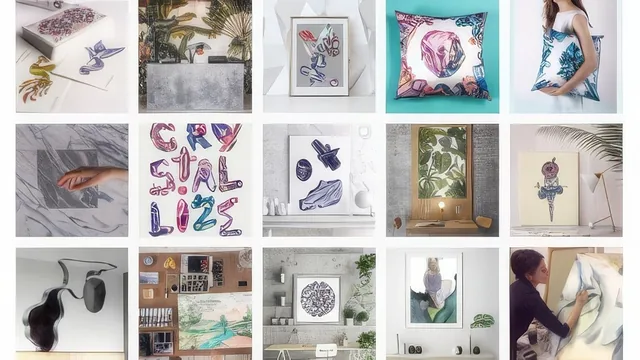
The strongest stretch is the Behance section, where Eibatova explains how Curated Galleries work, why she groups images into themed series like "Mineral Admiration" rather than posting singles, and how a project that lands in the main gallery can pull thousands of views within days. She backs this with specifics: eight years of consistent posting, a resume built entirely from client contacts made through the platform, and a concrete workflow for uploading a project, from photo grid to cover image to keyword tagging.
The income section is where the course earns its keep. Rather than vague encouragement to "sell prints," Eibatova walks through actual royalty structures: 20 percent from Print All Over Me, a per-item cut from Society6, and an ongoing arrangement with a Swedish bedding brand called ZigZag. She also shares a genuinely useful negotiating lesson, learned the hard way, about insisting on exclusive rights so a single design can be resold or reused rather than signed away for a flat fee to the first bidder.
Where It Thins Out
Once the course reaches store setup, the content becomes more demonstration than instruction. Bigcartel and Tictail get toured at a surface level, useful for a viewer who has never seen an e-commerce dashboard, but thin for anyone who has. The Printful integration explanation is clear and practical, covering how an order routes from a customer purchase to automatic printing and branded shipping, but it assumes a store already exists.
The final lesson on Instagram, Facebook, Tumblr, LinkedIn, and Cargo Collective feels rushed, closer to a list of platform names than a teaching unit. There's a genuinely good tip buried in it, watermarking popular images to retain credit when work goes viral, but it arrives alongside a lot of surface-level platform description that any working artist likely already knows.
The course's biggest structural weakness is dating. Several named tools and services referenced throughout have shifted or shut down in the years since this was recorded, so a viewer following along step by step will hit dead ends on some of the specific platforms shown. The underlying principles, focus on one primary platform, build a consistent portfolio series, negotiate for exclusivity, still hold, but the class works better as a mindset primer than a literal how-to guide.
There's no real project or assignment structure here either. It's a monologue with screen recordings, not a class with exercises, so anyone hoping for guided practice should look elsewhere. What it delivers well is candid, specific insight from someone who has actually built an income this way, which counts for more than its loose structure might suggest.
The standout
The walkthrough of negotiating exclusive versus nonexclusive licensing rights, including when to walk away from a low-royalty deal, is the one piece of business advice here with real teeth.
What you will learn
- How to build and organize a Behance portfolio using Curated Galleries, project grids, and collaboration tags
- Which print-on-demand and licensing platforms to use for passive income (Threadless, Print All Over Me, Society6, ZigZag)
- How to negotiate exclusivity terms and royalty deals with brands
- How to set up an online store on Bigcartel or Tictail and connect it to Printful for automated fulfillment
- How to fake convincing product photography using Photoshop perspective transforms and stock mockups
- How to build a personal website on Cargo Collective and use Pinterest for discovery
Best for: Illustrators and visual artists who already have a body of work and just need a map of where to post and sell it online.
Skip it if: Beginners with no finished portfolio yet, or anyone wanting a modern platform guide, since several tools referenced here are dated or discontinued.