
Fluffy Foxes in Watercolor
Olga Bonitas · Watercolor girl
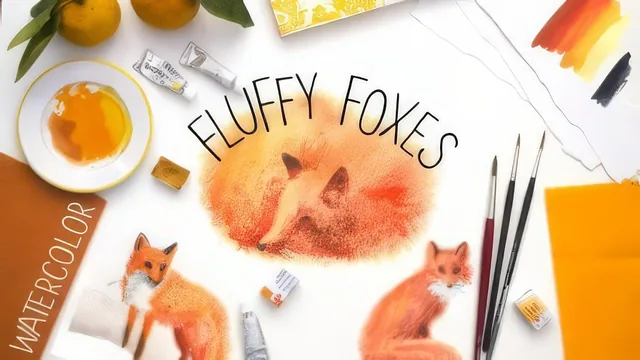
A 21-minute demo of three watercolor foxes teaches wet-on-wet basics but leaves fur, anatomy, and color theory largely unexplained.
What the class actually covers
Fluffy Foxes in Watercolor is a short, single-sitting class built around three finished illustrations: a sleeping fox, a sitting fox, and a fox in snow. The structure is straightforward. An intro and materials lesson lead into a dedicated techniques lesson, a brief note on the color palette, then three step-by-step painting demonstrations and a closing wrap-up. Each fox lesson follows the same three-stage rhythm: lay a wet-on-wet color base, build form and texture with a squeezed, drier brush on textured paper, then add fine details like eyes, nose, and whiskers with a thin brush or gel pen. That repetition is deliberate and it works as a teaching device. By the third fox, the steps feel familiar enough that a student could reasonably predict what comes next before it happens.
The technique lesson is the closest thing the course has to real instruction. It names three specific moves: painting on pre-moistened paper for soft, diffused color, dragging a saturated, mostly-dry brush across textured cold-press paper to create broken, fur-like marks, and switching to a fine brush (or a black gel pen as a substitute) for crisp details. This is a legitimate and useful watercolor vocabulary, and it is the one part of the class that could genuinely transfer to painting other animals, which the teacher explicitly claims as a takeaway in the final lesson.
Where it comes up short
The class is honest about being simple, and that simplicity cuts both ways. There is no instruction on color mixing beyond naming the palette (cadmium orange, cadmium yellow, a warm brown, and Payne's gray), no discussion of value planning, and no real anatomy lesson. Fox shapes are approached by eye, with instructions like dividing the reference photo in half and noting where the ears fall on each side. That approach relies heavily on the student's existing observational drawing skill rather than teaching it. A true beginner with no drawing background will likely struggle to place the fox's form correctly on the page, since the class does not walk through building that shape from basic construction lines.
The pacing is also uneven in a way that matters for a video course: each demonstration moves quickly through wet, unpredictable paint behavior, and a student pausing to catch up may lose the moment when the paper is at the right dampness for the next step. Because so much of watercolor technique depends on timing and paper wetness, a beginner watching without prior watercolor experience may find the results hard to replicate exactly, even while following along step by step.
Verdict
This is a demonstration-driven class more than a teaching one. It shows a competent, appealing process for painting fluffy animal portraits and gives enough named technique (wet-on-wet, squeezed-brush texture, dry detail work) to be useful as a reference to revisit. But it assumes a baseline of watercolor comfort and drawing-by-eye ability that a true first-time painter may not yet have. Students who already know their way around a brush and just want a fun, quick project with a specific furry-animal payoff will get real value here. Those looking for a foundational watercolor or drawing course should look elsewhere first.
The standout
The layered three-step method of wet-on-wet base, squeezed-brush texture, then fine detail is a genuinely reusable framework for painting any fuzzy animal.
What you will learn
- How to wet paper and lay down a soft wet-on-wet color base without forming puddles
- How to use a squeezed (drier) brush on textured paper to suggest fur texture and volume
- How to build a fox's form in three passes: base color, shading/volume, then fine details like eyes and nose
- How to place facial features using photo reference and a simple mirror-line trick for symmetry
- How to add finishing touches such as gel-pen linework or white gouache for a snow effect
- A general process that the teacher suggests can transfer to painting other furry animals
Best for: Beginners who already own basic watercolor supplies and want a fast, low-commitment first project with visible results.
Skip it if: Anyone wanting real instruction in anatomy, color mixing theory, or brush control, since the class assumes you can already follow along by eye.