
Filmmaking For All: Tell Your Story Through Video
Dan Mace · Peak Your Perspective
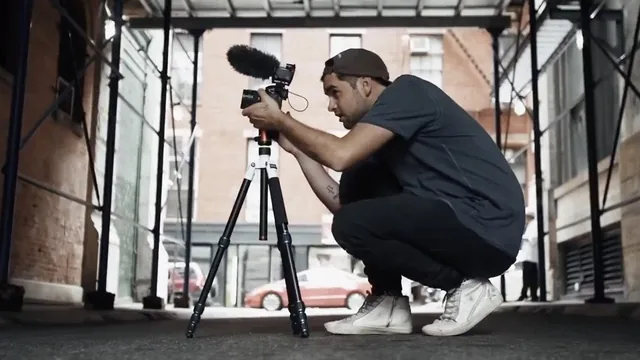
A 22-minute course that hands you a working story-to-video framework, but skips almost everything after you press record.
Dan Mace's class promises to teach video storytelling, and for the narrow slice it covers, it delivers. The course is built around a single class project: turn a true, personal story into a 3 to 8 minute video. Everything in the nine working lessons builds toward that one deliverable, which gives the course an unusual amount of focus for something this short.
The backbone is the 7 story archetypes lesson: overcoming the monster, rags to riches, the quest, voyage and return, comedy, tragedy, and rebirth. Mace has students free-write ideas with pen and paper before sorting them into one of the seven, then forces the idea through a three-act structure (setup, confrontation, resolution) using the deliberately simple example of a man climbing a mountain. It is not a novel framework, screenwriters have used variations of this for decades, but applying it specifically to short personal video is a genuinely useful narrowing of scope that most beginner filmmaking content skips past.
Where the course earns its keep is in two lessons that most similar classes leave out entirely. "Who Cares?" addresses audience and ethical framing directly, using Mace's own video about escaping an Indonesian jail as a case study in knowing your place as an outsider telling a story about a culture that is not yours. It is a small moment but a meaningful one, and it is delivered with a real example rather than an abstract rule. The editing lesson is the strongest in the class: lay down all dialogue first and confirm the narrative holds together on its own, then score music to the three-act arc before touching a single visual clip, then fill in visuals section by section. Placing the sizzle clip, a short pre-climax teaser, at the very front of the edit only after watching the full assembly is a specific, defensible technique rather than generic advice to "grab attention early."
Where it falls short
The course's biggest gap is gear and production mechanics. The "Gearing Up" lesson amounts to a packing list (tripod, DSLR, three lenses, shotgun mic, batteries, memory cards) and a one-line note to research smartphone microphone optimization elsewhere. Nothing here teaches framing, exposure, audio recording technique, or how to actually operate any of this equipment. The course description promises "the gear you need, from your smartphone to more," but the lesson never gets past a list.
The same thinness shows up in production and editing execution. "Production" is mostly mindset advice: stay on your log line, avoid getting distracted by unplanned shots, watch continuity. Useful, but abstract. "Editing" never opens Premiere Pro on screen or walks through a single cut, despite the course explicitly requiring "a basic understanding of editing software like Premiere Pro" as a prerequisite. Anyone hoping to see technique demonstrated rather than described will be disappointed.
At 22 minutes, this is closer to a structured pep talk with a genuinely solid narrative framework attached than a full filmmaking course. It is worth the short time for the archetype system and the edit-order method alone. It is not worth it if the goal is to learn how to actually shoot or cut footage.
The standout
The edit-order method (dialogue first, then music mapped to the story arc, then visuals last) gives a concrete, repeatable alternative to editing shot-by-shot in timeline order.
What you will learn
- Identify which of 7 story archetypes (overcoming the monster, rags to riches, the quest, voyage and return, comedy, tragedy, rebirth) fits your personal story
- Build a three-act structure (setup, confrontation, resolution) around that story before ever picking up a camera
- Write and keep a one-line log line to anchor decisions during a chaotic shoot
- Assemble an edit in a specific sequence: dialogue first, then music scored to the arc, then visuals slotted in section by section
- Cut a sizzle clip (pre-climax teaser) and place it at the very front of the edit to hook viewers
- Scope a personal, close-to-home story into a realistic 3 to 8 minute video with a smartphone-level gear list
Best for: Beginner to intermediate creators who already have a personal or true story in mind and need a structural method to turn it into a short video.
Skip it if: Anyone needing camera operation, lighting, color grading, or Premiere Pro software training, since the course assumes that skill already and never demonstrates it.