
Failure as a Win
Ethan Bodnar · Designer and Gardener. Previously, at Skillshare.
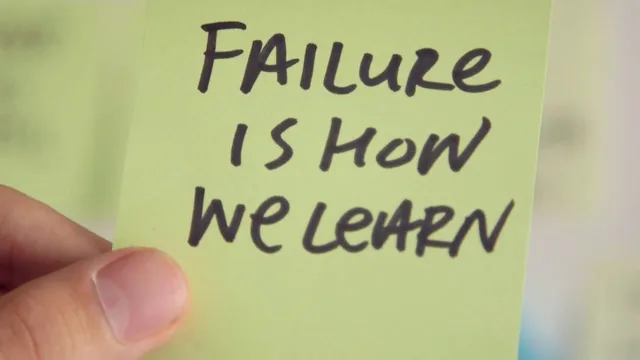
A six-minute pep talk on embracing failure, with almost no instruction on how to actually do that.
"Failure as a Win" runs two lessons: a trailer that previews the assignment, and a single main video where Ethan Bodnar, then a designer on Skillshare's education team, talks through why failure matters in creative work. There is no instruction beyond that. The entire course is one person speaking directly to camera in an office setting, walking through a handful of ideas in the space of a few minutes.
The core argument is simple: failure is a sign that someone is taking on new challenges rather than repeating familiar work, and it tends to arrive in a cycle rather than a straight line, since each failure gets analyzed, incorporated, and followed by another attempt at something harder. This is a reasonable and fairly common framing in creativity and design circles, but the course does not go much further than stating it. There is no case study, no breakdown of a real failure and what was learned from it, no exercise for identifying patterns beyond the instruction to look for them.
The Assignment
The one concrete deliverable is a "failure resume": a list of past failures, personal or professional, paired with what was learned from each and the patterns that emerge across them. The course explicitly leaves the format open. It could be a written document, a video, a portfolio page, or a custom LinkedIn section. This flexibility is a genuine strength. It lowers the barrier to starting and lets someone shape the exercise around whatever kind of failure feels most relevant to them, whether that's a stalled business idea, a rejected pitch, or a creative project that didn't land.
The trouble is that the course gives almost no scaffolding for doing the harder part of the exercise well. Identifying "the patterns" in a list of failures is treated as self-evident, when in practice it's the part most people would need help with. There's no prompt structure, no example of a filled-out failure resume beyond a passing reference to one existing somewhere, and no guidance on how to separate a failure worth analyzing from ordinary bad luck.
What It Delivers, and What It Doesn't
As a mindset primer, the course does what it sets out to do quickly and without padding. The idea that discomfort with failure often signals genuine risk-taking is a useful reframe for someone who avoids ambitious projects out of fear of visible failure. The suggestion to treat the process as iterative rather than a single event is also a fair corrective to all-or-nothing thinking.
But at six minutes, with one lesson doing all the actual teaching, there isn't room for anything beyond the reframe itself. There's no discussion of how to talk about failure with a team or a client beyond a brief mention that communication matters, no worked example of pattern-spotting, and no follow-up on what to do once the resume is built beyond imagining how it might come up in a job interview. Anyone who already accepts that failure is part of creative growth will find little new here. It functions best as a short warm-up exercise before a longer project, not as a course to be evaluated on depth.
The standout
The failure resume assignment gives a genuinely reusable format for turning a list of setbacks into a document of patterns and next steps.
What you will learn
- Why failure is framed as a byproduct of taking creative risks rather than a goal in itself
- How to build a 'failure resume' documenting past failures, what was learned, and the patterns that emerged
- That failure tends to recur in a cycle rather than a straight line, since each lesson leads into a new attempt
- Several low-effort formats for presenting a failure resume, including writing it out, filming a video, or adding it to a portfolio or LinkedIn
- How to respond constructively when others share their failures, by helping them spot patterns and choose a next challenge
Best for: Someone who needs a quick mindset reset before starting a creative project and responds well to a short, informal pep talk.
Skip it if: Anyone looking for frameworks, research, or step-by-step methods for analyzing failure, since the course stays almost entirely at the level of encouragement.