
Expressing Yourself With Personal Passion Projects
Kevin Lyons · Creative Director and Illustrator
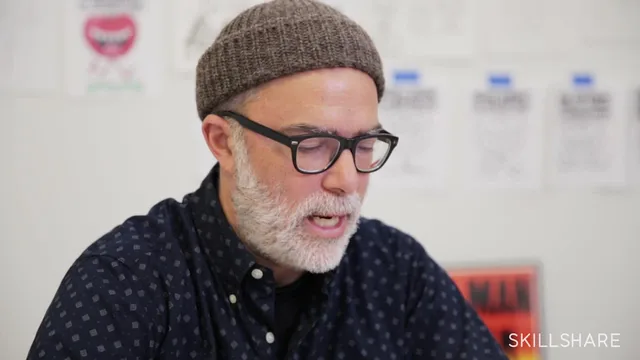
Twenty minutes of Kevin Lyons' skateboard-design case study teaches a simple prompt for finding your creative voice, not a step-by-step portfolio system.
A pep talk with one useful exercise inside it
Kevin Lyons' "Expressing Yourself With Personal Passion Projects" is less a class than a single extended conversation about creative identity, illustrated by one project: a series of six skateboards Lyons designed for Girl Skateboards, blending his recurring monster illustrations with the company's classic logo. At 21 minutes across nine short lessons, it never pretends to be comprehensive, and it shouldn't be judged as though it were trying to teach illustration, layout, or software. It is a mindset class, and it succeeds or fails on the strength of that mindset alone.
The structural arc is straightforward: find what you love, identify a style, build content and story, process both, then communicate the finished piece. Lyons walks through each stage using his own skateboard project as the through-line, which gives the class a concrete anchor rather than pure abstraction. The most substantive teaching moment comes early, when he describes finding your project by listing your unrelated interests and searching for where they overlap, his own example being the crossover of skateboarding, monster illustration, and his work for the brand Girl. He extends this into a few rapid hypotheticals, like a chef who is also in a marching band and loves fifties car culture, to show how specificity, not polish, is what makes a portfolio piece memorable. It's a simple prompt, but it's the kind of exercise that could genuinely reshape how someone thinks about a stalled portfolio.
Where the depth runs out
Once the class moves into "identify your style" and "process your content," the specificity drops off. Lyons describes his own process, hand-drawing monsters, inking them, scanning, and silk-screening onto boards, but this is a description of what he did, not a transferable technique a student in a different medium could apply. The lesson on tying rider personalities to color choices for each board is a nice illustration of thoughtful design reasoning, but it stays anecdotal rather than becoming a repeatable framework. A student working in photography, writing, or product design will have to do real translation work to extract anything actionable from a story about skateboard graphics.
The closing lesson on communicating the finished project, posting process shots, telling the story behind each piece, hosting a launch event, is sound advice but thin, amounting to a few sentences rather than a worked example of how to write portfolio copy or a case study page.
The verdict
The class delivers real value in a narrow band: the reframe of what makes portfolio work distinctive, and the interest-overlap exercise for generating a project idea. Past that, it's mostly Lyons narrating his own creative history with enthusiasm and some profanity-laced encouragement, which will land well for viewers who find him charismatic and less well for anyone hoping for method. There's no rubric for evaluating your own passion project once you've made it, no discussion of how to sequence such work within a broader portfolio, and no acknowledgment of students without an established personal style to draw from yet. It works best as a short, energizing nudge before a longer portfolio-building process, not as that process itself.
The standout
The exercise of listing your unrelated personal interests and finding the single project where they all overlap is a genuinely useful, portable idea-generation technique.
What you will learn
- How to identify a single passion-project piece that synthesizes your disparate interests into one cohesive body of work
- A method for choosing medium and style deliberately, rather than defaulting to your usual tools
- How to build narrative and personality into design choices, such as tying color and typography to a subject's background
- How to balance personal expression with a client's commercial needs, using the Girl Skateboards logo as a case study
- How to talk about the story and process behind a piece, not just present the finished object
Best for: Working designers or illustrators with existing technical skills who feel their portfolios look generic and want a prompt for injecting personality into their work.
Skip it if: Beginners looking for technical instruction in illustration, design software, or step-by-step portfolio construction, since none of that is covered here.