
Empower Your Brand: Crafting a Powerful Narrative to Redefine Your Business
Aram Atkinson · Storyteller. Filmmaker.
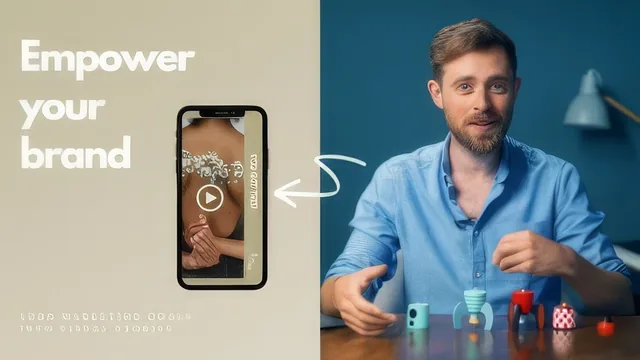
A filmmaker's brand-storytelling framework turned into a fast Canva project, more useful for finding your story than mastering the software.
A Storytelling Framework Borrowed From Film
Aram Atkinson's course opens with a reasonable premise: small businesses lose their way not because they lack a product, but because they lack a story, and the film industry has spent a century perfecting how to build one. The first half of the class translates that idea into a sequence of worksheets. A seven-whys drilling exercise pushes past surface-level pitches ("I sell watering cans") down to a motivating vision ("we help people feel happier and healthier by growing plants"). From there, the "rocket system" stacks why beneath how beneath what, borrowing NASA's brand evolution as an example of a structure that survives a change in product or direction without needing to be rebuilt. It is a clean, memorable model, and it is the part of the course most likely to still be useful months later.
The hero and nemesis exercises follow the same logic: a brand should showcase the people it serves and the problems they face, rather than the product's features. The examples, a pen sold through the story of a child learning to write, a gas engineer reframed around cowboy tradesmen and missed opportunities, make the abstraction concrete, and the worksheet format (who uses it, what does it enable, who benefits) gives the exercise enough scaffolding that it does not require creative talent to complete.
From Concept to Content
The second half shifts from brand identity to production, and here the course becomes a screen-recorded Canva tutorial. It walks through building an Instagram story, an animated post, and a 16x9 video, sourcing free footage from Pexels, Unsplash, and Pixabay, and applying a conflict-and-resolution structure to captions so that posts read as a story rather than an announcement. The demonstrations are practical in a narrow sense: color adjustment, trimming clips, layering text, downloading as MP4, but they are really a guided tour of one platform's interface rather than transferable video or design skill. Anyone who has used Canva before will find little new information in this section, and anyone who hasn't may find the pace brisk.
The course closes with a caution against overposting for the sake of consistency and a simple spreadsheet framework for planning future conflict-and-resolution content, a reasonable coda but not a substitute for a real content calendar or distribution strategy.
Where It Lands
At 72 minutes, this is not a deep or technical course, and it does not pretend to be. Its value sits almost entirely in the first half, where the seven-whys exercise and rocket system give small business owners a repeatable way to articulate what their brand actually stands for. The second half is serviceable but thin, more a demonstration that the ideas from part one can become real assets than an actual skills class in video production or Canva mastery. Business owners who already have a clear sense of their story and just want polished content tools will find less here than the pitch suggests. Those genuinely stuck on what their brand is trying to say will get the most out of it, provided they treat the software portion as a bonus rather than the main event.
The standout
The rocket system, which stacks why over how over what so a brand can swap products or pivot without rebuilding its identity from scratch.
What you will learn
- How to uncover a brand's core motivating vision using a seven-whys drilling exercise
- How to build a layered why-how-what brand structure (the 'rocket system') that survives pivots
- How to identify a brand 'hero' and 'nemesis' to anchor storytelling instead of talking about the product itself
- How to define a consistent tone of voice or 'genre' for content
- How to source free stock video and photos and assemble them into Instagram stories, animated posts, and 16x9 videos in Canva
- How to structure ongoing content using a conflict-and-resolution scripting pattern
Best for: Solopreneurs or small business owners who have a product but no clear brand narrative and want a fast, tool-based way to define one and start posting.
Skip it if: Anyone wanting deep Canva training, professional video editing skills, or a data-driven marketing strategy rather than a narrative framework.