
Easy Instant Coffee Painting! Modern Fun Paint Techniques & Mini Illustrations
Yasmina Creates · Artist & Creativity Cheerleader
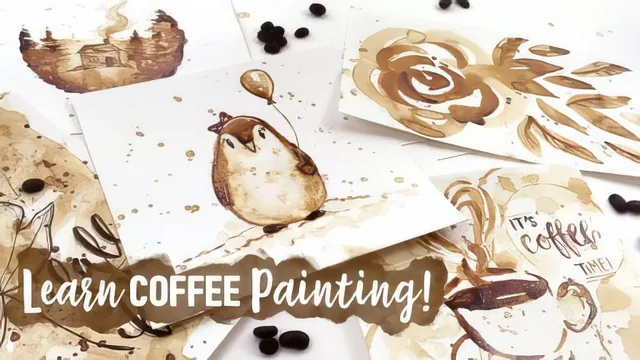
A quirky 29-minute detour that trades pigment for pantry coffee and teaches real watercolor-style value control along the way.
Coffee painting occupies an odd niche: it looks like a novelty and behaves like a genuine painting medium with its own rules. This class treats it that way, moving briskly from supplies to technique to three finished pieces in under half an hour, and that brevity is both its strength and its ceiling.
What the course actually covers
The opening lessons are practical rather than decorative. Supplies gets specific: instant coffee crystals rather than brewed coffee (brewed coffee cannot produce dark values), 140-pound watercolor paper to resist warping, and soft-bristled brushes ranging from a 5/0 spotter to a size 10. The basics lesson walks through building a value scale in a mixing tray, from a thick, almost gooey dark to a barely-there wash, then demonstrates a gradient by working dark to light across a test strip. This is the backbone of the whole class: without a set of pre-mixed values, coffee painting becomes guesswork.
The advanced techniques lesson is where the medium's personality shows. Salt sprinkled into wet coffee creates the same starburst texture familiar from watercolor. Splatter behaves the same way it does with paint, but with a twist: because dried coffee reactivates when it gets wet again, a moist brush or a piece of paper towel can lift dried pigment back off the page, functioning as an eraser. The course frames this correctly as the medium's single most useful property, since it removes the fear of committing to a stroke.
The three projects
Coffee Time, Cutie Patootie Penguin, and Simple and Loose Cabin scale in difficulty. The coffee cup requires no sketch at all and leans on loose, imprecise ovals that the eye still reads as a cup. The penguin introduces a light pencil sketch, dimensional shading with wet-on-wet blending, and detail work with a white gel pen. The cabin combines straight-edged architectural elements with loose, splattered pine trees, again using layering to control which areas bleed and which stay crisp once dried. Each project reinforces the same lesson: plan the lightest and darkest areas before touching the page, because coffee cannot achieve true black and once a wash goes dark, lifting it back to white is difficult.
Where it succeeds and where it thins out
The course is honest about coffee's limitations, particularly its refusal to layer transparently the way digital or acrylic layers can, and it explains why in concrete terms rather than glossing over the quirk. That kind of medium-specific troubleshooting is what separates a useful class from a gimmick video.
Where it falls short is depth on composition and drawing fundamentals. The projects rely on the instructor's existing sketching ability, and viewers without any drawing background will find the penguin and cabin harder to reproduce than the pacing suggests. There is also no real discussion of color theory beyond monochrome value, which is fine given the medium but means the class teaches a technique more than it teaches painting as a broader skill.
For a beginner who wants a low-stakes, low-cost way to practice value control and loose brushwork, this delivers exactly what it promises in less time than it takes to finish a pot of coffee.
The standout
The demonstration that a barely damp brush or paper towel can lift dried coffee paint to erase mistakes or carve out highlights, removing the fear of ruining a piece.
What you will learn
- How to mix graded values from instant coffee crystals and water to build a working palette
- How to erase or lighten dried coffee paint using a moist brush or paper towel
- How wet-on-wet blending, salt texture, and splatter behave differently with coffee than with watercolor
- How to plan light-to-dark layering since coffee reactivates and darkens previous layers when rewetted
- How to complete three guided mini illustrations: a coffee cup, a penguin, and a simple cabin scene
- How to add white gel-pen highlights as a finishing touch on a dried coffee painting
Best for: Beginners curious about a cheap, forgiving entry into watercolor-style painting, especially those who already enjoy loose, illustrative styles.
Skip it if: Experienced watercolorists seeking new compositional or color theory instruction, since the medium quirks are the only new material here.