
Easy Bookbinding: Two Ways to Make a Sketchbook
Amaya Jade · Artist and Video Creator
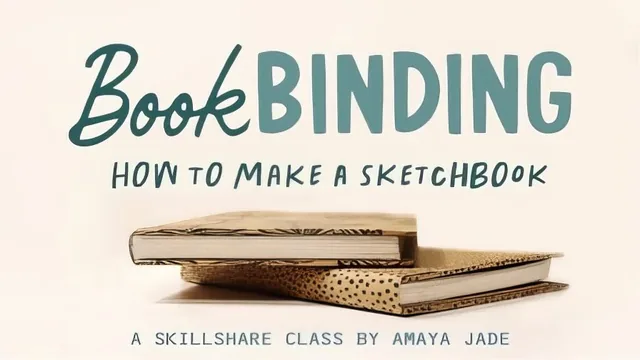
A 16-minute course that packs two complete bookbinding methods into a single sitting, with almost no fluff or filler.
Amaya Jade's "Easy Bookbinding: Two Ways to Make a Sketchbook" is exactly what its title promises: a compact, no-frills walkthrough of two beginner bookbinding methods, delivered in well under twenty minutes. There is no padding here. The nine lessons move briskly from supply list to finished, covered sketchbook, and the whole thing can be watched in one sitting and largely replicated in an afternoon.
Two Methods, Side by Side
The course's structural conceit is its strongest asset. Rather than teaching one binding method in isolation, it puts perfect bound and cord sewn construction next to each other, so a viewer can compare the tradeoffs directly. Perfect binding here means cutting and stacking watercolor paper, clamping it at a table edge, and brushing on two coats of tacky glue along the spine. It's presented honestly as the quicker, cruder option, valued mainly because the finished book opens completely flat.
Cord sewing gets more attention, and rightly so, since it's the more technical of the two. The course walks through folding paper into signatures, marking and poking six holes along the spine, taping cord strands in place, and sewing each signature around the cord with a simple over-and-back stitch. It's not the "kettle stitch" by name, but functionally it is one, and it's demonstrated cleanly enough that a first-timer could follow along frame by frame. The one genuinely useful piece of craft knowledge in the whole course, and worth the runtime on its own, is the instruction to fold multiple sheets of a signature together rather than folding each sheet individually before nesting them. That single adjustment prevents the ragged, uneven edges that trip up a lot of first attempts at signature binding.
Covers and Finishing
The cover-making lesson is the longest in the course and covers real ground: cutting cardboard to size, wrapping it in decorative paper with mitred corners, patching a corner gap with a scrap of the same clipping, and wrapping the spine separately before attaching the covers with enough gap to let the book close properly. The warning about spacing the covers too close together, since it stops the book from closing flat, reads like a mistake the instructor actually made and is passing on, which is the kind of detail that makes a tutorial useful rather than just demonstrative.
Where It Falls Short
The course's brevity is also its main limitation. Measurements are given loosely (a four-by-six sketchbook is mentioned almost in passing), paper weights and glue-drying times are approximate, and there's no discussion of what to do when signatures don't align, or how to handle thicker paper stock or larger formats. Anyone who has bound a book before will find nothing new here. And because everything moves so fast, some steps, particularly the corner-gap fix and the spine-wrapping paper measurements, would benefit from a written supplement or downloadable reference rather than a single spoken pass.
As a first exposure to bookbinding, though, it works. It removes the intimidation factor by showing that a serviceable sketchbook needs no special equipment, just paper, thread, cord, a needle, and glue, and it gets a beginner from blank paper to a bound, covered book without wasting their time.
The standout
The tip on folding two or more sheets of a signature together at once, rather than individually, so the pages fit snugly without the excess paper that leaves edges uneven.
What you will learn
- How to cut and prepare paper for both perfect bound and cord sewn sketchbooks
- The perfect bound method: gluing a stacked spine flat and clamped for a book that lies flat when opened
- How to fold multi-sheet signatures together (not individually) so pages sit snug without excess paper
- The Kettle-stitch-style cord sewing technique: poking six aligned holes and sewing signatures around cord strands
- How to glue and reinforce a sewn spine before covering
- How to build hardcovers from cardboard and decorative paper, including a corner-gap fix and spine wrapping
Best for: Total beginners who want a fast, low-equipment introduction to bookbinding and are satisfied learning by watching close, unnarrated demonstration rather than reading detailed written specs.
Skip it if: Anyone who wants precise measurements, paper weights, or troubleshooting depth, or who is already familiar with basic bookbinding and wants intermediate or advanced techniques.