
Dynamic People Illustration in Procreate: Drawing Gestures and Poses
Iva Mikles · Illustrator | Top Teacher | Art Side of Life
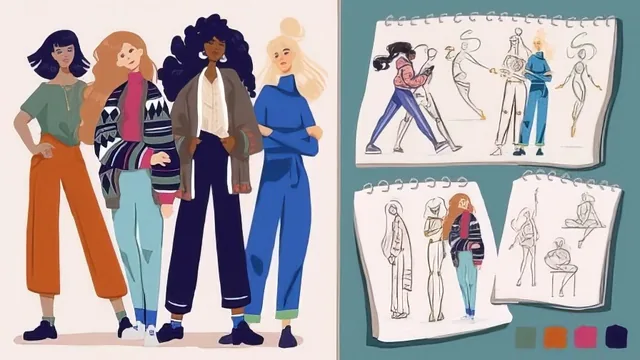
A pose-and-gesture course that trades anatomy lectures for a stick-figure shortcut, useful once basic proportions already click.
Iva Mikles's class on dynamic people illustration sits squarely in the character-design lane, and it knows exactly what it is: a practical, demonstration-heavy walkthrough of how to take a flat, stiff figure and give it energy. The twenty lessons move in a clear arc, from stick-figure fundamentals through named pose categories (confident, shy, elegant, happy, jumping, floating, walking, running, sitting) and finish with outfits, props, and composing a group portrait. Anyone who finishes it in order will have watched the same process applied a dozen times, which is either reassuring repetition or diminishing returns depending on how quickly the method clicks.
The core method
The spine of the course, literally, is the action line. Mikles has students sketch a stick figure using circles for joints and ovals for the torso, then trace an exaggerated curve through the spine on a separate layer before redrawing the body around it. This is a genuinely useful habit, not because the idea of an action line is novel to figure drawing, it isn't, but because the course ties it concretely to Procreate's layer workflow and shows the exaggeration-versus-plausibility tradeoff in real time. The related weight-shift trick, angling the shoulder and hip lines rather than redrawing the whole figure, is a small technical move that pays off across nearly every subsequent lesson.
Where the course is less rigorous is anatomy itself. Proportional rules are covered quickly (six head-heights, elbow-to-waist alignment, midpoint joints) and treated as a checklist to glance at rather than a skill to build. That is a reasonable choice for a class about gesture and expression rather than figure construction, but it also means the course leans on students already having that foundation. Someone who has never drawn a proportioned figure will likely struggle to keep up once the pace shifts into named poses.
Where it earns its runtime, and where it doesn't
The body-language material, the comparisons between dominant and submissive postures borrowed from animal behavior, the specifics of shy versus confident hand placement, is the most transferable content in the class because it applies regardless of art style. The coloring exercises are more style-locked: Mikles's flat-color, script-brush finish with minimal shading is shown clearly enough to replicate, but it is presented as her personal approach rather than a survey of options, so students hoping for broader rendering technique will come away with one method rather than several.
The back half, covering outfits, props, and multi-character composition, functions more as inspiration and mood-setting than instruction. Sections like "Outgoing vs Shy" outfits or the props lesson are built around stereotype-driven storytelling prompts rather than new technical skills, which is fine as creative scaffolding for the class project but means the informational density thins out considerably after the pose lessons proper.
At 254 minutes with a single consistent female body type used throughout, the course is honest about its scope: it is a pose and gesture primer, not a full character-design or anatomy course, and it repeatedly points back to Mikles's other classes for that groundwork. Students who already have basic figure drawing under their belt and want a structured way to make poses feel alive will get real value here. Those still learning proportions should look elsewhere first.
The standout
The action-line method, tracing the pose's energy through the spine on a separate layer before redrawing the body around it, is the one habit likely to change how a viewer designs poses going forward.
What you will learn
- Building a stick-figure armature from circles, ovals, and lines to block out proportions and joint placement before detailing a figure
- Using an action line traced through the spine to push a pose from static to dynamic
- Reading body language cues (posture, hand placement, foot angle) to convey confidence, shyness, or elegance
- Applying weight shift by angling the shoulder and hip lines to break up flat frontal poses
- Sketching specific pose categories: sitting, walking, running, jumping, and floating, each with adjustments for foot placement and limb bend
- Finishing sketches with a flat-color, script-brush coloring method including simple shadow placement and pattern accents
Best for: Illustrators who already understand basic figure proportions and stylized character construction and want a repeatable process for turning static poses into expressive ones.
Skip it if: Absolute beginners with no prior figure-drawing or Procreate experience, since the course assumes comfort with basic anatomy and moves quickly through technical setup.