
Drawing Plants & Leaves: Grow Your Unique Style Through a Visual Library
Marie-Noëlle Wurm · Artist, illustrator, HSP
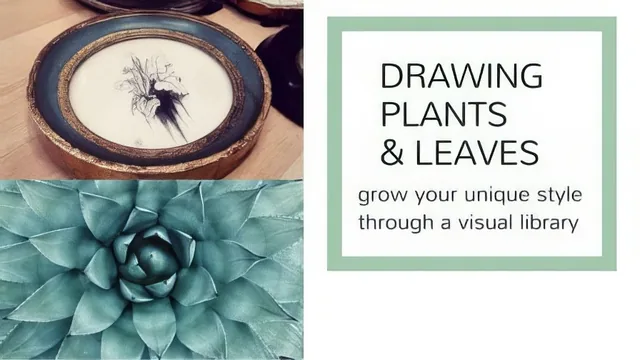
A 30-minute primer on building a mental catalog of leaf shapes to enrich plant drawings, not a full botanical illustration course.
Marie-Noëlle Wurm's class promises a "visual library" of leaf forms, and it delivers exactly that, in miniature. At half an hour across twelve short lessons, the course is really one idea stretched just far enough to be useful: that drawing plants well means having a stock of remembered shapes to pull from, rather than staring blankly at a real plant and improvising every line. The class opens by drawing an analogy between visual vocabulary and spoken language, arguing that just as words and grammar give a writer infinite room for individual voice, a shared set of leaf shapes gives every artist room to develop something personal on top of a common structure.
The instructional core is compact. Leaf structure gets split into single leaves versus compound leaves, where a leaf appears to be many small leaflets fused into one form. From there the course moves into five schematic shape categories: oval, diamond, triangle, heart, and needle, deliberately named in plain language instead of botanical terms so they are easier to hold in memory. Leaf edges and venation patterns, including parallel veins on narrow blade-like leaves and palm-shaped veins on broader ones, round out the categorical groundwork. None of this is presented with technical rigor. There is no discussion of actual plant taxonomy, no attention to proportion or perspective, and no shading or rendering instruction at all. The shapes are intentionally flat and symbolic, meant to be memorized and recombined rather than studied for accuracy.
The most transferable idea in the class is the assimilation method itself: build a reference page of these categories, then practice drawing them from memory until they no longer require looking back. That single habit, treating shape recall as a trainable skill rather than a one-time reference, is the piece of the course most likely to stick and to transfer beyond leaves to any subject the viewer wants to internalize quickly.
Where the structure helps and where it thins out
The arc is logically sound: build the schematic library first, then explain how to break away from it. The two-part framework for finding personal style, staying curious about real plants encountered day to day and treating each drawing as an experiment rather than a final product, is reasonable creative advice, but it is generic enough that it could apply to almost any subject and isn't specific to plant drawing at all.
The demonstration segment, where the shapes get applied to a finished piece, is the section that actually shows the method paying off, with leaves varied in size, layering, and vein direction to build a more visually complex composition. But because the class runs only thirty minutes, this demo moves quickly through many small decisions without lingering on any one of them long enough to fully absorb.
Verdict
This is a lean, single-concept class best suited to sketchbook regulars who already have basic drawing comfort and want a fast mental framework for diversifying plant forms, not a course for anyone seeking technical botanical accuracy or a slow, guided drawing tutorial.
The standout
Reframing leaf shapes as a memorizable visual vocabulary, five simplified forms like oval, diamond, and heart, that can be recalled by hand rather than re-observed every time.
What you will learn
- How to distinguish single versus compound leaf structures and why the difference matters visually
- A simplified vocabulary of five basic leaf shapes: oval, diamond, triangle, heart, and needle
- How leaf edges and venation patterns (parallel, palm-shaped, and others) add visual variety
- A method for building a personal reference sheet of schematic leaf forms to memorize by repetition
- How to vary size, density, and layering of plants within a composition to create depth or flatness by choice
- How to move from schematic reference shapes toward a looser, personal drawing style through repeated practice
Best for: Sketchbook artists who already draw somewhat comfortably and want a quick mental framework for varying plant and leaf forms in their work.
Skip it if: Absolute beginners seeking step-by-step drawing instruction or botanical accuracy, since the class assumes basic drawing comfort and stays deliberately loose and schematic.